

Albacore White Tuna: Delicate Light-Meat Profile and Formats for Premium Retail and HoReCa
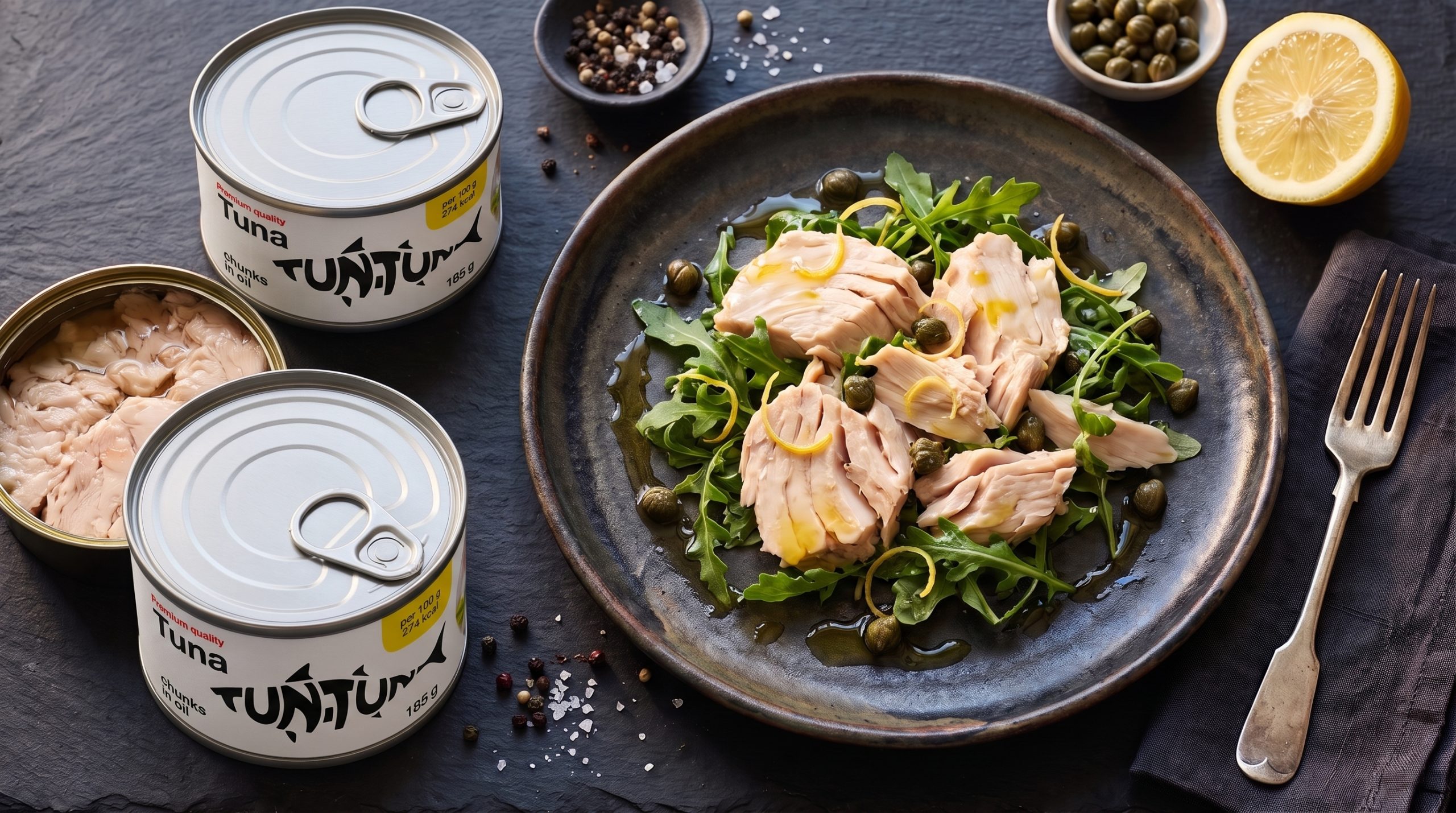
In oceanic gastronomy, few products carry as recognizable a profile as albacore white tuna. Unlike more intensely flavored tuna species, it is distinguished by pale, light-colored flesh and a mild, delicate taste. This combination of light appearance and subtle flavor makes it well suited to retail, HoReCa, and food manufacturing. Canned Thunnus alalunga represents premium quality and occupies the upper tier of the product range. Its mild flavor and two packing media—refined soybean oil or water—allow it to perform across diverse culinary applications, from salads, bowls, and appetizers to sandwiches, fillings, and pasta dishes. Wherever visual presentation on the plate matters, pale albacore chunks provide a distinct focal point. For international importers and distributors, handling this species means positioning within the upper premium segment of canned tuna. The combination of two cut options (Chunks and Flakes), two packing media, and pack sizes ranging from 80 g to 1880 g supports tailored assortments for retail, HoReCa, industrial food processing, and Private Label programs.
Natural Origin and International Identification of Thunnus alalunga
Under the official classification of the Food and Agriculture Organization of the United Nations (FAO), this species carries the international name Albacore and the scientific name Thunnus alalunga. In the wild, longfin tuna inhabits tropical and temperate waters across all major oceans.
In international trade and gastronomy, the species has established nomenclature across languages reflecting either its elongated pectoral fins or the pale hue of its flesh. In English, it is known as white tuna and longfin tuna; in Spanish as atún blanco and albacora; in French as germon; in German as Weißer Thun; and in Italian as alalunga. Standardized international naming streamlines label adaptation across export markets.
Within the MIC-TRADE portfolio, canned albacore originates from China. The product meets Premium quality standards and sits in the upper tier of the canned tuna assortment. Its pale flesh and delicate flavor establish its positioning in the upper premium segment across distribution channels.
Sensory Profile of Light Meat and the Role of Packing Media
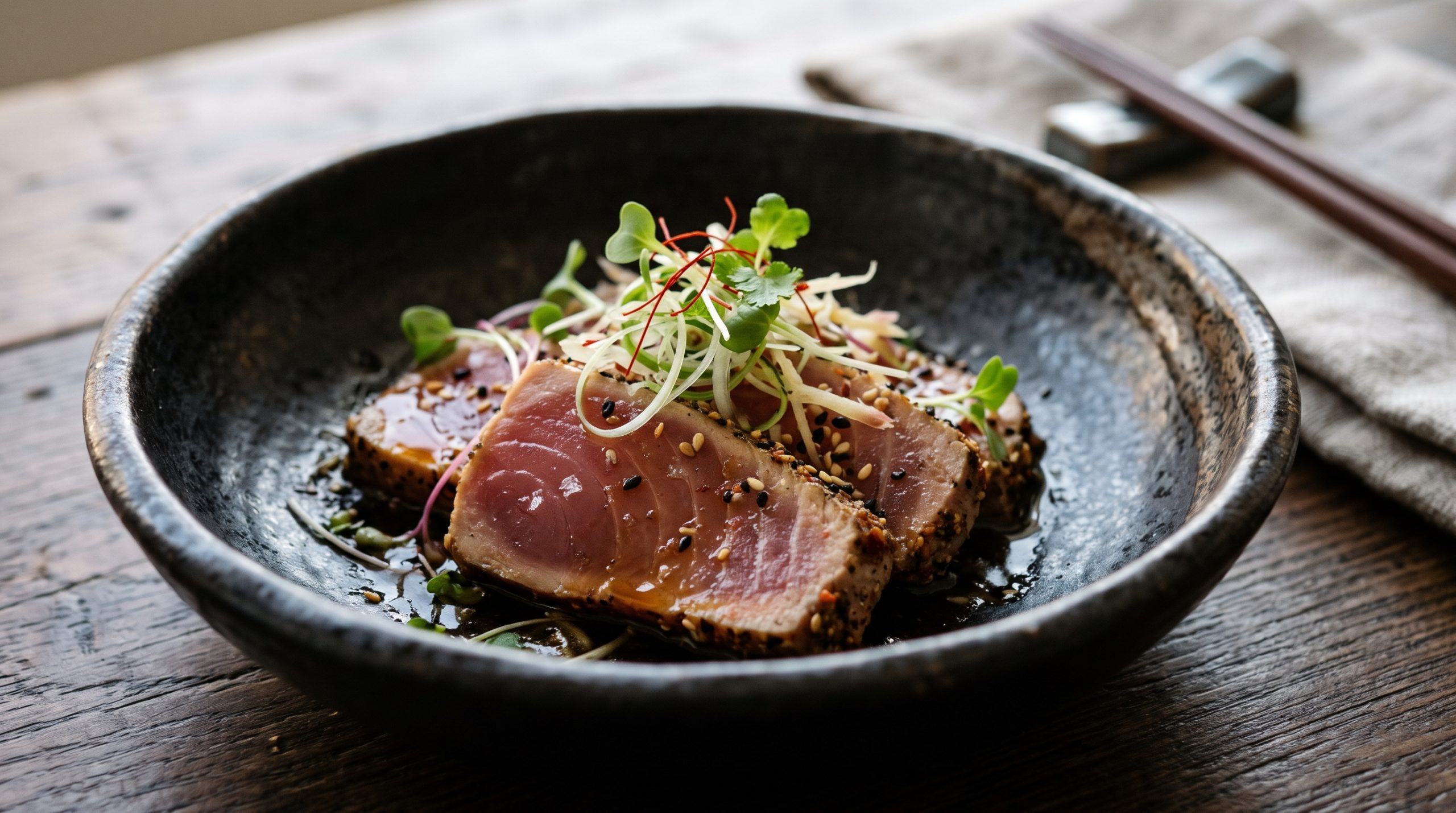
The first distinguishing trait of albacore is the visual appearance of the fillet. Its light, pale flesh contrasts markedly with darker tuna species—the very characteristic behind the trade name “white tuna.” Because of its pale tone and mild taste, the product is suited to dishes where ingredient presentation on the plate is critical.
The flavor profile of Thunnus alalunga is notably mild and delicate. Final sensory characteristics are shaped by the packing medium: each cut is available in either refined soybean oil or water. For procurement teams and chefs, this provides flexibility to match flavor balance and texture to specific culinary applications or channel requirements.
- In refined soybean oil, the texture becomes softer and richer, while the medium delivers a fuller, more rounded flavor.
- In water, the texture remains lighter, yielding a cleaner, more neutral flavor profile.
For a standard 185 g can, the typical composition ratio is 70% tuna and 30% packing medium. Detailed processing parameters—such as Brix, pH, and other technical characteristics—are not published in the open catalog and are provided in the full product specification sheet upon request.
Quality Anatomy and Cut Geometry: Chunks and Flakes
In canned tuna, the cut format determines how the ingredient behaves during mixing and what visual role it plays in the finished dish. Albacore white tuna is offered in two cut formats: Chunks and Flakes. A Shredded format is not offered for albacore, as in the MIC-TRADE assortment it is available exclusively for Skipjack.
Chunks: Structural Definition on the Plate
The Chunks cut consists of large fillet pieces that hold their shape well in prepared dishes. Because the structure remains intact, the tuna stays visually prominent on the plate and creates a distinct centerpiece. This format is preferred for salads, bowls, pasta dishes, appetizers, and toppings where product appearance is essential.
Flakes: Uniform Integration in Fillings and Sauces
The Flakes format consists of smaller pieces that blend readily with other recipe ingredients. This cut ensures even distribution of the fish component across multi-ingredient mixtures. Flakes are well suited to sandwiches, fillings, and pasta sauces.
Culinary Craft and Applications in HoReCa and Home Kitchens
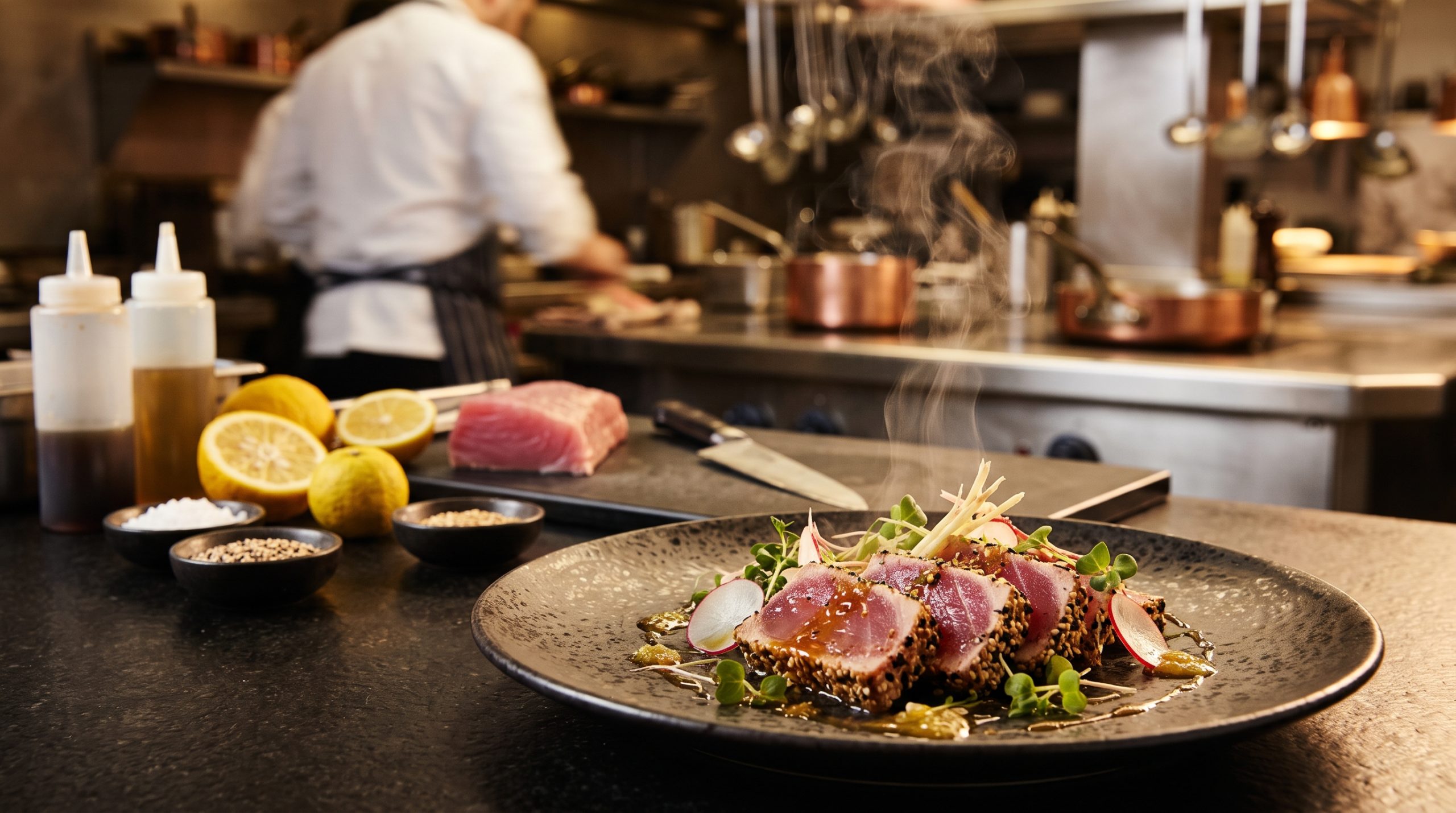
The delicate character of Thunnus alalunga makes it an appropriate choice for both classic recipes and contemporary menus. Wherever preserving a light dish composition and pale visual tone is important, white tuna performs reliably. Professional kitchens and home cooks pair it with herbs, citrus, capers, olives, and vegetables depending on the selected packing medium and cut.
Salads, Bowls, Appetizers, and Toppings with Chunks
Large, pale Chunks are designed for open-plate presentations where the tuna must remain clearly visible. In Niçoise-style salads or vegetable appetizers, for instance, albacore in water pairs with green beans, eggs, and potatoes while maintaining a lighter flavor profile. In grain and fresh vegetable bowls or pasta dishes, the refined soybean oil pack offers a softer, richer texture.
Sandwiches, Fillings, and Pasta Sauces with Flakes
Smaller Flakes demonstrate their functionality in composite fillings and pasta sauces. For sandwiches or savory tartlets, Flakes in water can be blended with cream cheese, lemon zest, and finely diced celery to create a light base. In pasta preparations, Flakes in refined soybean oil serve as a sauce component, while Chunks can be placed on top as a finishing garnish.
- Albacore in water (3 g fat per 100 g) is well suited to bowls and dishes featuring rich dressings.
- Albacore in refined soybean oil is recommended for appetizers and pasta sauces requiring a softer texture and a fuller, richer taste.
- Combine formats: prepare the sauce base or filling with Flakes, and add Chunks on top at plating so the tuna remains visually distinct in the dish.
Nutritional Biochemistry and Nutrient Balance
From a nutritional standpoint, albacore white tuna delivers 22–23.6 g of protein per 100 g depending on the packing medium, contains zero sugars, and has no more than 0.5 g of carbohydrates. Nutritional values and caloric density vary by packing medium, enabling food technologists and chefs to calculate recipe parameters accurately.
The water-packed variant provides 23.6 g of protein, 3 g of fat (of which 0.8 g is saturated), and an energy value of 128 kcal / 536 kJ per 100 g. The refined soybean oil variant supplies 22 g of protein, 12 g of fat (of which 2 g is saturated), and 230 kcal / 962 kJ per 100 g. The table below presents typical values per 100 g of product for a 185 g can with a 70% tuna and 30% packing medium ratio.
| Metric per 100 g of product | Albacore in Refined Soybean Oil | Albacore in Water |
|---|---|---|
| Energy value | 230 kcal / 962 kJ | 128 kcal / 536 kJ |
| Protein | 22 g | 23.6 g |
| Fat | 12 g | 3 g |
| of which saturates | 2 g | 0.8 g |
| Carbohydrates | < 0.5 g | 0 g |
| of which sugars | 0 g | 0 g |
| Salt | 0.3 g | 0.55 g |
| Cholesterol | 40 mg | 40 mg |
| Moisture | 62% | 72% |
Salt content stands at 0.3 g (in oil) and 0.55 g (in water) per 100 g of product. Moisture content is 62% for albacore in oil and 72% for the water-packed version, while cholesterol content is 40 mg per 100 g in both variants.
Canning Technology, Quality Control, and International Certification
Production of canned albacore complies with international standards including HACCP, ISO 9001:2015, ISO 14001:2015, ISO 22000:2018, and BRCGS. Typical fill ratios for a 185 g can are 70% tuna and 30% packing medium. Specific technical sheets for the selected species and format, along with copies of certificates, are supplied alongside the commercial quotation.
All MIC-TRADE products are certified, and both manufacturing processes and finished goods conform to the following international frameworks and standards:
- HACCP and ISO 22000:2018 — international food safety management standards.
- BRCGS — global food safety and quality standard for retail chains and manufacturers.
- ISO 9001:2015 and ISO 14001:2015 — quality management and environmental management system standards.
- Kosher OU — international product and production certification.
For Private Label orders, technical specifications and label artwork are finalized prior to production, while shelf life and storage conditions are detailed in the individual product specification upon request. Further details on the company’s certification and standards framework are available on the MIC-TRADE product quality page.
Packaging Formats, Private Label, and International B2B Import
Different sales channels impose distinct packaging requirements. In retail, shoppers focus primarily on clear species identification and labeling, whereas professional kitchens (HoReCa) and food manufacturers prioritize ingredient performance and large-format convenience. The albacore range spans pack sizes from 80 g to 1880 g:
- Small easy-open cans for retail: 80 g, 120 g, 140 g, 160 g, 170 g, and 185 g.
- Large cans for HoReCa and food processing: 1000 g and 1880 g.
- Pouches for HoReCa and food processing: 500 g and 1000 g.
In international trade, the products are classified under HS codes 1604 14 and 1604 20. Shipments are executed exclusively in full container loads (FCL), with a minimum order quantity starting from one FCL container. Within an order from 1 FCL, buyers can arrange a mixed assortment combining selected cuts, packing media, and container formats; exact case counts per master carton are specified in the commercial offer.
Supply is available under the proprietary TUN-TUN brand or under the client’s Private Label. Under the Private Label model, technical specifications, packaging design, and labeling languages are agreed ahead of production launch.
Selection Criteria and MIC-TRADE Supply Standards
Selecting canned white tuna for retail shelves or professional kitchens begins with the intended use case. Small easy-open cans serve the retail segment efficiently, while large cans and pouches are engineered for HoReCa and food manufacturing workflows. Across every format, Thunnus alalunga maintains its upper-premium positioning through its pale flesh and delicate flavor.
MIC-TRADE partners with importers, distributors, retail chains, and HoReCa operators across international markets. To calculate commercial terms, buyers specify the fish species, cut type, packing medium, container format, estimated volume, sales channel, destination country, and—where applicable—destination port or city. Quotations are accompanied by copies of certificates, technical specifications, and the agreed shipping documentation package.
An overview of formats, cuts, and container-loading data is presented in the canned tuna section of the MIC-TRADE catalog. To discuss specifications tailored to your sales channel, supply under the TUN-TUN brand, or Private Label orders, contact the team via the MIC-TRADE contacts page.