

Bonito Tuna: Rich Flavor, Protein Value, and FCL Export Standards for Retail and Catering
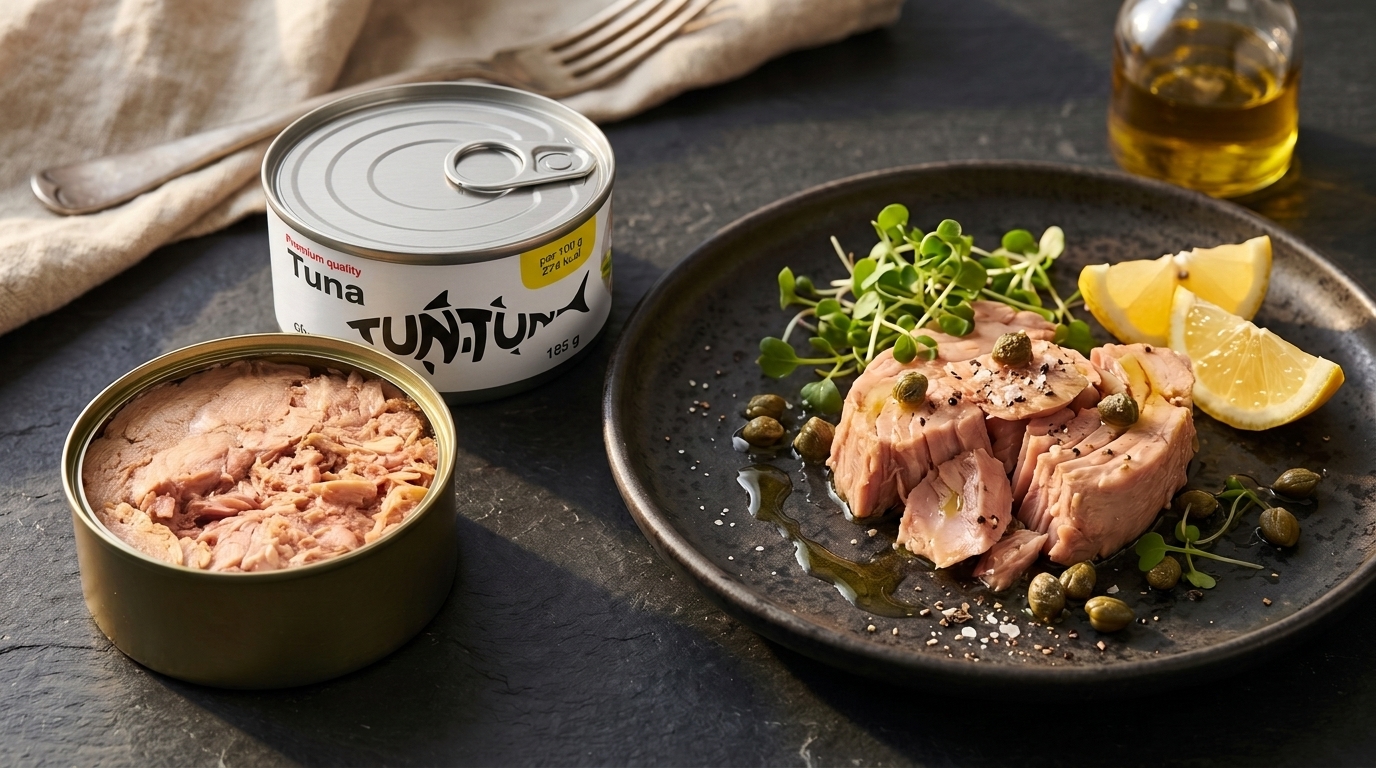
In modern foodservice and retail, canned tuna has moved well beyond convenience snacking to become a foundational ingredient for supermarket chains and commercial catering alike. Among commercial species, bonito tuna (Auxis thazard) holds a distinct position as an oceanic fish with a pronounced marine character, firm flesh, and consistent culinary behavior. With a balanced profile across two classic packing media, the product adapts cleanly to diverse menu formats—from light grain bowls to hearty sandwiches and pasta dishes. Demand for canned tuna in retail and catering centers on two core requirements: predictable texture on the plate and a clean label free from unnecessary additives. With bonito, choosing between refined soybean oil and water with no added salt allows chefs and procurement managers to control flavor intensity and caloric density with precision. At the same time, cut geometry—substantial Chunks or tender Flakes—governs visual presentation and prep speed in commercial kitchens. For international distributors and grocery chains, culinary versatility must be matched by disciplined full-container seafood supply. A standardized portfolio of tin cans and flexible pouches backed by a long shelf life positions Auxis thazard as a reliable anchor SKU across global assortment matrices.
Natural Origin and Biology of Auxis thazard
Bonito tuna (Auxis thazard) belongs to the tuna-like species group and naturally inhabits warm tropical and subtropical ocean waters. Raw material for canning is wild-caught in FAO Major Fishing Area 71, covering the Western Central Pacific, with China as the country of origin for the finished product. In international trade and culinary terminology, the species is marketed commercially as Bonito Tuna and designated officially by the FAO as Frigate tuna.
Depending on the destination market and labeling language, buyers and chefs encounter several regional names for the same species—an important detail when preparing export documentation and menu copy. In international customs declarations, the product is classified under Harmonized System codes HS 1604 14 and 1604 20.
- English terminology: bonito tuna, frigate tuna, frigate mackerel.
- Spanish species name: melvera.
- French species name: auxide.
- German species name: Fregattenmakrele.
- Italian species name: tombarello.
From a food transparency standpoint, canned bonito maintains a straightforward ingredient profile suited to varied dietary standards. The product contains fish, is free from other major food allergens, and does not require GMO labeling under European traceability and labeling regulations. In addition, every production lot undergoes mandatory safety verification for marine contaminants and raw material freshness indicators.
Organoleptic Profile: Balancing Flesh and Packing Medium
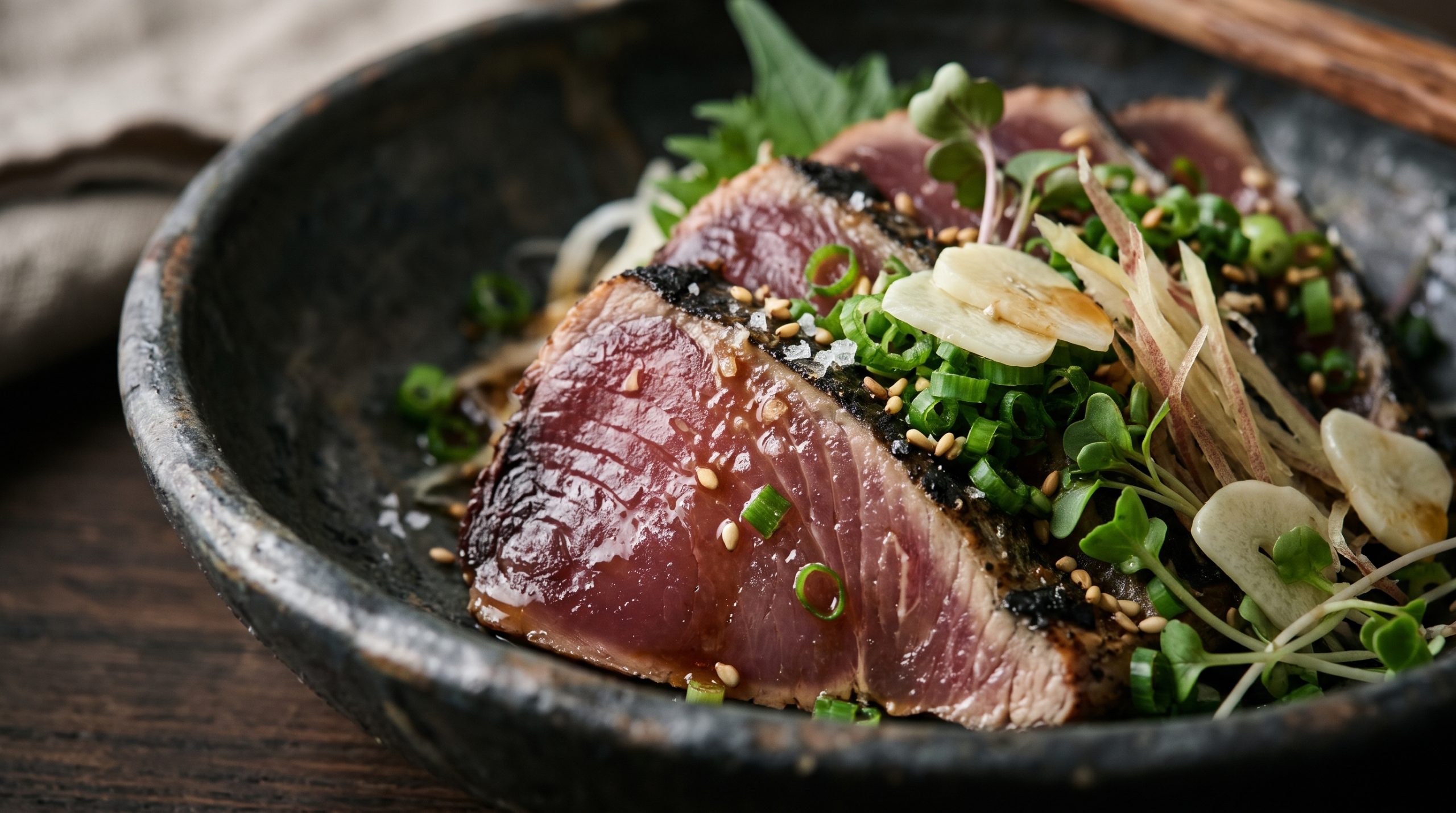
The tasting profile of bonito tuna is shaped by two interacting factors: the natural fiber density of Auxis thazard and the chosen packing medium. Both options—refined soybean oil and water with no added salt—are available across all cut formats, enabling buyers to calibrate flavor balance for specific regional preferences and recipes.
A defining feature of the water-packed format is the absence of added salt, which brings the clean, natural taste of the fish forward without excess salinity. This gives chefs complete control over seasoning with spices, citrus juice, capers, or signature dressings without risking over-salting the finished dish.
Oil vs. Water: How Packing Medium Shapes Dish Character
Bonito tuna in refined soybean oil delivers a richer, smoother flavor and a fuller aromatic profile. The oil lightly coats the muscle fibers, creating a silky mouthfeel prized in warm preparations, pasta sauces, and spreads where lipids act as a natural flavor carrier.
The water-packed version offers a lighter consistency, a more neutral flavor note, and substantially lower caloric content. It stays clean and restrained in cold appetizers, vegetable salads, and nutrition-focused menus where plate lightness and distinct piece definition are priorities.
Anatomy of Quality: Raw Material Selection and Cut Geometry
In international commercial grading, the bonito tuna range is positioned as Basic quality, tailored specifically for high-volume retail, catering, and ready-meal manufacturing. Under standard preparation protocols, the fish is cleaned of skin, scales, and bones, preserving a firm, compact, yet tender texture that avoids mushiness.
Piece geometry is strictly defined: for Auxis thazard, only two cuts are produced—Chunks and Flakes—while fine-fiber Shredded cuts are not offered for this species. This specification prevents textural breakdown during transit and thermal processing.
- Chunks: distinct, intact pieces of flesh that hold their shape reliably on the plate and provide strong visual appeal in plated dishes.
- Flakes: a uniform, finer fraction that blends evenly with sauces, spreads, and other ingredients without requiring additional chopping.
Alongside cut geometry, portion consistency is governed by exact drained fish content across packaging tiers: 70% tuna and 30% packing medium in small retail tin cans, 65% tuna in large foodservice cans, and 75% tuna in flexible pouches. Brix, pH, and drying metrics are not regulated for this canned seafood category, as production relies on conventional liquid packing and thermal sterilization.
Culinary Applications: HoReCa, Catering, and Home Kitchens
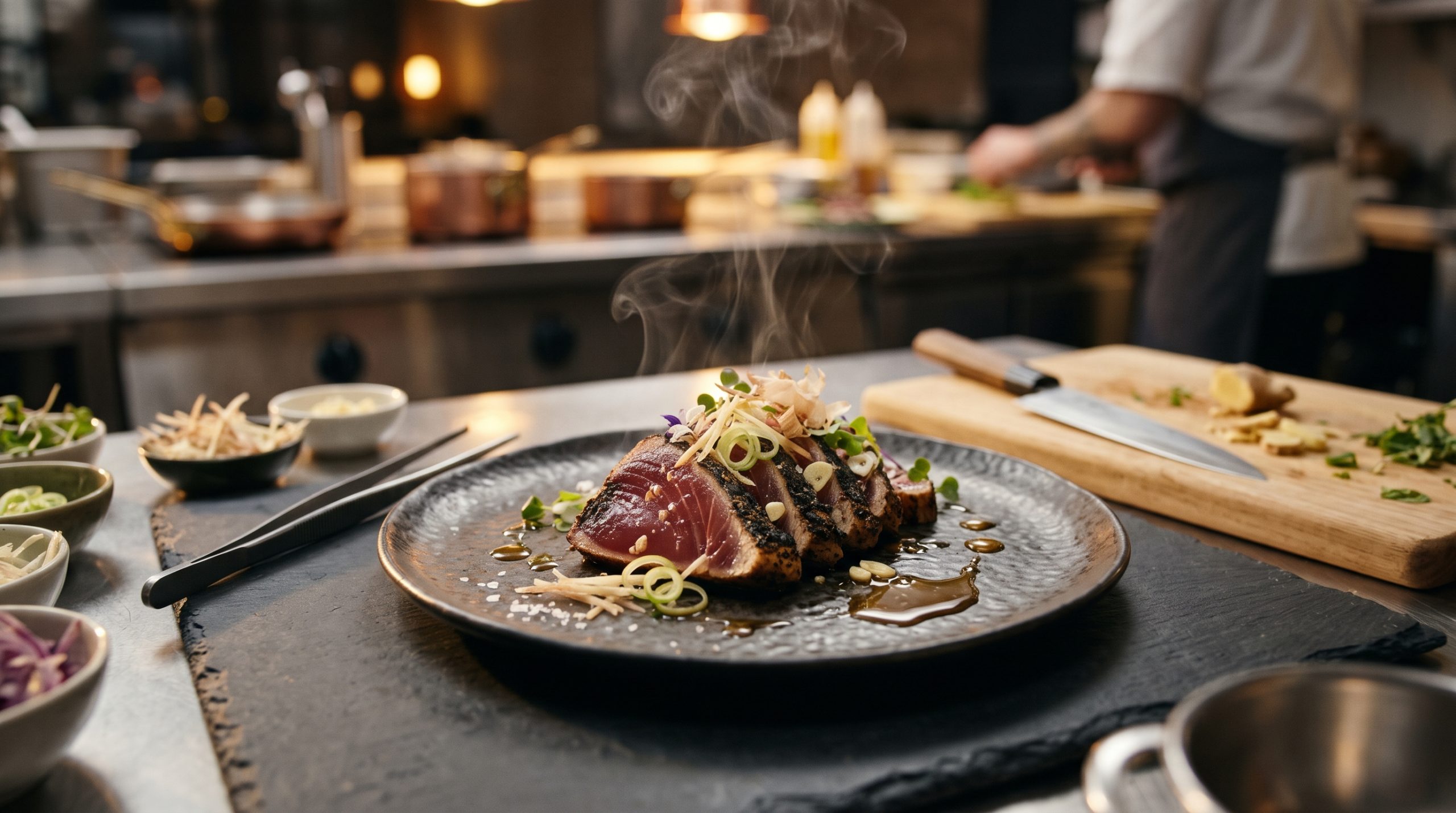
The versatility of Auxis thazard is maximized when cut format is matched to the cooking technique. Commercial catering operations and restaurant kitchens value its predictable handling straight out of the pack: bone-free and skinless preparation reduces line prep time and minimizes kitchen yield loss.
Chunks for Signature Salads, Bowls, and Pasta
Chunks are engineered for dishes where fish serves as a visible centerpiece ingredient. Because the pieces retain structural integrity on the plate, they integrate cleanly into green salads, quinoa or rice grain bowls, and Mediterranean pasta dishes with olive oil, garlic, and tomatoes.
Chefs frequently specify bonito Chunks in water as the protein base for chilled bowls paired with bright lime, sesame oil, or yogurt dressings, as the lighter flesh absorbs aromatics readily. For warm pasta dishes or baked vegetable gratins, refined soybean oil is the preferred option, preserving juiciness and lending a rounded finish.
Flakes for Sandwiches, Fillings, and Sauces
When a recipe requires a cohesive, tender filling or an emulsified sauce, Flakes deliver optimal performance. The uniform pieces disperse evenly through cream cheese, crème fraîche, capers, finely diced celery, or red onion without separating.
- Club sandwiches, croissants, and brioches: flakes in soybean oil provide a smooth, creamy filling texture without excess mayonnaise.
- Savory tartlets, canapés, and vitello tonnato: flakes in water with no added salt allow exact salinity control in delicate seafood mousses and sauces.
- Savory pastries and pies: even distribution with vegetables and egg yields a clean, stable slice in portioned quiches and empanadas.
Nutritional Value of Bonito Tuna in Oil vs. Water
When evaluating the nutritional profile of bonito tuna in oil versus water, nutritionists and food technologists focus on the contrast between energy density and protein concentration. Both formats deliver marine animal protein, yet the choice of packing medium materially alters the lipid profile per serving.
In water with no added salt, protein reaches 21.4 g per 100 g alongside minimal fat at just 0.85 g, yielding a moderate energy value of 97 kcal. By comparison, bonito in refined soybean oil provides 19.6 g of protein and 21.0 g of fat per 100 g, delivering a more energy-dense profile of 267 kcal.
| Nutrient per 100 g | Bonito Tuna in Refined Soybean Oil | Bonito Tuna in Water (No Added Salt) |
|---|---|---|
| Energy | 267 kcal / 1119 kJ | 97 kcal / 405 kJ |
| Protein | 19.6 g | 21.4 g |
| Fat | 21.0 g | 0.85 g |
| of which saturates | 3.26 g | 0.25 g |
| Carbohydrates | 0.5 g | 0.3 g |
| of which sugars | 0.4 g | 0.3 g |
| Salt | 0.3 g | 0.6 g |
| Sodium | 0.12 g | 0.24 g |
The figures above correspond to the standard 185 g net weight tin specification and highlight minimal carbohydrate content across both variants, ranging from 0.3 g to 0.5 g per 100 g. With a transparent ingredient list free of major allergens other than fish, the product integrates easily into diverse consumer diets as well as institutional, corporate, and hotel catering programs.
Canning Technology and Food Safety Controls
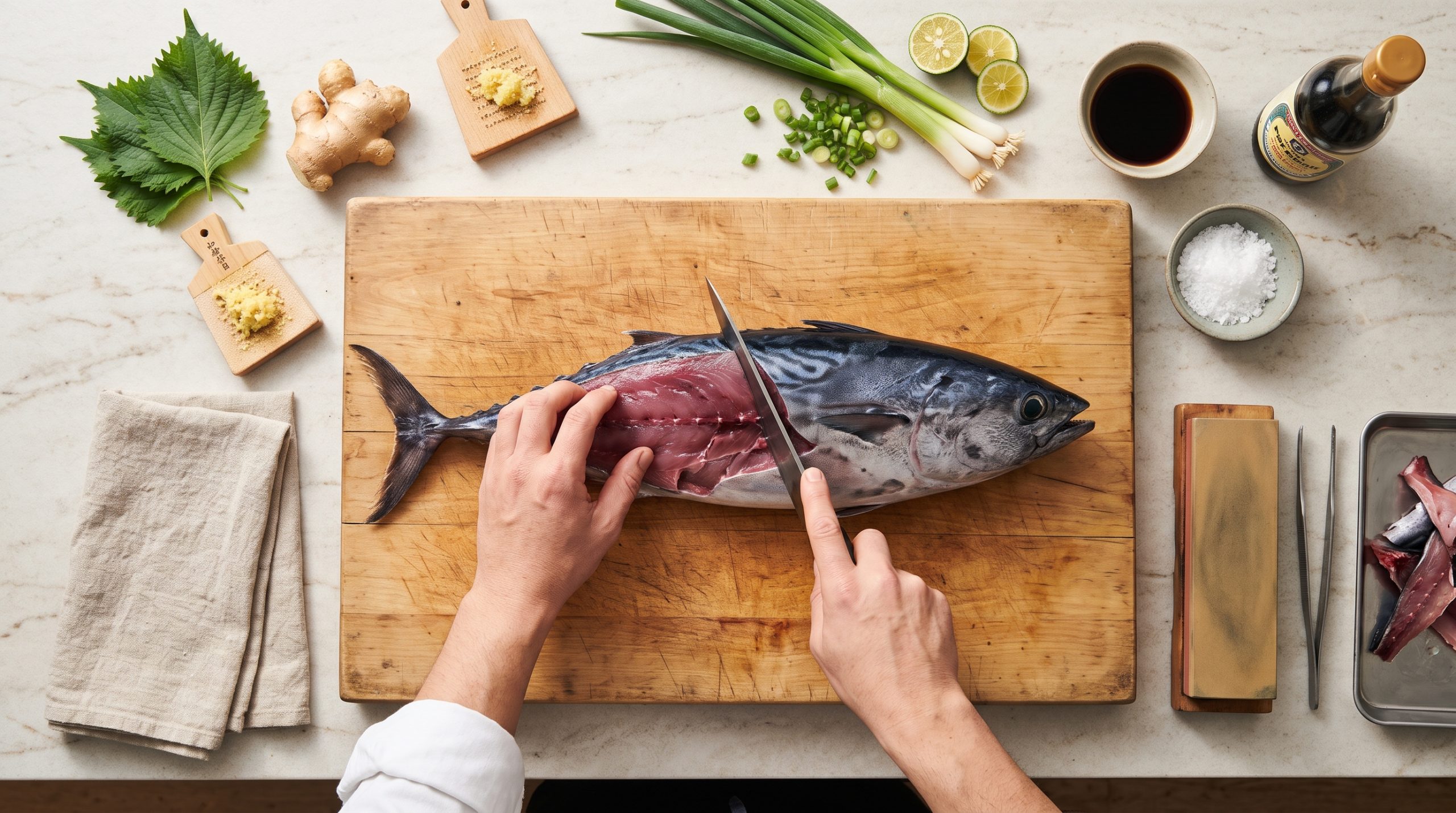
Food safety and long-term flavor stability in canned tuna start with rigorous incoming fish inspection and strict cold-chain discipline prior to packing. The thermal production cycle achieves full commercial sterility (Commercial sterility: Complies), with complete absence of Clostridium botulinum and absence of Salmonella and Listeria monocytogenes in 25 g samples.
Particular focus is placed on histamine control—the primary freshness marker for tuna-like species—maintaining a target level of ≤ 10 mg/kg against a maximum statutory limit of 100 mg/kg. Each production batch is also tested for heavy metals and tin against strict internal safety thresholds:
- Mercury (Hg): target < 0.5 mg/kg (maximum limit 1.0 mg/kg).
- Lead (Pb): target < 0.1 mg/kg (maximum limit 0.3 mg/kg).
- Cadmium (Cd): target < 0.05 mg/kg (maximum limit 0.1 mg/kg).
- Tin (Sn): target < 50 mg/kg (maximum limit 200 mg/kg).
Quality and food safety management systems are verified under international standards including ISO 9001:2015, ISO 14001:2015, ISO 22000:2018, HACCP, and BRCGS, alongside Kosher OU certification; Halal certification is not specified in catalog documentation for this SKU. Further details on supplier verification protocols are available in the MIC-TRADE international standards and quality control section.
Unopened containers retain full product integrity for 36 months from the production date when stored in a cool, dry environment at 0 to +25 °C and relative humidity not exceeding 75%. Once opened, any unused portion should be transferred to a non-metallic container and refrigerated at +2 to +6 °C for 24–48 hours.
Packaging Formats, FCL Export Standards, and the MIC-TRADE Approach
Effective canned seafood procurement depends directly on aligning packaging format with the distribution channel. For retail shelves, compact tin cans with easy-open lids and 70% fish content provide immediate convenience for household consumers without requiring a can opener.
Meanwhile, commercial foodservice operators, central kitchens, and hotel caterers increasingly specify large HoReCa cans at 65% fish content or flexible pouches reaching 75% fish content. Pouches streamline kitchen workflow, reduce packaging waste volume, and allow rapid portioning with minimal excess liquid; glass jars and bulk bags are not offered for bonito tuna.
- 10 standardized formats spanning compact retail cans to large foodservice packs cover a net weight range from 80 g to 1,880 g.
- Assortment flexibility allows buyers to combine Chunks and Flakes cuts with both packing media, including water with no added salt.
- Consistent fish content of 65–75% depending on container type ensures transparent food-cost calculations for chefs and category managers.
- A 36-month shelf life minimizes write-off risk across distribution centers and multi-tier retail networks.
International B2B shipments are executed strictly on a Full Container Load (FCL) basis, optimizing ocean freight economics and stabilizing landed unit costs. Within a single container order, buyers can configure a customized mix of pack sizes, cuts, and packing media aligned with destination market demand.
Partners can choose between two market-entry models: supply under MIC-TRADE’s proprietary TUN-TUN brand or contract manufacturing under a private label, subject to prior approval of technical specifications and artwork. Copies of valid international certificates and current product specifications are supplied upon request alongside the commercial offer.
To review the full range of species, cuts, and tin or pouch formats, visit the MIC-TRADE canned tuna catalog. To finalize container mix specifications, export terms, or certificate documentation, contact the company’s export team directly.