

Dessert Peaches in Syrup: Clingstone Cultivar Selection, Vitamin Balance, and Commercial Culinary Applications
In high-end gastronomy and industrial pastry production, ingredient reliability is anchored in decades of pomological selection and processing experience. While the sun-ripened dessert peach (Prunus persica) remains an emblem of summer sophistication, fresh market-grade fruit introduces operational instability for executive chefs and production managers due to rapid post-harvest senescing, variable water content, and structural breakdown under heat. Consequently, the commercial food sector relies on dedicated pomological cultivars engineered to maintain fiber tensile strength, uniform geometry, and a clean honey-peach aromatic profile. Premium international-grade canned dessert peaches are not merely a method of surplus crop preservation, but an autonomous culinary and food processing discipline governed by strict organoleptic standards. Specially bred Yellow Clingstone cultivars, packed in a delicate, clarified syrup with calibrated sugar density, serve as a versatile culinary medium. They provide consistent performance across diverse applications: from classic open tarts and grill caramelization to silky mousses and curated cheese accompaniments. For commercial restaurateurs, HoReCa purchasing managers, and discerning culinary professionals, canned peach halves in light syrup represent the benchmark for cut symmetry, visual presentation, and taste balance. This technical guide outlines the pomological characteristics of the Clingstone variety, precision peeling and autoclave pasteurization techniques, vitamin and polyphenol retention, and functional pairing methods that establish canned peaches as an indispensable asset in commercial foodservice.
Natural Provenance and Botanical Breeding of the Yellow Clingstone Cultivar
Peach cultivation spans millennia of selective breeding; however, modern commercial canning relies on precisely differentiated botanical varieties. The commercial dessert segment is anchored by select Yellow Clingstone peaches cultivated in subtropical orchards. These climatic zones deliver optimal cumulative heat units and solar exposure, yielding stone fruit with superior organoleptic attributes, balanced acidity, and pronounced aromatic compounds.
The Yellow Clingstone botanical grouping is of primary importance in international food processing. The Clingstone cultivar is valued across global gastronomy for its dense, fleshy, and resilient pulp, which retains its halved geometry and resists disintegration during high-temperature thermal processing. These innate structural characteristics provide high thermal tolerance, rendering the fruit an essential raw material for commercial bakery, dairy, and dessert manufacturing.
For executive pastry chefs and foodservice operators, carefully selected dessert canned peaches have become the dependable industry standard. Because the pulp of the Clingstone cultivar possesses dense, non-melting tissue, the halves maintain clean cut lines and do not break down under sustained baking or boiling. This structural integrity allows culinary professionals to execute complex formulations with full confidence that the fruit base will retain its structural definition and plate appeal.
Organoleptic Profile and the Balance of Light Syrup
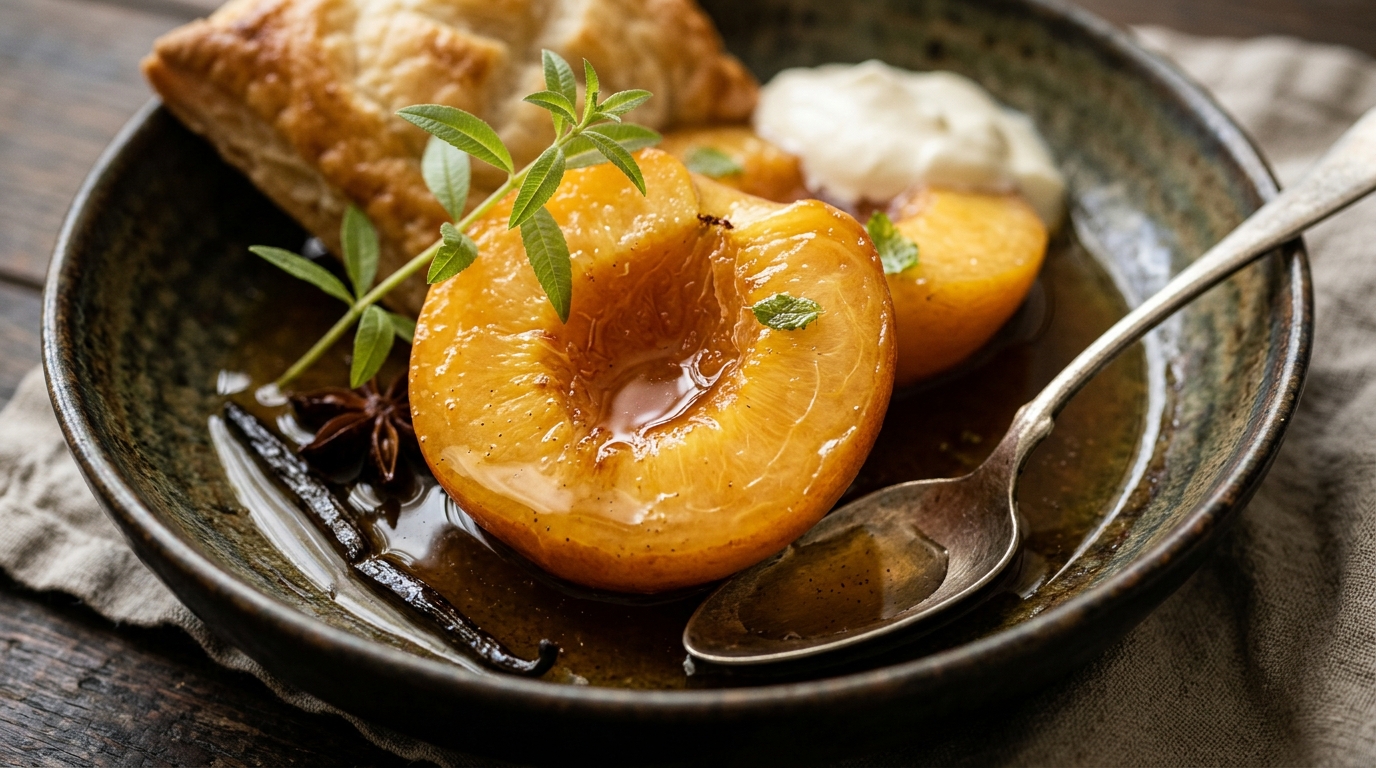
The organoleptic profile of benchmark canned dessert peaches is governed by the equilibrium among endogenous sugars, organic fruit acids, and an ultra-clarified covering liquid. The fruit delivers a rich honey-fruit flavor complemented by a delicate, natural tartness and velvet finish. The palate profile is defined by clarity and freshness, offering deep notes of orchard stone fruit, sun-ripened nectar, and balanced sweetness.
Liquid medium formulation is critical to unlocking the fruit’s full aromatic potential. Halves are packed in Light Syrup with a strictly monitored refractometric index of 14–17% Brix, which supports rather than masks the fruit’s authentic sensory profile. By avoiding excessive sugar saturation, the syrup preserves the varietal character of the peach, permitting natural flavor nuances to lead.
Visual presentation is equally vital in foodservice plating: an even, golden-amber hue visible through clear syrup makes these dessert peaches a compelling decorative component. The tissue preserves a smooth, silky mouthfeel and delivers an extended aftertaste defined by honeyed fruit notes and a clean, refreshing finish.
Clingstone Anatomy: Processing Resilience and Calibration Standards
The definitive dominance of the Clingstone variety across international processing channels stems from its distinct cellular density. Valued globally for its compact, fleshy, and elastic tissue, the Clingstone peach preserves halve symmetry without sloughing or softening during thermal sterilization. This offers an indispensable technical advantage for professional kitchens: pieces retain sharp margins under high-heat roasting, direct grilling, and chilled multi-layer construction.
Product consistency begins at harvest. Orchards are picked strictly during the technological maturity window, guaranteeing uniform golden-amber color saturation free from green shoulders or overripe, soft spots. Rigorous maturity audits ensure consistent sizing, mature aromatic precursors, and the required tissue firmness for industrial canning.
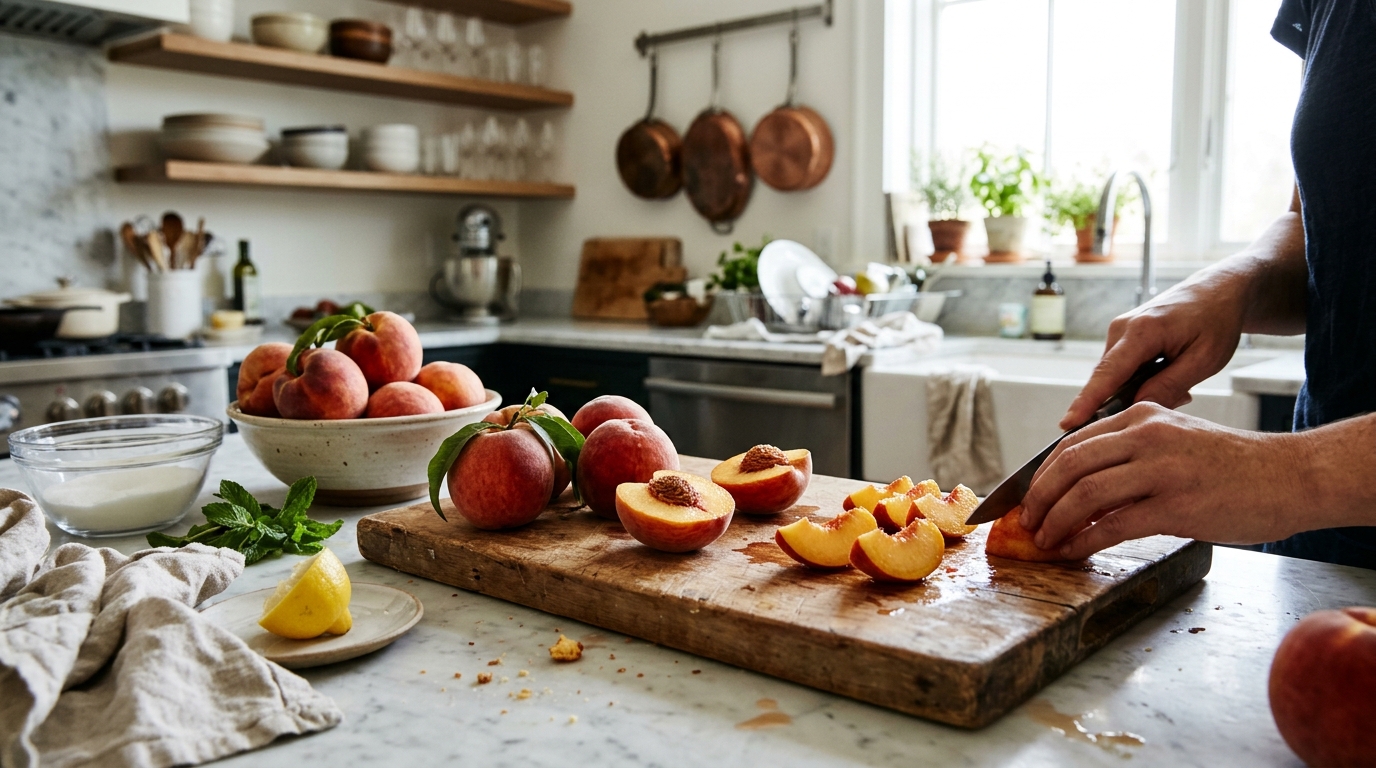
Post-harvest, raw material undergoes precision preparation. The processing cycle incorporates gentle thermal steam peeling and calibrated mechanical pitting to produce uniform, symmetrical halves with clean seed cavities. Steam peeling preserves fruit wall integrity without chemical scarring, while precision mechanical sizing delivers uniform piece weights and consistent cupping depth.
- Cultivar Advantage: The Clingstone variety features firm, fleshy, resilient pulp that retains half-cut geometry and resists breakdown during thermal processing.
- Optimal Maturity: Harvesting takes place strictly at technological ripeness, ensuring uniform amber-gold coloration without green shoulders or overripe areas.
- Gentle Steam Peeling: Controlled steam peeling removes the skin cleanly without compromising fruit flesh integrity.
- Precision Sizing: Exact mechanical coring and calibration yield symmetrical, uniform halves with clean pit cavities.
Culinary Applications and Foodservice Baking: From Tarte Tatin to Cheese Platters
In professional culinary environments, canned dessert peaches represent one of the most functional fruit components. Their processing versatility is demonstrated across varied preparations: serving as the gold standard for commercial open-faced pastries (such as tarte tatin), aerated cheese mousses, breakfast yogurt parfaits, high-heat grill caramelization, and premium cheese boards featuring Brie and Gorgonzola.
Foodservice Baking and Delicate Dairy Desserts
Classic peach tarts, including French inverted tarte tatin, require fruit components that maintain structural integrity under prolonged heat and caramelization. Clingstone peaches serve as the benchmark for open bakery applications because their dense, non-melting pulp retains slice definition and does not collapse or exude excessive moisture during baking. Arranged on laminated pastry dough, the halves preserve distinct volume, gloss, and plate architecture throughout high-temperature oven cycles.
Beyond baked goods, canned peach halves serve high-volume demand across dessert menus: they represent an optimal fruit base for delicate curd mousses and nutritional breakfast offerings. Incorporating resilient peach dices into mascarpone creams or Greek yogurt yields a balanced mouthfeel, anchored by natural honeyed sweetness and crisp residual acidity.
Grill Caramelization and Gourmet Cheese Platters
Canned peaches have also earned an established position on savory cheese boards, paired alongside mold-ripened cheeses such as Brie and Gorgonzola. The concentrated fruit bouquet and crisp acidity offset the rich butterfat and piquancy of artisanal cheeses.
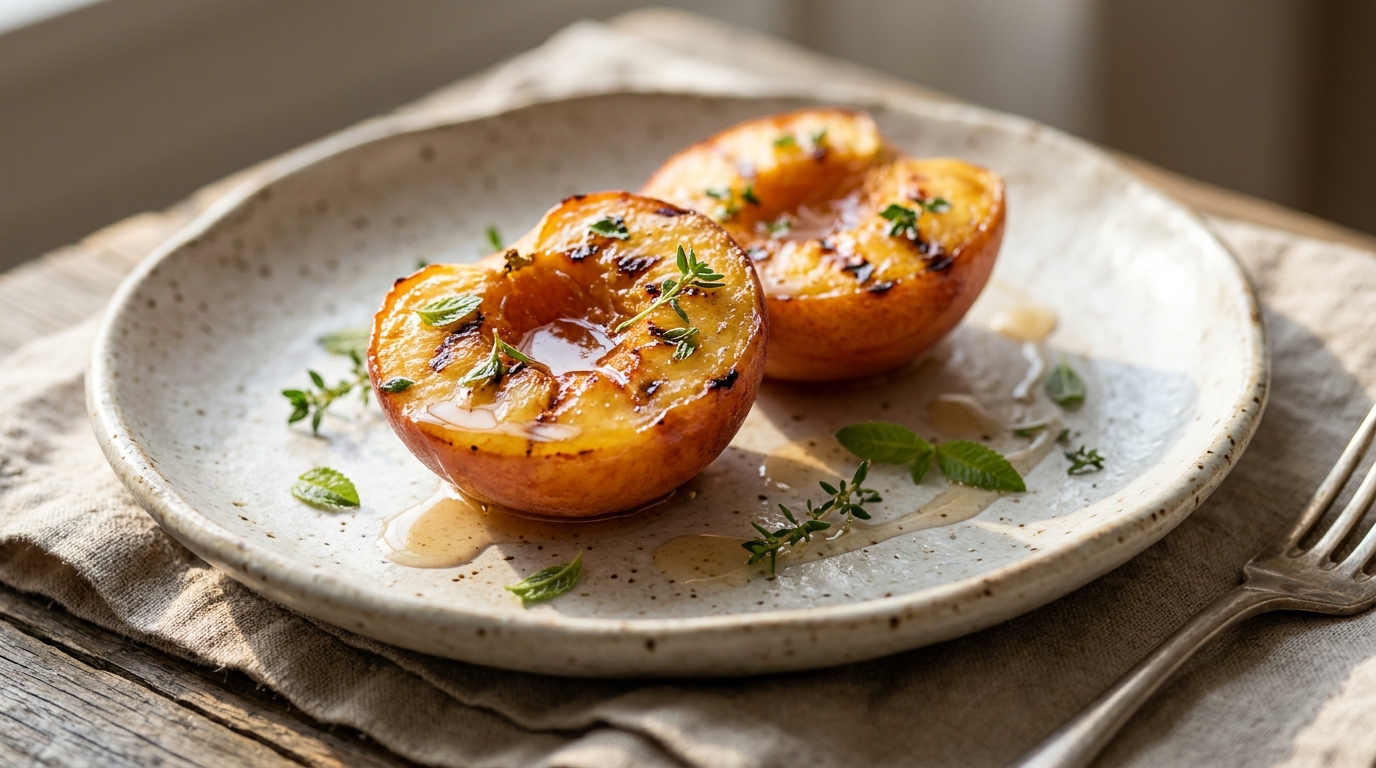
Direct grill caramelization represents another proven culinary technique. Because Clingstone peaches do not soften excessively under thermal exposure, contact with hot grates yields distinct caramel markings while the core remains juicy and structurally intact.
Nutritional Biochemistry and Nutrient Profile
Canned dessert peaches packed in light syrup illustrate how controlled thermal processing can stabilize nutritional compounds without artificial preservatives. The product exhibits a balanced nutritional matrix: moderate caloric density of 65–75 kcal per 100 g, with 0 g total fat and 0 mg cholesterol, making it suitable for clean-label, health-conscious menu segments.
Gentle thermal processing preserves high retention rates of beta-carotene (provitamin A), ascorbic acid (vitamin C), and structural dietary fiber. Beta-carotene is responsible for the deep amber-gold pigmentation, while insoluble pectins and hemicelluloses maintain cell wall resilience. Furthermore, the fruit provides notable concentrations of natural polyphenols and bioflavonoids that mitigate oxidative degradation.
| Nutrient / Parameter | Value / Specification | Processing Source |
|---|---|---|
| Energy Value | 65–75 kcal per 100 g | Light dessert syrup balance |
| Total Fat | 0 g | 0 g fat per 100 g |
| Cholesterol | 0 mg | 0 mg cholesterol per 100 g |
| Beta-carotene (Provitamin A) | High concentration | Preserved via gentle thermal processing |
| Vitamin C | High concentration | Preserved via gentle thermal processing |
| Dietary Fiber | Present (intact) | Preserved via gentle thermal processing |
| Natural Polyphenols & Bioflavonoids | Rich content | Protect cellular structures from oxidative stress |
By employing a calibrated Light Syrup at 14–17% Brix, product caloric load is kept strictly in check, enabling pastry chefs to design balanced dessert offerings without compromising on flavor depth.
Thermal Processing Excellence and Food Safety
The premium quality of canned Yellow Clingstone peaches is sustained via tight parameter control across every stage of processing. Commercial sterility and structural stability are achieved through short-duration hermetic autoclave pasteurization, which preserves cellular crispness and delivers a certified shelf life of up to 3 years without chemical preservatives.
This optimized thermal regimen prevents overcooking, retaining natural fiber firmness while neutralizing enzymatic activity and microflora.
Packaging integrity is maintained through heavy-duty food-grade tinplate containers featuring internal protective lacquer. This barrier prevents direct contact between fruit acids and metal surfaces, eliminating oxidation and safeguarding syrup clarity and flavor purity.
Processing facilities comply with internationally recognized benchmarks: finished inventory conforms strictly to global food safety management protocols, including ISO 22000:2018, HACCP, and ISO 9001:2015.
Procurement Standards and MIC-TRADE Import Specifications
For executive chefs, culinary directors, and industrial buyers, ingredient uniformity is essential to maintaining operational margins and menu standards. MIC-TRADE structures its import portfolio to meet the rigorous requirements of the HoReCa and processing sectors: sourcing exclusively Yellow Clingstone dessert peaches cultivated in subtropical orchards and packed in 14–17% Brix light syrup.
In high-throughput kitchens, preparation efficiency is paramount: each can contains peeled, cored, and calibrated halves ready for direct assembly or thermal finishing. Backed by compliance with ISO 22000:2018, HACCP, and ISO 9001:2015 quality systems, buyers receive an ingredient engineered to retain its shape, texture, and visual appeal under demanding foodservice conditions.
To elevate commercial dessert menus with certified ingredients, explore our selection of canned peach halves in syrup, which combine balanced flavor with reliable structural performance. For detailed technical specifications, volume pricing, and logistics arrangements, please contact MIC-TRADE specialists.