

Canned Sweet Corn: Sterilization Technology, Kernel Firmness, and B2B Export Standards
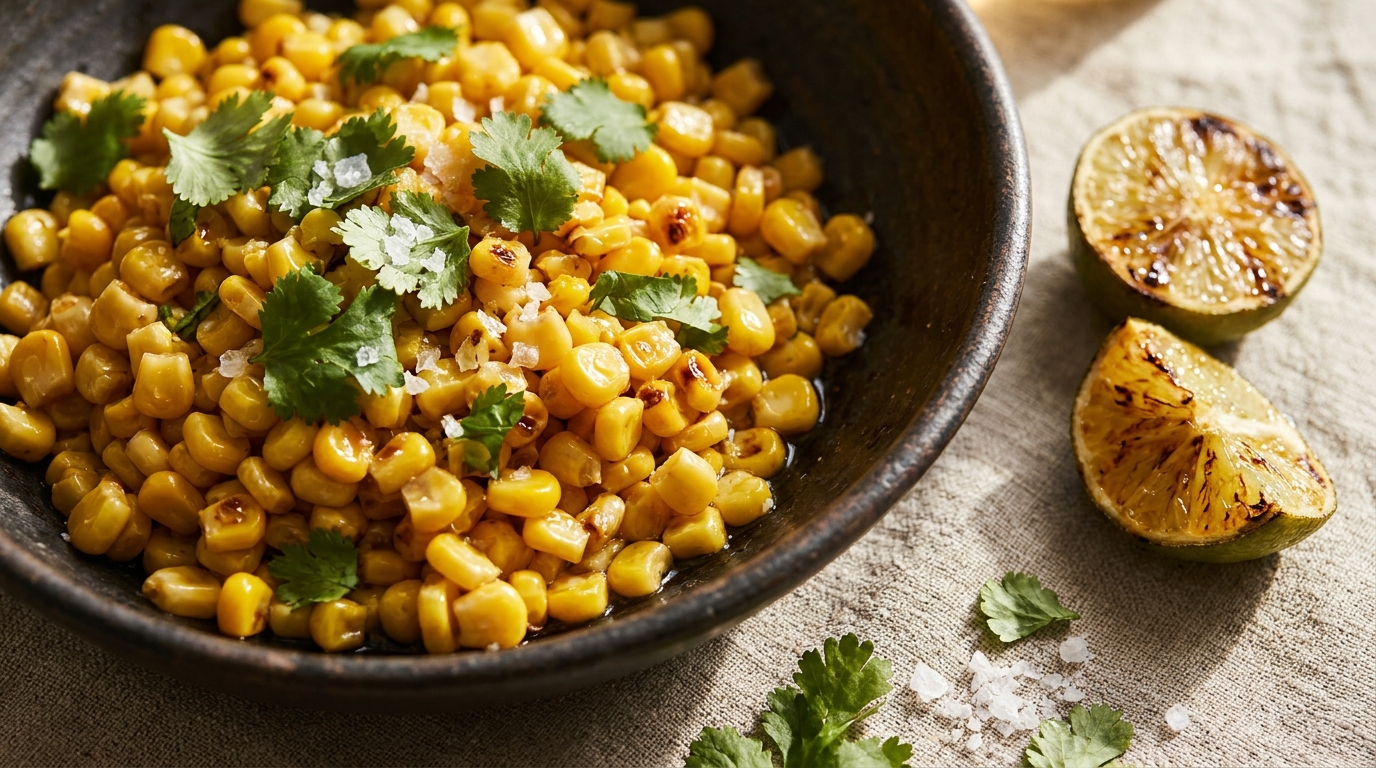
Golden sweet corn kernels consistently serve as a natural culinary accent on the plate, delivering bright color, delicate sweetness, and a firm bite. In professional kitchens and everyday menus alike, this product has long moved beyond a simple side dish. Today, canned sweet corn functions as a staple ingredient in grain bowls, hot appetizers, specialty pizzas, and complex composed salads. Behind this apparent lightness of flavor lies precise food engineering, where every parameter—from whole-kernel selection to the pH balance of the brine—governs final texture. When raw material is carefully graded and industrial sterilization follows strict protocols, each kernel retains a resilient outer skin and a juicy interior. This organoleptic balance is precisely what executive chefs, food technologists, and retail procurement managers seek across international markets. This technical review examines the botanical foundation of sweet corn, its textural characteristics, culinary versatility in the HoReCa sector, and the compliance standards required for certified product in international trade.
Natural Origin and Botanical Basis of Quality
The product is derived from sweet corn of the species Zea mays, known for its characteristic sweetness and golden kernel coloration. Within the international portfolio of MIC-TRADE, this category is supplied under the Sunny Corn brand, with China as the country of origin.
Initial raw-material condition is decisive in ensuring that canned kernels remain intact and hold their shape after thermal processing. Production uses whole sweet corn kernels, accounting for 60–65% of the finished formulation. Kernel integrity and color consistency are verified against the specification of the selected product.
Mechanical integrity requirements are strictly defined: the share of damaged or broken kernels does not exceed 5%. This maintains a clean, uniform appearance inside the can, which is particularly important both for open plating in restaurants and for industrial salad packing.
Organoleptic Profile: Color, Flavor, and Firm Texture
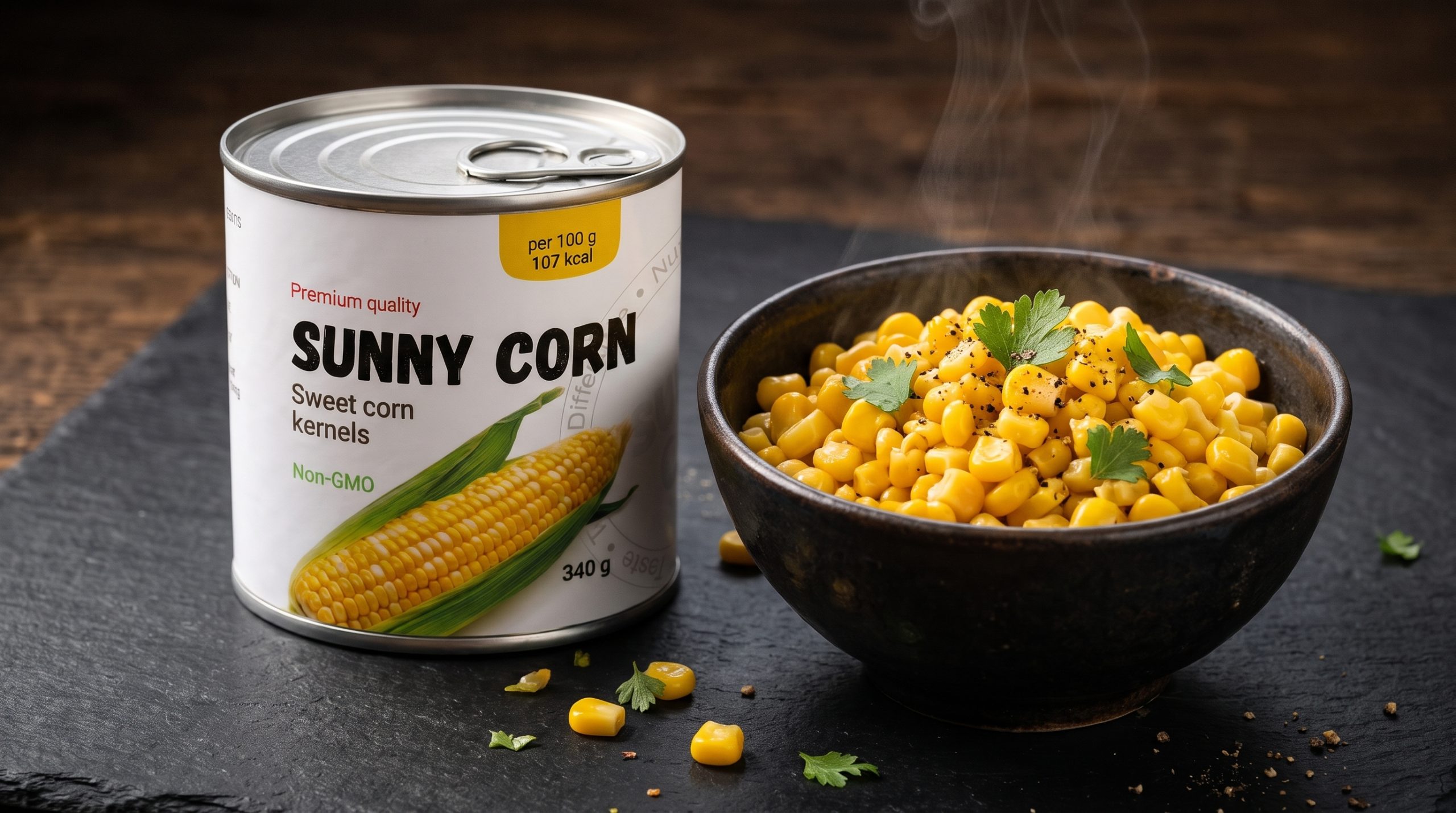
Visual uniformity creates the first impression of high-grade canned sweet corn, with kernel hues ranging from warm gold to vibrant bright yellow. Selected kernels exhibit intact geometry, with broken kernels capped at no more than 5%. In professional catering and deli displays, this coloration provides clear visual contrast.
On tasting, the product unfolds in two distinct stages: an initial gentle snap of the outer pericarp, followed by a tender, succulent core with natural sweetness. This combination of juiciness and firmness separates properly processed canned corn from overcooked alternatives.
A calibrated brine plays a central role in preserving natural flavor. A standard formulation combines 60–65% corn kernels, 33–37% water, 0.5–1.2% salt, and 0–1% sugar, establishing a medium with a pH between 5.5 and 6.2. This composition creates a balanced brine environment for sweet corn kernels.
Anatomy of Quality: Selection Standards and Parameter Control
In commercial kitchens and food manufacturing, predictable solid yield without excess liquid is critical when sourcing canned vegetables. Under the product specification, minimum drained weight is set at no less than 60% of net weight. Once the brine is drained, chefs and production technologists receive a consistent, accurately forecastable volume of firm kernels.
Every production lot is inspected against several core parameters:
- Color uniformity — kernel shade verified against specification.
- Mechanical integrity — broken kernels limited to a maximum of 5%.
- Precise solid-to-liquid ratio — minimum drained weight controlled at 60% or more of net weight.
- Stable acidity — pH maintained within 5.5–6.2 across every batch.
Through this control framework, Sunny Corn canned sweet corn delivers repeatable can-to-can performance. For B2B operators, consistent industrial-grade product quality remains essential.
Culinary Versatility: Pairings and HoReCa Applications

Natural sweetness and crisp juiciness make canned sweet corn a versatile textural component in both commercial and domestic kitchens. It integrates seamlessly into salads, pizzas, burgers, side dishes, and grain bowls. At the same time, 340 g and 170 g can formats serve distinct demand channels—from household consumption and retail impulse purchases to regular usage in HoReCa, catering, and food processing.
Ideas for Restaurant Menus, Catering, and Modern Kitchens
- Bowls and salads: pairing firm kernels with quinoa, avocado, roasted salmon, or spiced chicken, finished with a lime-cilantro dressing.
- Pizza and baked goods: incorporating corn into cream-based or tomato-based recipes alongside mozzarella, jalapeños, and smoked sausages.
- Burgers: folding kernels into a warm corn salsa with red onion, chili pepper, and fresh herbs to contrast savory beef or plant-based patties.
- Side dishes and industrial blends: serving as a ready-to-use ingredient in food manufacturing for prepared salads, frozen vegetable mixes, and ready meals.
Chef Tips for Enhancing Flavor
To accentuate the natural sweetness of the kernels in hot side dishes, chefs recommend draining the brine thoroughly and flash-searing the corn in a dry, well-heated skillet or grill pan. Brief contact with high heat lightly chars the exterior while preserving internal moisture and sweetness.
In cold appetizers, the product pairs effectively with contrasting ingredients such as aged cheeses, feta, citrus juice, sun-dried tomatoes, or mustard dressings. With salt content kept at 0.5–1.2%, the kernels readily accommodate aromatic herbs, oils, and acidic accents.
Nutritional Profile and Energy Value
Across everyday and restaurant menus, canned sweet corn combines moderate caloric density with meaningful carbohydrates and dietary fiber. Its energy value is 75–95 kcal per 100 g of product, supporting its role either as a standalone side or as a component in multi-ingredient dishes.
According to manufacturer data, 100 g of product provides 2.5–3.5 g of protein, 1.0–1.5 g of fat, 14–19 g of carbohydrates, and 2–3 g of dietary fiber, while salt content remains within 0.5–1.2%. The formulation consists of corn kernels, water, salt, and sugar in the specified proportions.
| Nutritional Indicator | Value per 100 g of Product |
|---|---|
| Energy value | 75–95 kcal |
| Protein | 2.5–3.5 g |
| Fat | 1.0–1.5 g |
| Carbohydrates | 14–19 g |
| Dietary fiber | 2–3 g |
| Salt content | 0.5–1.2% |
The figures above reflect manufacturer data for the product packed in brine. Fat (1.0–1.5 g) and dietary fiber (2–3 g) values are stated per 100 g of product.
Sterilization Technology and Multi-Stage Quality Control
Extended shelf stability of canned sweet corn is achieved through industrial sterilization inside sealed metal cans. Thermal processing renders the product commercially sterile and free from pathogenic microorganisms, supporting a shelf life of 36 months from the date of manufacture.
Manufacturing operations are certified to international food safety and quality management standards. The facility complies with ISO 9001:2015, ISO 14001:2015, ISO 22000:2018, HACCP, BRCGS, and Kosher OU requirements. Further details on product inspection protocols and technical compliance can be reviewed on the MIC-TRADE quality control page.
Each lot is verified against manufacturer specifications: kernel integrity and color, minimum drained weight of 60% of net weight, broken-kernel share (max. 5%), and pH within 5.5–6.2. Brix is not regulated in the catalog specification. Copies of certificates and the product specification are supplied to trading partners alongside the commercial offer.
Sourcing Standards, Private Label, and International B2B Export with MIC-TRADE
For distributors, importers, and retail procurement heads, batch-to-batch consistency carries as much weight as flavor. Wholesale shipments of canned sweet corn from MIC-TRADE are structured for international trade flows: orders are dispatched by full container load (FCL) with a minimum order quantity starting from 2 containers. Within a single shipment and purchase order, buyers also have the flexibility to combine both metal can formats—340 g and 170 g.
Combining formats in B2B procurement enables retail chains and HoReCa operators to optimize shelf allocation and kitchen portioning: the 340 g can targets family consumption, whereas the 170 g format is tailored to single-serving use and impulse retail. For chain buyers and brand owners, Private Label manufacturing is available with prior alignment on label artwork, language versions, case pack count, can format, and technical specification.
International FCL exports of canned sweet corn are executed under CIF and other Incoterms. Each shipment is accompanied by a complete export documentation package: commercial invoice, packing list, Bill of Lading, certificate of origin, quality certificate, laboratory analysis, and product specification. The extended 36-month shelf life provides a practical operational advantage for importers and distributors.
When sourcing for restaurant menus, food processing, or supermarket shelves, procurement teams should evaluate objective benchmarks: firm whole-kernel integrity, balanced brine chemistry, verified drained weight, and accredited manufacturing certifications. Detailed assortment specifications are available in the Sunny Corn sweet corn section, while bespoke supply terms or Private Label launches can be arranged through the MIC-TRADE team contacts.