

Canned Tropical Pineapple: Varietal Selection, Bromelain Enzyme Dynamics, and Culinary Synergy
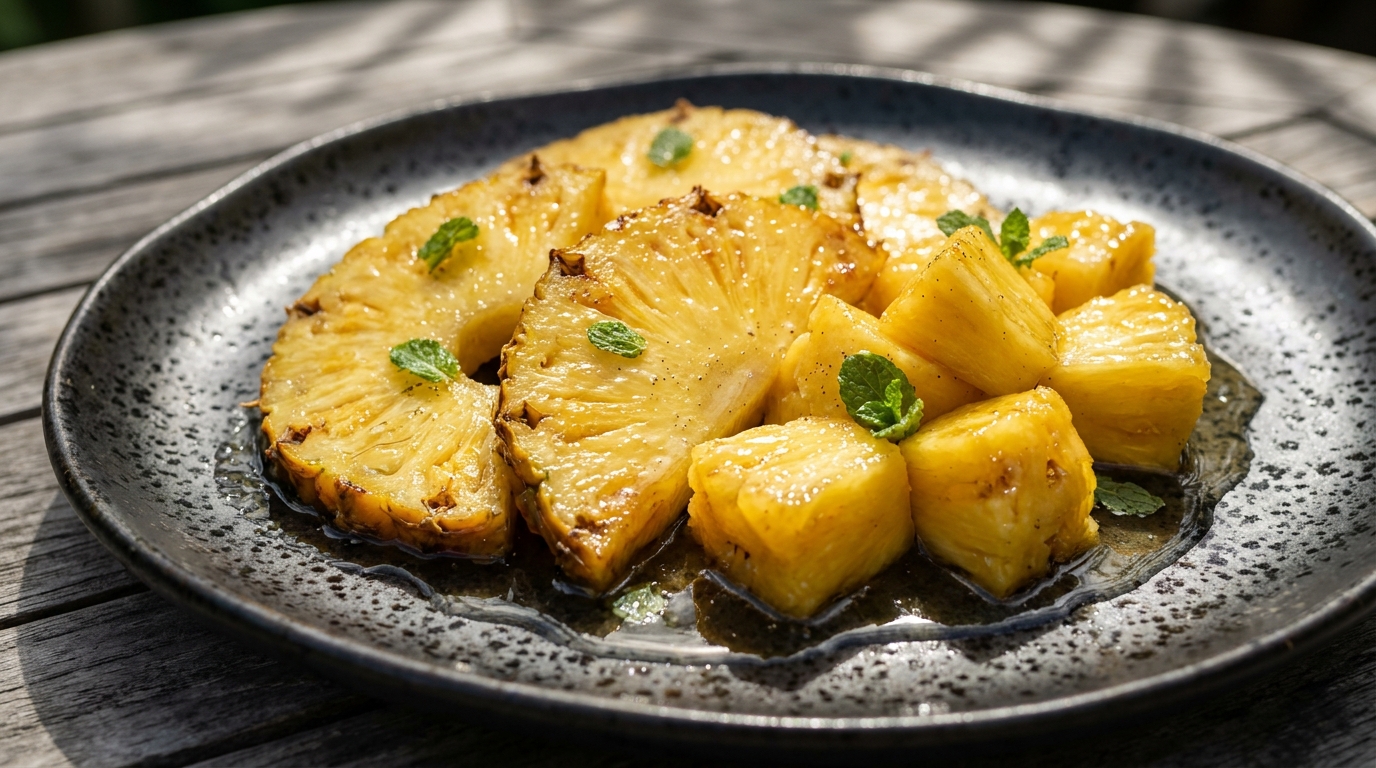
Tropical pineapple stands as one of the most distinctive staples of exotic gastronomy, capable of elevating conventional culinary applications through an assertive balance of juiciness, sweetness, and crisp tropical acidity. In modern commercial foodservice and high-end gastronomy, canned pineapple has expanded well beyond conventional sweet desserts, establishing a central role in complex, multi-layered savory and sweet preparations. Driven by high natural sugar concentrations and a pronounced aroma, the fruit pairs seamlessly with poultry, artisanal cheeses, seafood, and aromatic Asian spices. Behind every can of premium product lies meticulous agronomic selection, cultivar segregation, and high-tech processing engineered to capture the fruit at peak ripeness. While preservation is often perceived merely as a convenient storage format, for professional chefs and food manufacturers, high-grade canned pineapples provide a dependable benchmark for texture, calibration, and Brix specifications that remains consistent regardless of seasonality. This standardization guarantees reproducible results and precise flavor balancing across high-volume production. Beyond exceptional sensory characteristics, pineapple possesses significant biochemical utility, headlined by the proteolytic enzyme bromelain. This technical analysis explores the commodity’s journey from equatorial Southeast Asian plantations to commercial kitchens, contrasting Smooth Cayenne and Queen cultivars, evaluating Brix syrup parameters, and detailing high-performance culinary integrations.
Agronomic Origins and Climatic Conditions for Ananas comosus
Cultivating pineapple (Ananas comosus) requires a specific microclimate where elevated atmospheric humidity aligns with extended daylight hours and fertile, well-draining soils. Premium Smooth Cayenne and Queen cultivars are primarily grown across tropical plantations in Southeast Asia, which offer optimal agroecological conditions for slow, full-term fruit maturation. In this equatorial zone, crops receive the sustained heat units required to synthesize the complex esters responsible for the fruit’s characteristic volatile aroma profile.
Agroclimatic variables directly govern fiber density and endogenous organic acid equilibrium. Industrial canning grades cannot accommodate artificially ripened fruit or raw material exposed to thermal stress during extended maritime transit. Harvesting is therefore synchronized strictly with peak brix-to-acid maturity, with raw fruit transferred to processing facilities within 24 hours of cutting.
This rapid post-harvest turnaround halts spontaneous fermentation and cellular wall degradation. Consequently, the fruit tissue retains its mechanical turgor, juiciness, and natural vitamin profile established during maturation.
Organoleptic Profile and Textural Dynamics
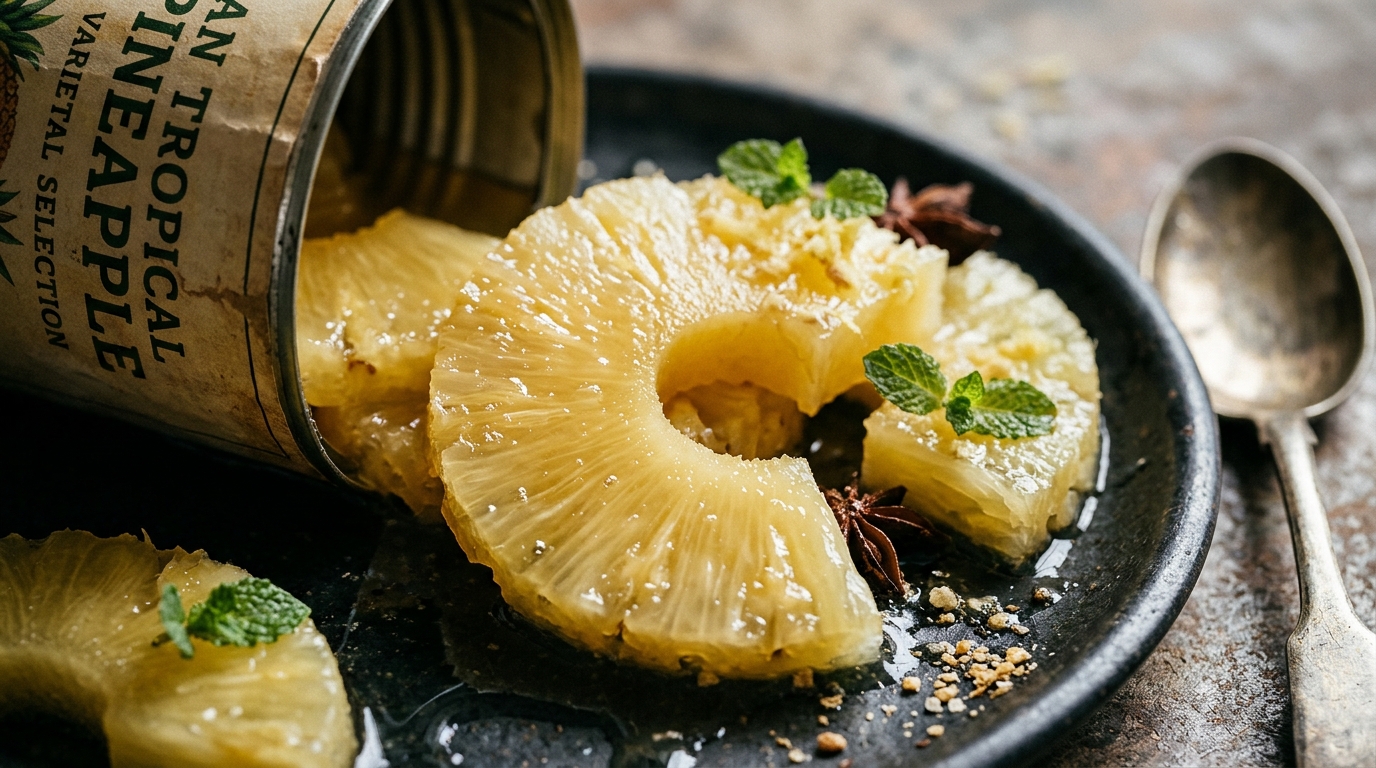
The commercial value of selected canned pineapple centers on its multifaceted sensory profile. Premium-grade pack-outs exhibit an intense, juicy, sweet-acid balance paired with clean tropical aromatic intensity. Under mastication, the pulp maintains crisp structural firmness rather than breaking down into stringy fibers, releasing an abundant flow of concentrated juice.
The packing medium plays a decisive role in sensory equilibrium. Fruit is processed either in clarified light sugar syrup (Light Syrup) at 14–17% Brix or in natural unsweetened pineapple juice. Syrup density is calibrated to highlight natural fruit notes without masking varietal acidity under excessive sweetness.
When commercial kitchens demand rapid mise en place without compromising product consistency, calibrated pineapple chunks in syrup provide an efficient solution for salads, compound sauces, and hot entrées. The light syrup integrates smoothly into dressings, serves as a glaze reduction base for proteins, or functions as a sweet soak in bakery applications.
The unsweetened natural juice pack is favored for clean-label applications and health-conscious foodservice concepts. In this medium, the fruit preserves its raw flavor profile, driven by prominent fruit acids and unadulterated tropical freshness.
Varietal Selection and Sizing Specifications: Smooth Cayenne vs. Queen
In global pineapple processing, varietal purity is critical. Tropical cultivars respond differently to thermal pasteurization and extended shelf life. Accordingly, the commercial canning sector relies primarily on two proven Southeast Asian cultivars: Smooth Cayenne and Queen.
Each cultivar presents distinct functional properties. Smooth Cayenne features larger, juicier fruit cylinders with a pronounced acidic profile, whereas Queen exhibits a deep golden hue and concentrated honey sweetness. Smooth Cayenne serves as the industry standard for savory entrées, hot appetizers, and grilling, where robust acidity cuts through rich fats. Conversely, Queen’s amber hue and delicate sugar profile make it the preferred specification for high-end dessert and pastry applications.
Cut Specifications and Culinary Ergonomics
Geometric precision during mechanical cutting reflects operational processing standards. Commercial specifications center on uniform slices/rings for center-of-plate presentation and graded chunks/pieces for salads, bakery, and pizza toppings.
In banquet catering and commercial baking, canned pineapple rings require uniform outer diameter, central core extraction, and consistent slice thickness throughout the can. Processing lines utilize automated core coring and high-speed rotary slicers prior to can filling to maintain these strict dimensional tolerances.
Chunks are screened for piece-size consistency, ensuring uniform heat transfer during baking and consistent visual distribution across prepared salads. This standardized format eliminates manual trimming, lowering kitchen labor overhead and food waste.
Culinary Science: From Hawaiian Pizza to Contemporary HoReCa Applications
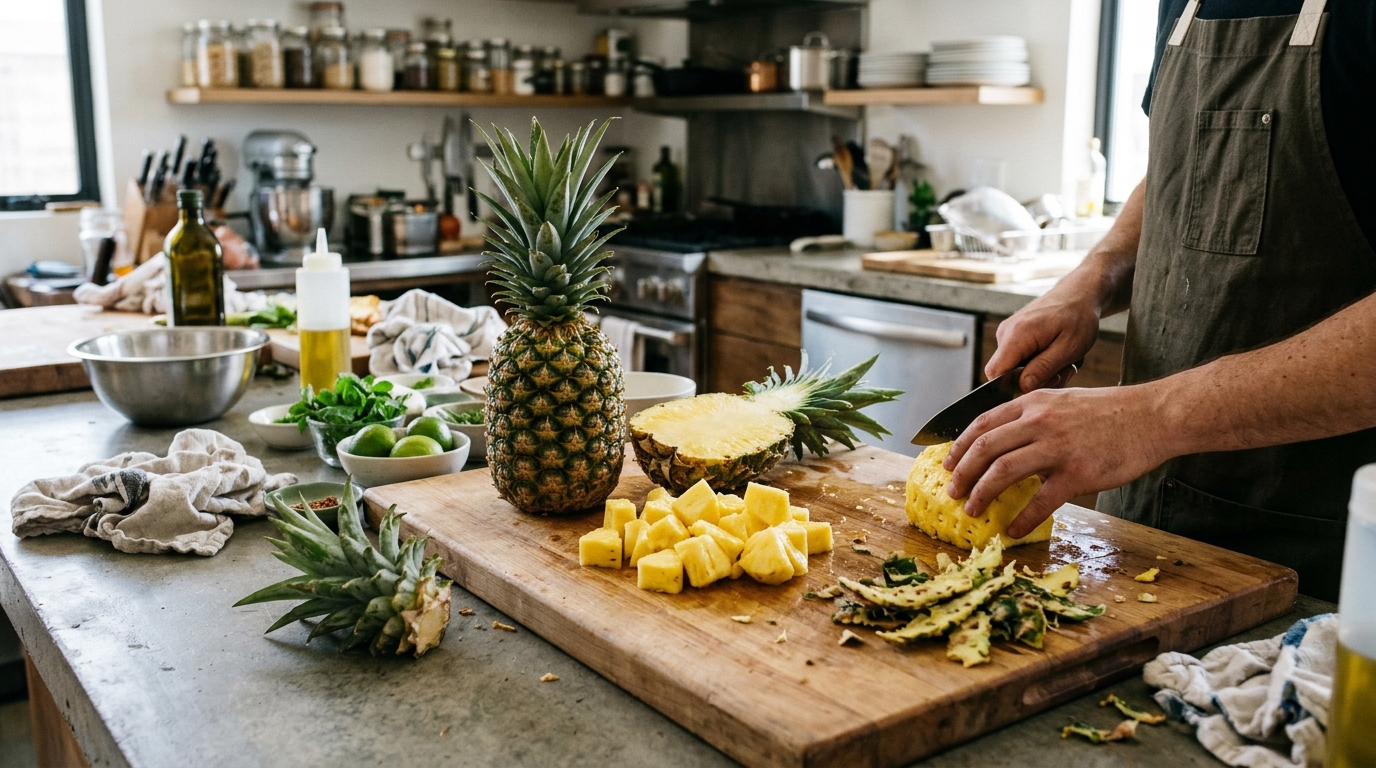
Pineapple’s culinary versatility relies on flavor contrast, wherein fructose and organic acids interact with the glutamates and sodium in savory matrices. The fruit demonstrates exceptional utility across food formats—from high-volume Hawaiian pizza and sweet-and-sour poultry to curries, poke bowls, pureed smoothies, and fine-dining tarts.
Pineapple pizza remains a high-volume global category benchmark, where the sweet, acidic fruit creates a deliberate contrast against savory cured ham, whole-milk mozzarella, and acidic tomato sauce. Under high oven temperatures, the fruit’s surface sugars undergo Maillard and caramelization reactions, yielding charred edges and releasing volatile aromatics into the crust.
In Pan-Asian foodservice, pineapple forms a core building block for wok preparations. Classic sweet-and-sour poultry and pork formulations require pineapple cuts to temper the pungent heat of ginger, garlic, and chili. In Thai green and red coconut curries, the acidic fruit balances dense lipid profiles and heavy spice pastes.
Modern canned pineapple formats are increasingly integrated into commercial fast-casual bowl concepts. In poke formulations featuring salmon, tuna, or tofu, calibrated pineapple chunks complement raw fish textures while introducing bright visual appeal and clean acidity.
In commercial pastry and beverage manufacturing, the ingredient delivers consistent yield and coloration. Tarte Tatins, upside-down cakes, glazes, and fruit purees leverage syrup-packed or juice-packed pineapple to maintain uniform moisture levels and vibrant yellow pigmentation.
Professional Applications in Commercial Foodservice
- Direct-flame and plancha caramelization: High natural sugar content permits rapid surface charring on pineapple rings without drying out interior cell tissue.
- Spiced syrup reductions: Drained packing syrup can be reduced with star anise, cinnamon, and chili peppers into an aromatic glaze for roast duck or pork cuts.
- Acidic counterbalance in tartares and crudos: Fine-diced pineapple provides controlled sweet-acid balance in raw whitefish ceviches and seafood crudos.
- Savory chutneys and emulsion bases: Pureed pineapple combined with cider vinegar and mustard seed forms a stable accompaniment for aged cheeses and charcuterie.
- Textural structure in mousse formulations: Poached Queen cultivar pieces maintain firm bite within aerated, high-fat dairy dessert applications.
Biochemical Profile: Bromelain Enzyme, Vitamin Micronutrients, and Nutritional Value
Pineapple occupies a distinct position in food science due to its enzyme chemistry. Both fresh fruit and gently processed canned pineapple contain bromelain, a complex proteolytic enzyme mixture that cleaves peptide bonds, accelerating protein breakdown.
In culinary science and dietetics, bromelain serves as a biological tenderizer and digestive aid, breaking complex protein chains into peptides and amino acids. Pairing pineapple cuts or marinades with fibrous meats and game is an established technique in commercial protein preparation to improve tenderness and digestibility.
Beyond enzyme activity, pineapple delivers a robust micronutrient profile. The fruit is rich in vitamin C (providing over 30% of daily reference intake per 100 g), bioavailable manganese (essential for metabolic function), and polyphenolic antioxidants that mitigate cellular oxidative stress.
Controlled canning parameters safeguard these core micronutrients in the finished product, delivering a clean nutritional profile free of artificial preservatives.
| Nutrient / Parameter | Content per 100 g | Functional Impact |
|---|---|---|
| Vitamin C | >30% Daily Value (DV) | Natural antioxidant protection |
| Manganese | Naturally present | Supports metabolic regulation |
| Bromelain Enzyme | Active constituent | Facilitates protein proteolysis and digestion |
| Brix Degree (Light Syrup) | 14–17% | Calibrated sweetness in clarified syrup |
| Natural Juice Format | No added sugar | Authentic, clean-label fruit profile |
Industrial Processing Standards: From Plantation to Can
Manufacturing premium canned pineapple is a precision engineering operation designed to preserve fruit texture and flavor. The chain begins with field maturity grading: harvesting occurs precisely at peak sugar-acid balance, with immediate transport to canning facilities within 24 hours of cutting.
At the plant, fruit passes through optical sizing and mechanical coring to remove fibrous inedible material. Raw cylinders are then precision-cut into rings or chunks before hermetic container filling.
Food safety is governed by controlled thermal pasteurization within hermetically sealed cans, eliminating chemical additives. Supported by the fruit’s natural low pH (high acidity), retorting achieves commercial sterility, delivering a verified 3-year shelf life under ambient storage without synthetic preservatives or stabilizers.
This processing rigor provides commercial food manufacturers and foodservice operators with microbiological stability, uniform texture, and reliable moisture retention across wholesale supply cycles.
MIC-TRADE Sourcing Standards: Commercial Reliability for Foodservice and Retail
For procurement managers, executive chefs, and plant operators, specification consistency is non-negotiable. Variations in slice thickness, pulp firmness, or Brix ratings disrupt automated recipes and cost margins. MIC-TRADE structures its import programs around vetted manufacturing plants compliant with strict global food safety benchmarks.
Partner processing facilities hold third-party certifications including ISO 22000 and HACCP, with Halal and Kosher certification available upon request. Through rigorous quality audits and standardized processing specifications, MIC-TRADE enforces full traceability and technical compliance throughout the supply chain.
For enterprise foodservice and retail contracts, procurement specialists rely on audited quality frameworks detailed in our international food safety standards section. To review packaging configurations, varietal specifications, and schedule wholesale contract shipments, explore our product catalog and contact the MIC-TRADE commercial team for technical consultations.