

Canned White Beans in Tomato and White Sauces: Creamy Texture for Retail and HoReCa
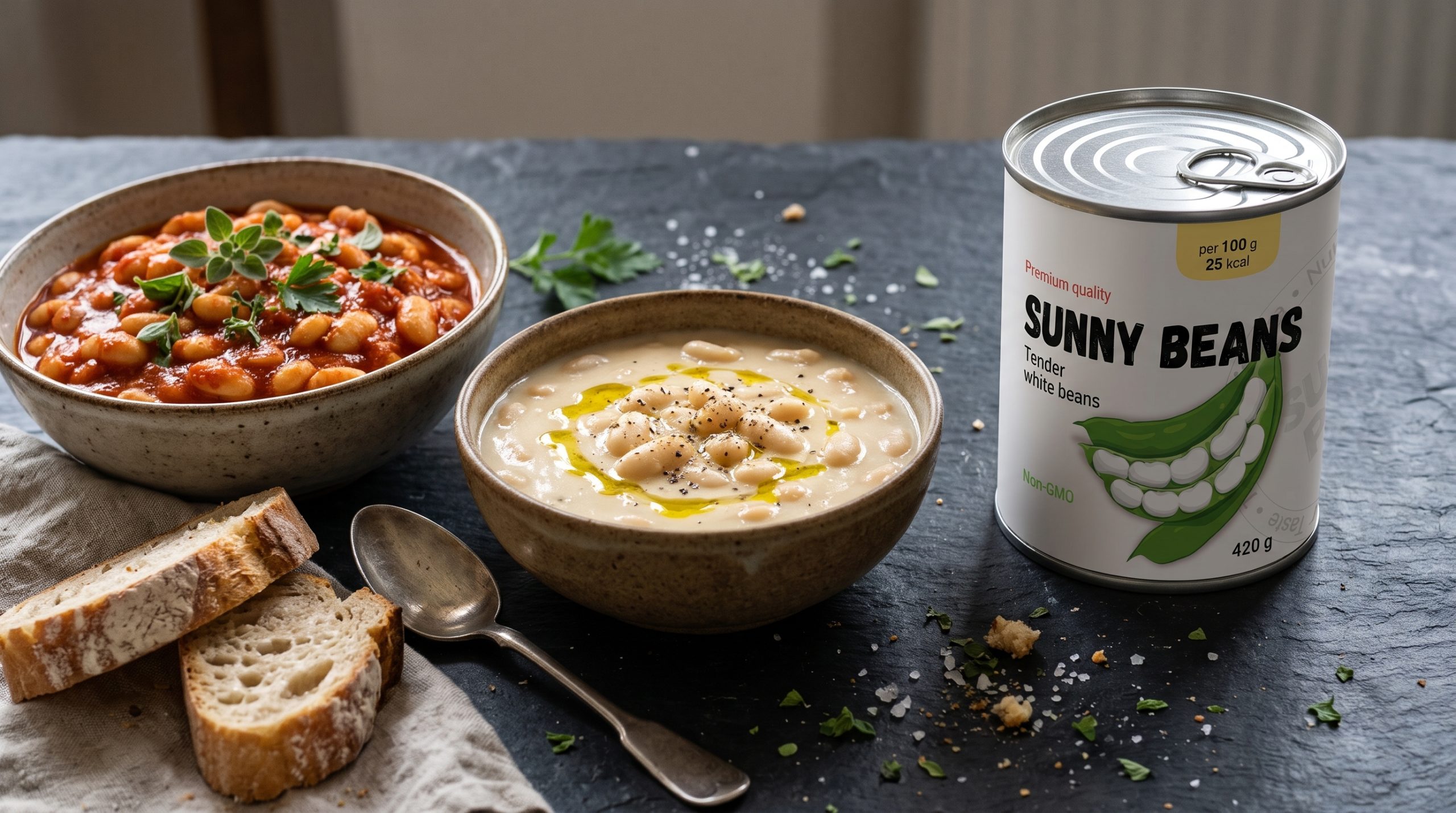
Canned white beans are a staple ingredient across commercial HoReCa kitchens, catering operations, ready-meal manufacturing, and modern retail shelves. Their appeal lies in the combination of a mild, creamy flavor and a tender, uniform texture with whole, intact kernels. Cooked white beans readily absorb surrounding aromatics and naturally add body and richness to finished dishes. Modern canning formats present this product in two distinct sauce mediums—white sauce and tomato sauce. The white sauce delivers a light presentation and smooth coating, while the red tomato sauce imparts bold color and a defined flavor profile. Both options enable chefs and ready-meal producers to achieve consistent culinary results with minimal preparation. For importers, distributors, and foodservice operators across international markets, canned white beans provide an efficient pantry solution thanks to immediate culinary readiness and an extended shelf life. Equally versatile across applications, the product performs reliably in soups, stews, and salads, as well as pureed into spreads, dips, and fillings.
Natural Origin and Botanical Profile of Phaseolus vulgaris
The product is based on the legume species Phaseolus vulgaris—white beans valued for their mild, creamy flavor profile and tender texture. In international B2B supply chains, commercial supply originates from China.
Depending on the cultivar, white bean kernels may be either rounded or elongated. Both morphological types are widely used in foodservice and manufacturing, as thermal processing yields whole, tender-to-soft yet intact kernels without overcooking. This balance of kernel integrity and flavor absorption makes Phaseolus vulgaris well suited for soups, stews, casseroles, and salads.
Across international commodity trade and professional culinary specifications, canned white beans are cataloged under established multilingual trade names to help buyers and food technologists identify the exact SKU:
- English: white beans, canned white beans, haricot beans;
- Spanish: alubias blancas, judías blancas;
- French: haricots blancs, haricots en conserve;
- German: weiße Bohnen, weiße Bohnen in Dosen;
- Italian: fagioli bianchi, fagioli bianchi in scatola;
- Ukrainian: біла квасоля, консервована біла квасоля.
Sensory Profile and Culinary Balance of Both Sauces
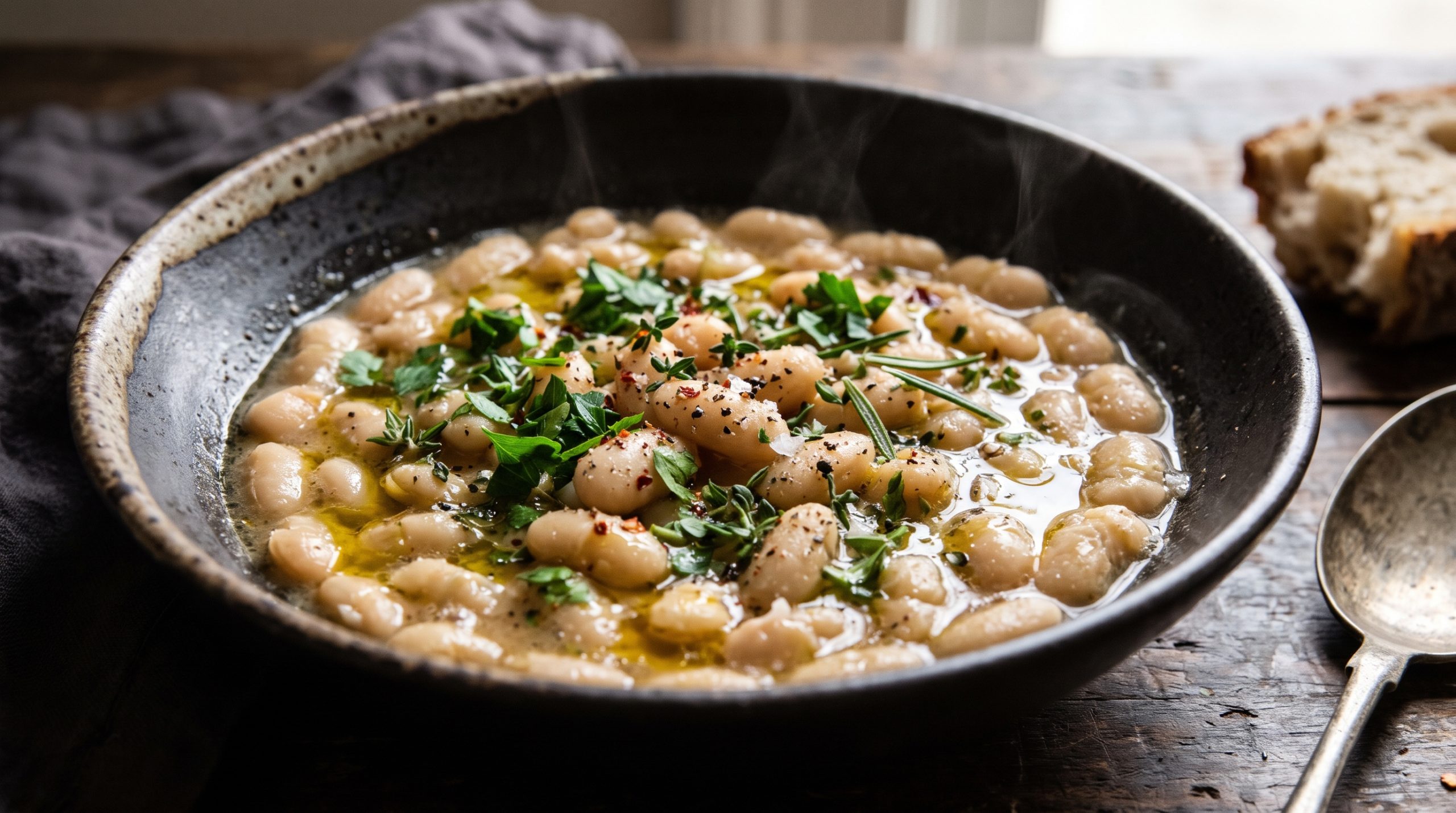
Cooked white beans are characterized by a mild, creamy taste and a smooth, tender texture that absorbs surrounding seasonings effectively. During cooking, they naturally contribute thickness and richness to dishes. The packing medium defines the final character of the product, shaping both its flavor profile and visual presentation on the plate.
Canned Beans in White Sauce: Light Presentation and Smooth Coating
The white sauce formulation delivers a light visual presentation and a smooth coating over the kernels. In this format, white beans account for 55–60% by weight, packed in a base of water (25–30%), vegetable oil (3–5%), and wheat flour or modified starch (2–4%), seasoned with sugar (1–2%), salt (1–1.5%), and spices (0.5–1%).
The acidity of the white sauce measures pH 5.5–6.5. Kernels packed in this medium range from cream to light beige in color, enveloped in a smooth, cohesive sauce.
Beans in Tomato Sauce: Distinct Color and Defined Flavor Profile
The second format—white beans in tomato sauce—is tailored for soups, stews, casseroles, and ready-meal production. Retaining the same 55–60% bean share, the recipe comprises 30–35% tomato sauce, 1–2% sugar, 1–2% vegetable oil, 1–1.5% salt, and 0.5–1% spices. The tomato sauce maintains an acidity level of pH 4.0–4.5.
Visually, this pairing creates clear contrast, with cream-colored kernels standing out against the red tomato base. Unlike the white sauce variant, the tomato sauce provides vibrant color and a distinct savory profile while requiring minimal preparation before service.
Anatomy of Quality: Raw Material Selection and Bean Integrity
A critical quality benchmark for canned pulses is the balance between tenderness and structural integrity. In finished production, white bean kernels remain whole, tender or soft, and intact without splitting or mushiness. This texture preserves clean visual appeal whether served in the sauce or drained for salads and vegetable medleys.
Equally important for retail buyers and commercial kitchens is the ratio of solid ingredient to packing medium. Bean content in the finished product is at least 55% of net weight, formulated at 55–60% in the recipe. Maintaining a minimum 55% bean fill by net weight represents a key commercial advantage for importers, distributors, and foodservice operators.
- whole, intact kernels with no overcooking or disintegration;
- bean color ranging from cream in tomato sauce to cream or light beige in white sauce;
- smooth coating in the white sauce format or pronounced red color in the tomato sauce format;
- consistent salt content controlled at 1–1.5% across both formulations.
Culinary Applications Across HoReCa and Retail
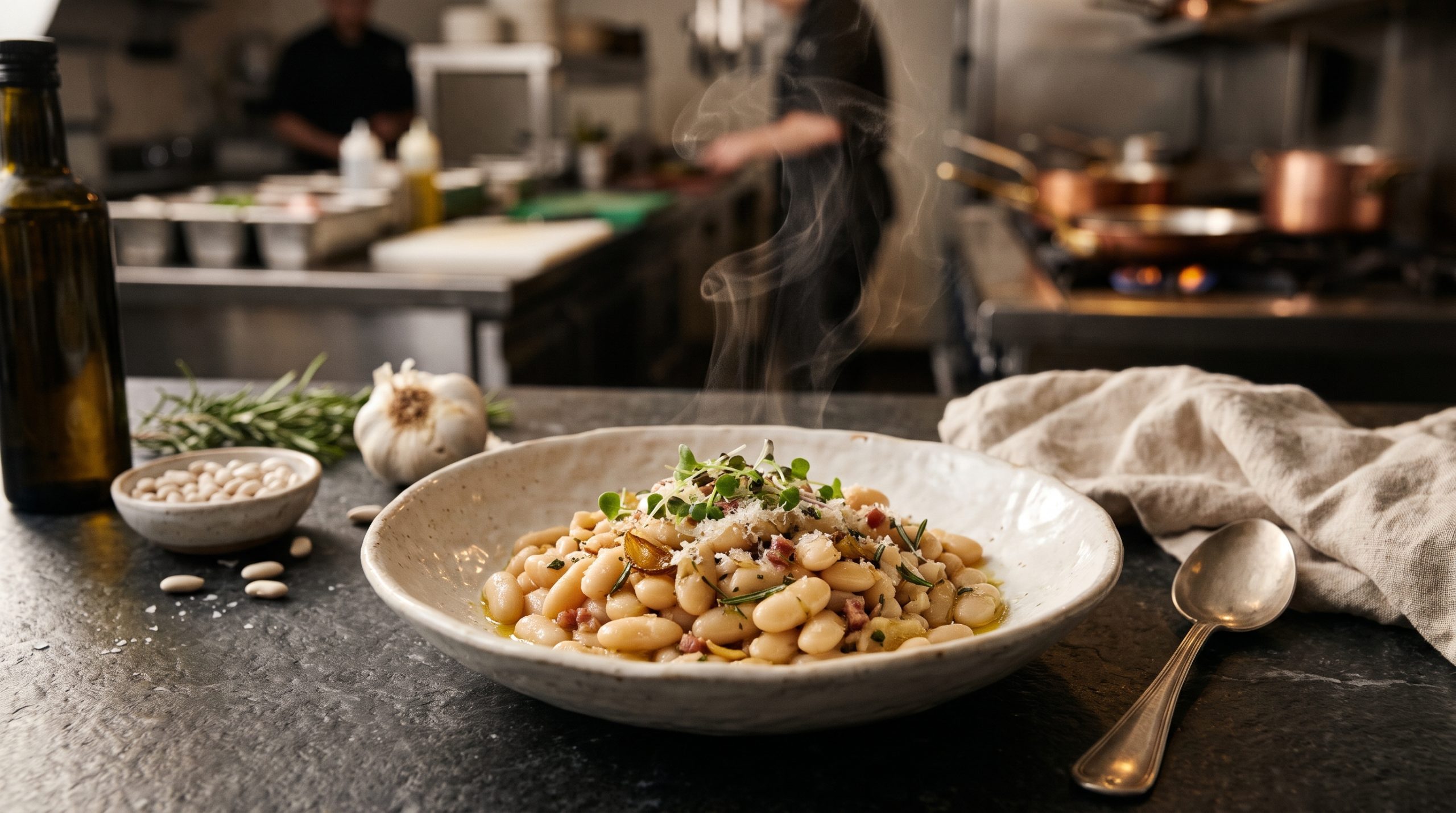
Ready-to-use white beans in sauce support broad menu versatility, requiring minimal handling prior to plating or further processing. Depending on the recipe, chefs can either drain the kernels or incorporate them directly with the sauce.
Tomato Sauce Applications: Stews, Casseroles, Soups, and Vegetable Medleys
White beans in tomato sauce pair whole, creamy kernels with the distinct color and savory character of the tomato medium. Across commercial kitchens and home cooking, they are incorporated into soups, warm stews, casseroles, and vegetable medleys. Immediate culinary readiness makes this format practical for both HoReCa kitchens and industrial ready-meal lines.
White Sauce in Soups, Salads, and Mediterranean Dishes
The mild, creamy flavor of white beans and the light appearance of the white sauce integrate naturally into Mediterranean-style dishes. The beans add body and richness to soups while performing effectively across salad bars and composed salads.
Professional Techniques for HoReCa, Catering, and Ready-Meal Producers
For HoReCa operators, caterers, and ready-meal manufacturers, canned white beans offer operational versatility and textural stability. Beyond whole-kernel applications in salads, stews, casseroles, and vegetable medleys, the beans can be pureed into smooth spreads, dips, and savory fillings. On retail shelves, the white and tomato sauce variants function as two distinct SKUs addressing different consumer cooking occasions.
Nutritional Value per 100 g
Across everyday diets and institutional menus, canned white beans provide protein, carbohydrates, and dietary fiber. Per 100 g, white beans in white sauce deliver 5–7 g protein, 3–5 g fat, 12–16 g carbohydrates, 3–5 g dietary fiber, and an energy value of 100–125 kcal.
Per 100 g in tomato sauce, the product provides 5–7 g protein, 1–2 g fat, 14–18 g carbohydrates, 4–6 g dietary fiber, and 90–115 kcal. Salt content in both variants is 1–1.5%. The comparative nutritional profile from the manufacturer specification is outlined below.
| Parameter (per 100 g of product) | White Beans in White Sauce | White Beans in Tomato Sauce |
|---|---|---|
| Energy value | 100–125 kcal | 90–115 kcal |
| Protein | 5–7 g | 5–7 g |
| Fat | 3–5 g | 1–2 g |
| Carbohydrates | 12–16 g | 14–18 g |
| Dietary fiber | 3–5 g | 4–6 g |
| Salt content | 1–1.5% | 1–1.5% |
Production Technology and International Safety Standards
Cooked white beans in white and tomato sauces are thermally processed to achieve commercial sterility with no pathogenic microflora present. Finished pH levels are maintained at 5.5–6.5 for white sauce and 4.0–4.5 for tomato sauce, supporting a 36-month shelf life.
Every production lot undergoes laboratory analysis. Full manufacturer specifications, certificates of quality, and copies of valid certifications are provided alongside commercial offers (see the quality control and international standards section of MIC-TRADE for further details).
Manufacturing facilities operate under the following international certifications:
- ISO 9001:2015 — quality management system;
- ISO 22000:2018 and HACCP — food safety management systems;
- ISO 14001:2015 — environmental management system;
- BRCGS — global food safety standard;
- Kosher OU — kosher compliance certification.
Procurement Options for Retail, HoReCa, and MIC-TRADE Export Programs
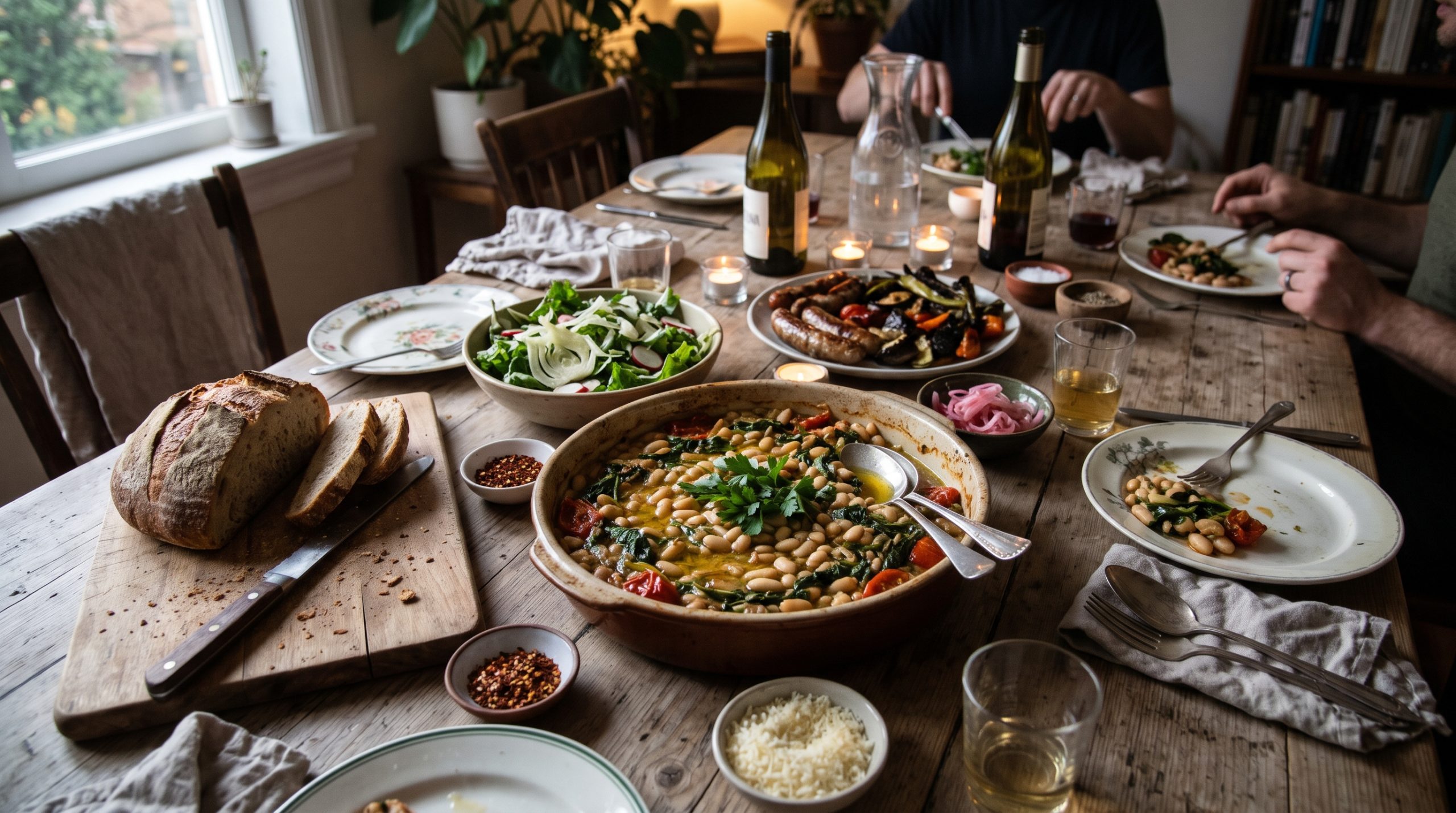
For retail chains, foodservice operators, and international distributors, canned white beans are supplied in 420 g net weight metal cans packed 24 cans per carton, with a 36-month shelf life. Offering two clearly differentiated sauce profiles—white sauce and tomato sauce—allows buyers to merchandise two complementary retail SKUs or cover multiple kitchen applications. Importers can also consolidate mixed-product orders, combining white beans with red kidney beans within the MIC-TRADE canned beans range.
Across export markets, both sauce variants are available under the Sunny Beans brand as well as under buyer-owned Private Label programs. Full private-label execution includes alignment on product specifications, mandatory labeling languages, and artwork approval prior to production.
International B2B container shipments are available from a minimum order quantity of 2 containers under CIF and other Incoterms tailored to the destination port or country. Each consignment is accompanied by a complete export documentation package: commercial invoice, packing list, Bill of Lading, certificate of origin, certificate of quality, laboratory analysis report, and product specification. To discuss packaging terms, mixed-container assortments, or private-label launches, reach out via the MIC-TRADE contacts page.