

Competition in Europe’s Canned Vegetable Market: How Processors Are Optimizing Production Costs
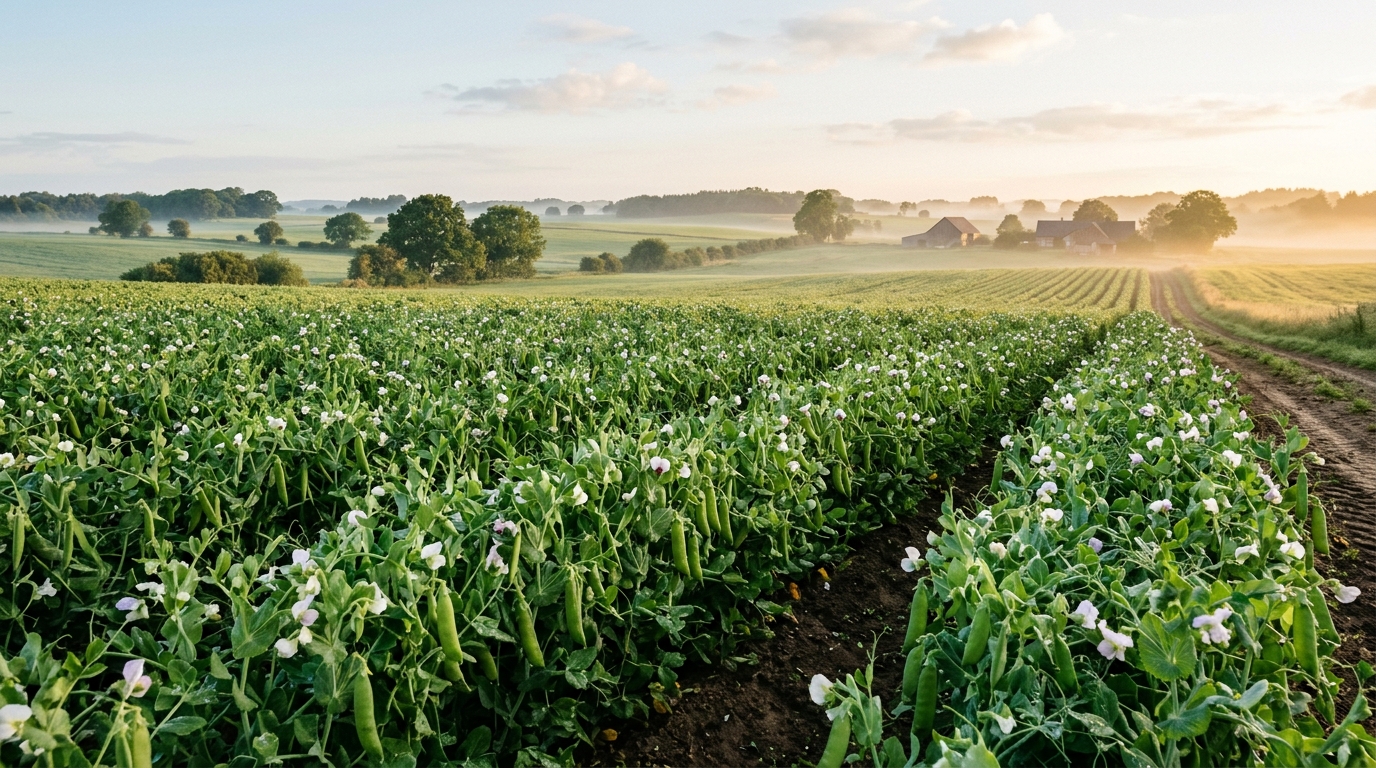
A 6.5% decline in the European pea harvest, combined with the record expansion of retail private labels, is forcing EU canning groups to overhaul their production footprint, energy balance, and contracting structures.
Shrinking Raw-Material Base and Record Retail Expansion in the EU
According to operational estimates from the European Commission’s Directorate-General for Agriculture and Rural Development (DG AGRI), published as part of its ongoing pulse crop monitoring, total EU pea production in the current marketing cycle has fallen by approximately 6.5% to 2.27 million tonnes. This contraction has triggered a wave of cost optimization across the canning sector. The European canned vegetable market, which accounts for roughly 36–37% of the global green pea category by value, has entered a phase of structural restructuring: the sharpest reductions in planted acreage have been recorded in traditional Western European growing regions — primarily France and Germany — only partially offset by expanded output in Central, Eastern, and Northern Europe.
Alongside tighter raw-material supplies, pricing pressure from retail chains has intensified. According to PLMA and Circana market panels, the share of Private Label products across key European grocery markets has reached a record 50% by volume and approximately 39.5% by value across 17 countries in the region. In markets with a high concentration of discounters, notably Spain and the Netherlands, this share reaches 56–59%.
Shelf-stable canned vegetables — and green peas in particular — rank among the categories with the highest penetration of retailer-owned brands. As a result, leading European processing groups find themselves in a double squeeze: shrinking local raw-material supply prevents any reduction in procurement costs, while supermarket tender policies strictly limit the ability to pass production inflation on to retail shelf prices.
Key Drivers of Rising Operating Costs for Processors
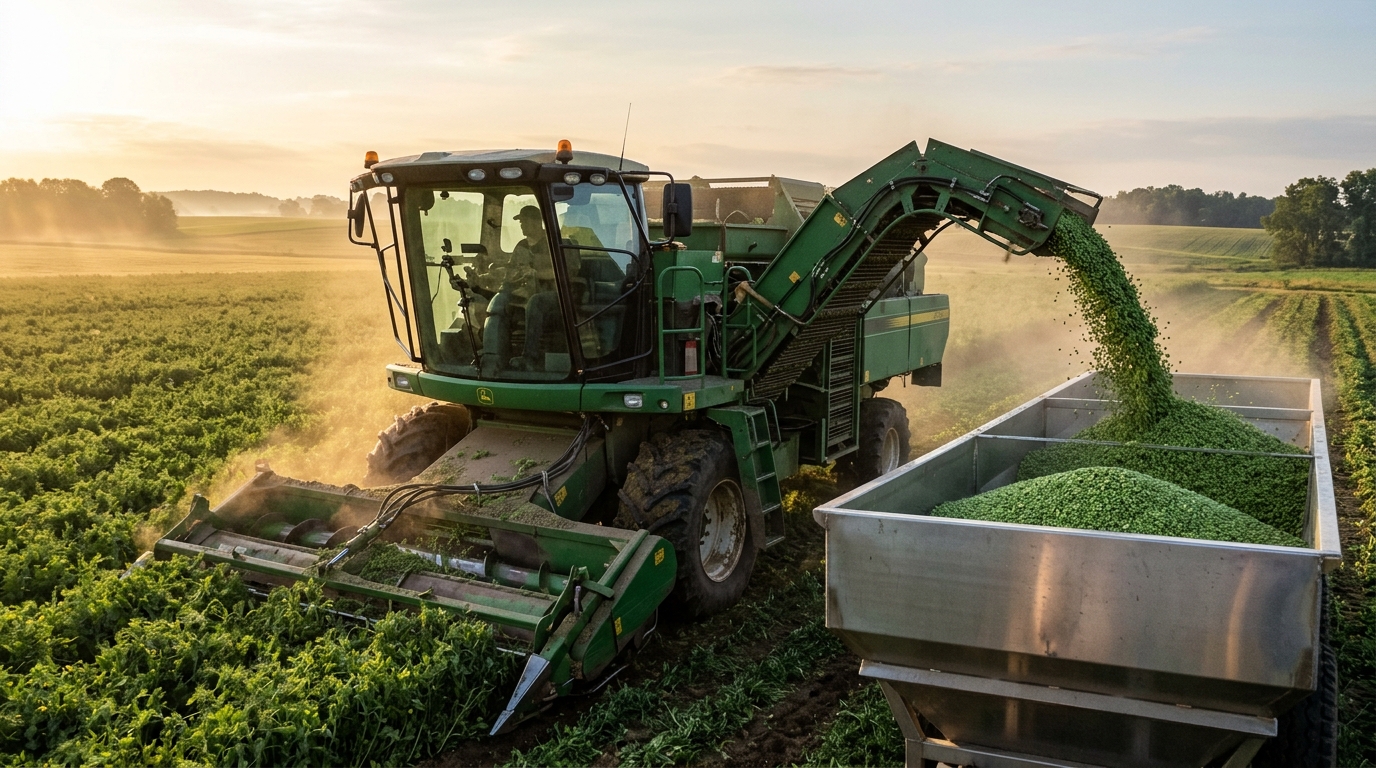
The root cause of the current restructuring wave is a convergence of climatic, energy, and regulatory pressures that have directly amplified the impact of the smaller harvest. In Western Europe, spring and summer droughts and heat stress have reduced yield predictability for early- and mid-season pea varieties, prompting some growers to reallocate acreage toward more resilient crops. This has automatically heightened competition for contracted hectares near existing canneries, widening the gap in the raw-material balance.
A second structural driver is persistently high energy and metal packaging costs. Although acute industrial energy price spikes in Europe have subsided, the cost of thermal energy required for retort sterilization remains substantially higher than in competing regions outside the EU. At the same time, stricter environmental standards, steel-sector decarbonization, and packaging waste regulations are keeping electrolytic tinplate prices on an elevated plateau, leaving processors with little room to cut packaging expenses.
Additional pressure stems from Europe’s protein autonomy strategy. Under the EU’s updated agricultural policy, cooperatives and agro-industrial hubs are redirecting pulse volumes into deep processing — producing plant protein isolates, textured vegetable protein, and dietary fiber. The higher margins offered by bioprocessing projects create internal competition for the same raw-material base already constrained by the 6.5% harvest drop, doubling the strain on conventional canning lines.
Why This Contraction Hits Margins Hard: The Mechanics of the Pea Market
A 6% acreage reduction in France and Germany hits cannery margins disproportionately hard because of the biological and technical characteristics of the category, which rule out compensating through long-distance raw-material sourcing. High-grade canned green peas harvested at milky maturity require an extremely tight interval between field harvesting and thermal sterilization — measured in a matter of hours. Because rapid sugar loss and starch conversion degrade quality, raw peas cannot be transported economically over long distances. Every processing plant is therefore tied strictly to harvests within a limited radius, turning a 6–7% local output decline into a structural rather than temporary challenge.
When local yields drop, processors face a disproportionate rise in fixed unit costs. The seasonal processing window lasts only a few weeks, during which a plant must amortize the upkeep of steam boilers, blanching, sorting, and retort lines. Underutilization during peak weeks caused by lower raw-material intake immediately inflates unit production costs — a shortfall that cannot be recovered during the off-season. Consequently, processors can neither lower prices under retail pressure nor raise them without risking the loss of Private Label contracts.
Simultaneously, shifting retail demand has further narrowed pricing flexibility. Grocery chains have moved beyond basic economy private-label tiers into multi-tiered segmentation, including mid-tier, organic, and clean-label lines. This erodes the price premium that branded manufacturers previously relied on to offset cyclical increases in raw-material, labor, and energy costs. Taken together, these dynamics explain why the industry is pursuing structural rather than cosmetic optimization.
Industry Response: Capacity Consolidation and Supply-Flow Reallocation

In response to margin compression, major European agri-processing groups have moved decisively to optimize their manufacturing portfolios. Site consolidation is accelerating across the sector: less efficient local lines in regions with high labor and energy costs are being scaled back or placed under restructuring, while capital investment is being concentrated in high-productivity clusters in Central and Eastern Europe. This enables groups to rebalance their operating cost base without losing access to core destination markets.
In parallel, technological modernization across canning facilities is gathering pace. Processors are investing in retort heat-recovery systems, cogeneration units, and biomass transitions to reduce exposure to volatile natural gas and electricity markets. On the raw-material side, adoption of digital field monitoring and resource-efficiency tracking is expanding, helping synchronize harvest schedules across varieties with staggered maturity windows and extend continuous line utilization.
Across international trade flows, importers, distributors, and HoReCa operators are increasingly diversifying their sourcing geography. Rather than relying solely on suppliers in regions facing a shrinking raw-material base, buyers are assembling balanced supply baskets that incorporate producers from Eastern Europe and alternative agricultural corridors maintaining competitive cost structures and consistent specifications for grain caliber and tenderness.
Conclusions and Market Outlook
Analytical Takeaway: The recorded decline in the EU pea harvest has acted as a catalyst for structural industry reorganization whose effects extend well beyond the current production cycle. The combination of tighter raw-material availability, record Private Label pressure, and rising competition from the plant-protein sector will continue to weigh on canning margins. Over the next 6–12 months, the primary market tension will remain the cost gap between energy-intensive sites in Western Europe and more agile manufacturing clusters in Central and Eastern Europe — driving further supply consolidation and a geographic redistribution of contracting.
Practical Takeaway: For international importers, distributors, and retail chains, the current cycle calls for a strategic shift toward multi-regional supplier diversification. Relying on a single agricultural region heightens the risk of specification shortfalls driven by localized weather volatility or individual plant restructurings. Supply chain resilience increasingly depends on early seasonal volume planning, clear alignment on varietal and technical parameters, and direct access to processors with modernized energy infrastructure.
MIC-TRADE (International Food Trading Company): MIC-TRADE is an international food trading company specializing in food commodity supply and developing trade links between producers and buyers across global markets. We organize international supply chains, identify manufacturing partners, align product specifications, and support export-import operations. Particular focus is placed on product characteristics, manufacturing standards, quality control, and commercial transparency. Full product range and specifications are available on the canned green peas page. To discuss supply opportunities and international cooperation, reach out to our team via the contact page.