

Global Canned Peach Exports: Confectionery Industry Expands Order Volumes

Recovering harvests in Southern Europe and stabilizing global supply are prompting industrial confectioners and bakery groups to increase procurement of processed peaches. Rising B2B order volumes are reshaping canning line utilization across key exporting countries.
Greek Exports Return to 240,000–300,000 Tonnes as Confectioners Expand Contracting
In the current marketing cycle, stone fruit harvest volumes in Greece rose by more than 30% compared with the previous weather-driven dip. This has enabled the country to return to its normal operating export corridor for canned peaches of 240,000–300,000 tonnes per year. In Spain, the total peach and nectarine harvest increased by around 5–6%. According to USDA FAS and the Greek Canners’ Association (EKE), amid subdued retail demand, it is confectionery plants, industrial bakeries, and dessert filling manufacturers that are expanding forward contracting and driving the bulk of order growth.
Greece’s weight in this supply chain is decisive: the country accounts for 55% to 60% of global canned peach exports and ships more than 98% of its output to foreign markets. Consequently, any shift in its harvest is immediately reflected in global supply.
Alternative processing hubs remain active. China, which accounts for more than 70% of global gross peach production, is scaling up exports of processed products to Asia, the Middle East, and Europe. South Africa supplies around 15–16% of global canned stone fruit exports, shipping approximately 85% of its domestic output abroad. Chile is strengthening its position as a supplier of processed fruit and purees to markets across the Americas.
Why Now: Drivers Behind Stronger Confectionery Procurement
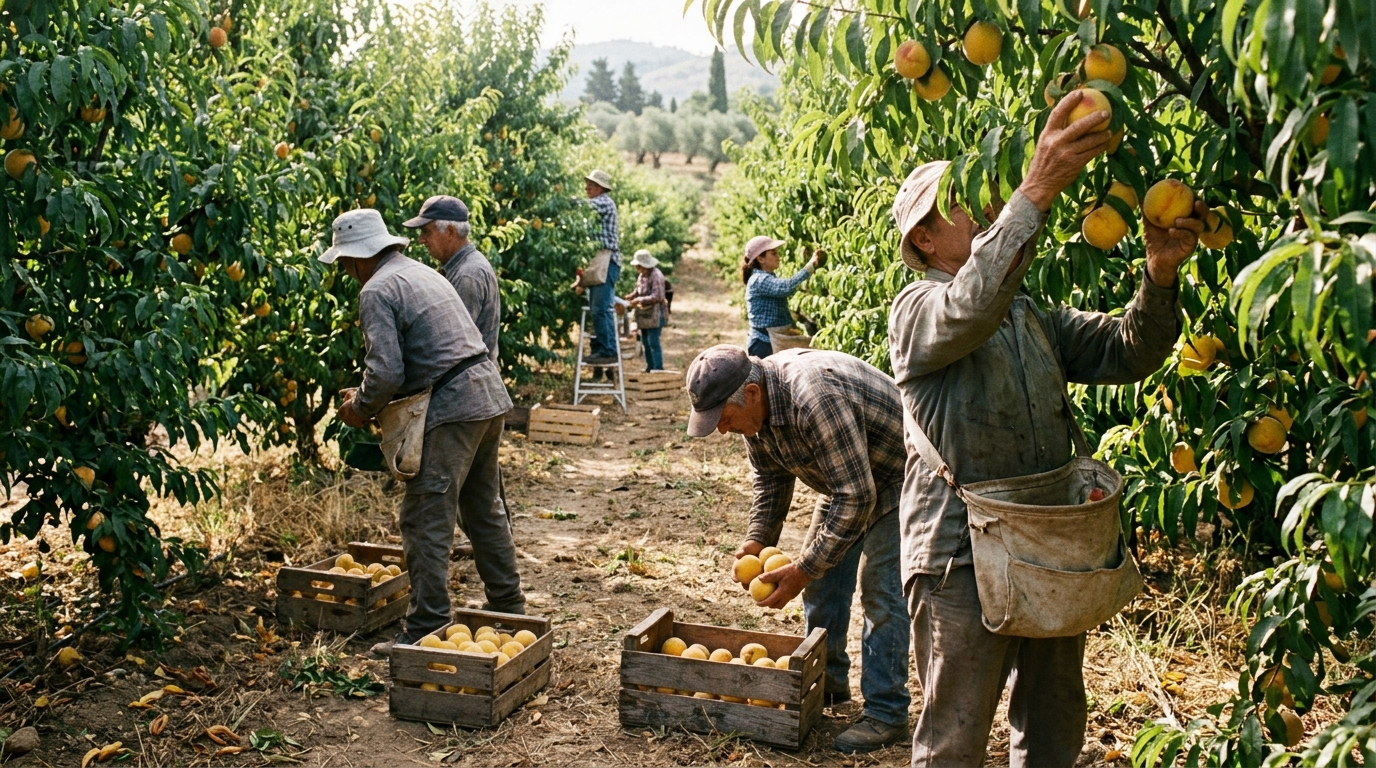
The increase in orders from the confectionery and bakery sectors is a direct response to the harvest recovery. Following several prior cycles marked by spring frosts, extreme heat, and raw material disruptions in Central Macedonia (Imathia, Pella, and Larissa), the return of stable volumes has removed the risk of acute shortages. Predictable supply has eased price overheating and restored canned peaches to the category of economically attractive fruit ingredients.
A second driver is recipe optimization. Amid elevated volatility across cocoa products, nuts, and certain fresh berries, manufacturers of pastries, pies, tarts, and dairy desserts are expanding the share of fruit SKUs with predictable input costs. Canned peaches help maintain stable margins on high-volume product lines without exposure to seasonal fluctuations in the fresh market.
Competition between Mediterranean and Asian exporters provides additional momentum. Active Chinese supply is curbing aggressive price increases by European processors, encouraging multinational confectionery groups to lock in larger volumes in advance.
Capacity Impact: Competition for Processing-Grade Clingstone Varieties
Rising industrial orders directly target yellow processing-grade clingstone peaches. Their firm flesh preserves cut geometry during baking and blast freezing, meaning the confectionery segment competes for the exact same raw material as retail canning lines.
As a result, capacity allocation inside canneries is shifting. A substantial share of raw fruit is being redirected from retail-pack lines toward industrial specifications—calibrated dices, uniform slices, and halves in bulk-format packaging or aseptic bags. These formats form the core offering in the canned peaches market for industrial bakeries and dessert production lines.
Additional pressure is building on inter-seasonal inventories. As the confectionery sector increases annual consumption, strain on carryover stocks between the Northern Hemisphere season (Greece, Spain, China) and the Southern Hemisphere counter-season in South Africa’s Western Cape and Chile’s producing regions intensifies. Coordinating shipments across both hemispheres is therefore becoming critical.
Industry Response: Processor Adaptation and Shifting Trade Flows

European processors in Greece and Spain are responding to industrial buyer demand with a more flexible production mix, increasing the share of calibrated cuts and options packed in light syrup or natural juice. At the same time, the operating environment remains tight: plants are investing in line upgrades to comply with stricter European standards on lightweight tinplate, while factoring rising irrigation costs and seasonal harvest labor shortages into their cost models.
Across trade flows, procurement strategies are becoming more clearly segmented. Premium bakery and dairy-fruit dessert producers in Western and Central Europe largely maintain their focus on Mediterranean origin due to stringent traceability and food safety requirements. Mass-market players and non-EU destinations are increasingly combining sourcing from China, South Africa, and Chile to optimize logistics and diversify climate risk.
The shift also affects retail and the HoReCa sector. As the confectionery industry absorbs a growing share of high-grade processing fruit, international retail chains are revising assortment planning schedules and booking volumes earlier for Private Label ranges. This helps prevent supply gaps in classic halves and slices during peak demand periods.
Conclusions and Market Outlook
Analytical Takeaway: The global canned peach market is entering a phase of relative raw material equilibrium, where recovered Southern European supply and large-scale Asian exports are balanced by rising industrial consumption. Over the next 6–12 months, the primary point of tension will not be an overall tonnage deficit, but competition for high-grade processing fruit between the industrial sector and traditional retail against a backdrop of production cost inflation at processors.
Practical Takeaway: For importers, distributors, retailers, and food manufacturers, the growing role of the confectionery segment underscores the need for early strategic supply planning. Diversifying origins across the Northern and Southern Hemispheres and working through verified export channels are becoming essential to supply chain stability amid climate variability and shifting processing capacity.
MIC-TRADE (International Food Trading Company): MIC-TRADE is an international food trading company specializing in the supply of food commodities and the development of trade relationships between producers and buyers across global markets. We organize international supply chains, source manufacturing partners, align product specifications, and support export-import operations. Particular focus is placed on product characteristics, manufacturing standards, quality control, and transparent commercial terms. You can review our product range and specifications on the canned peaches page. To discuss supply, distribution, and international cooperation opportunities, contact our team via the contacts page.