

Global Tomato Harvest Drops to 39.37m Tonnes as Low European Brix Tightens Concentrated Paste Supply

Updated estimates from the World Processing Tomato Council (WPTC) point to a 2.6–3.4% decline in global processing volume alongside falling soluble solids levels across Southern Europe. Even with lower raw tomato prices and carryover inventories, reduced yields of high-concentration paste are constraining availability on the global market.
Scale and Key Figures: Global Processing Contraction and Regional Divergence
According to the latest figures from the World Processing Tomato Council (WPTC), global processing tomato volume for the current season is estimated at 39.37 million tonnes, down 2.6–3.4% from the preceding cycle. Over the same period, average global reference prices for raw processing tomatoes have declined by roughly 5%.
Performance across major producing regions has diverged sharply. California concluded its harvest campaign at approximately 9.37 million tonnes, marking an 11.1% contraction. By contrast, Italy expanded gross output by 8.8% to 6.36 million tonnes, Spain maintained steady volumes, and China reduced planted acreage to draw down export inventories.
Crop quality across the Mediterranean has emerged as the market’s primary bottleneck. In Northern Italy, average soluble solids fell to 4.83 °Bx, leaving effective supply of high-concentration bulk paste significantly tighter than headline raw tonnage figures suggest.
Drivers: Mediterranean Climate Stress and Acreage Adjustments
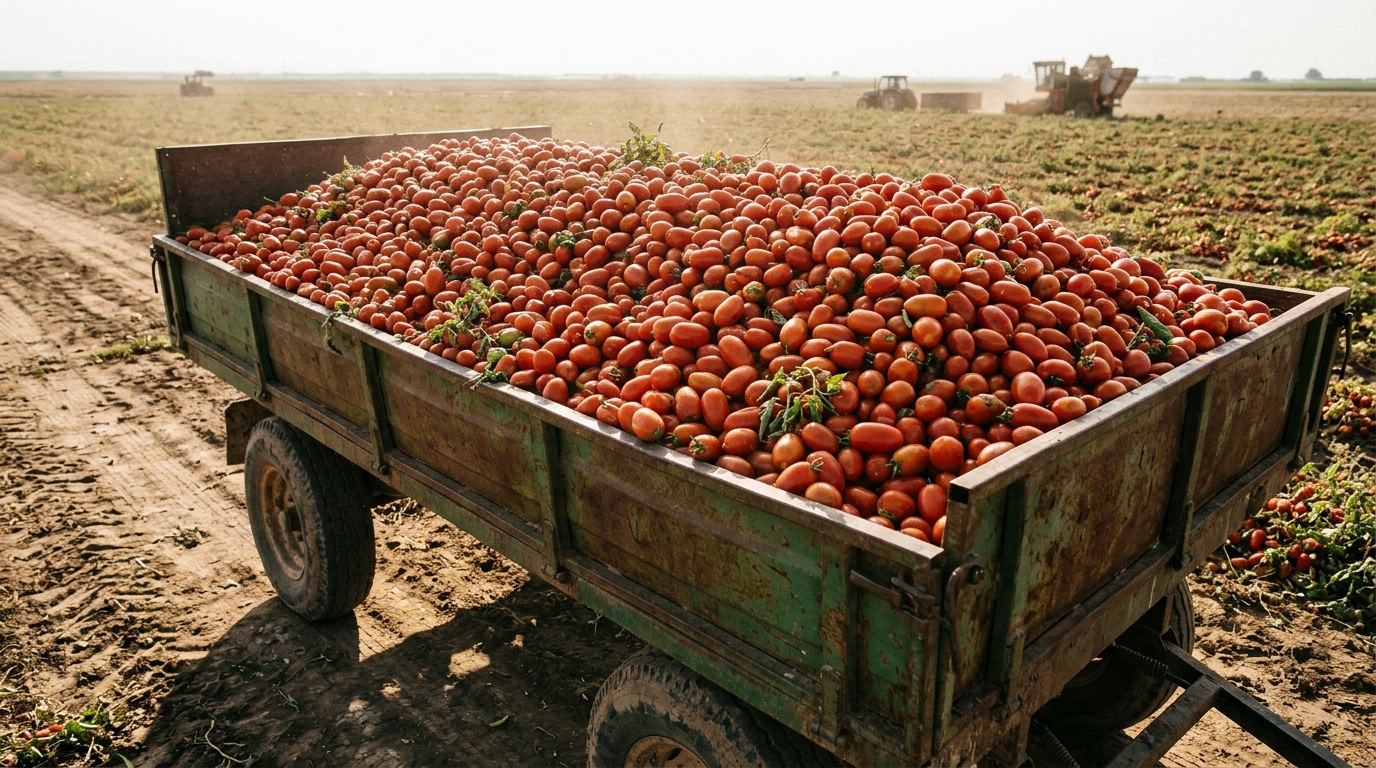
The decline in Brix levels across Southern Europe reflects the combined impact of three agronomic pressures. Intense summer heat disrupted natural sugar accumulation in the fruit, while mite infestations impaired photosynthesis during the peak fruit-sizing phase. Subsequent September rainfall further raised moisture uptake ahead of harvest, pulling soluble solids concentration down to 4.83 °Bx.
The 2.6–3.4% drop in overall global tonnage was driven primarily by acreage reductions in North America and Asia. California’s 11.1% decline reflects lower contracted volumes following previous cycles, while Chinese processors deliberately curtailed plantings to accelerate the clearance of warehoused stocks.
Spain, meanwhile, avoided a drop in gross harvest thanks to well-stocked reservoirs that sustained consistent irrigation throughout the growing season. Even so, steady Spanish tonnage was insufficient to offset the broader European loss in soluble solids.
Category Market Mechanics: How Brix Levels Shape the Paste Balance
International trade in bulk tomato paste is anchored to standardized soluble solids concentrations of 28–38%. When raw fruit solids drop to 4.83 °Bx, processors must intake substantially more fresh tomatoes and evaporate greater volumes of water to produce each tonne of finished concentrate.
Because of this conversion ratio, higher gross raw tonnage does not translate into a proportional increase in finished paste. Even with Italy’s 8.8% harvest expansion, net output of high-concentration product remains constrained while unit energy costs across evaporation lines rise.
This conversion bottleneck is providing a structural floor for market pricing. Under normal fruit quality, a 5% decline in raw tomato reference prices alongside carryover stocks from prior cycles would weigh heavily on quotes; instead, tight availability of 28–38% paste is preventing a sharp downturn.
Industry Response: Reallocating Flows and Prioritizing Concentration
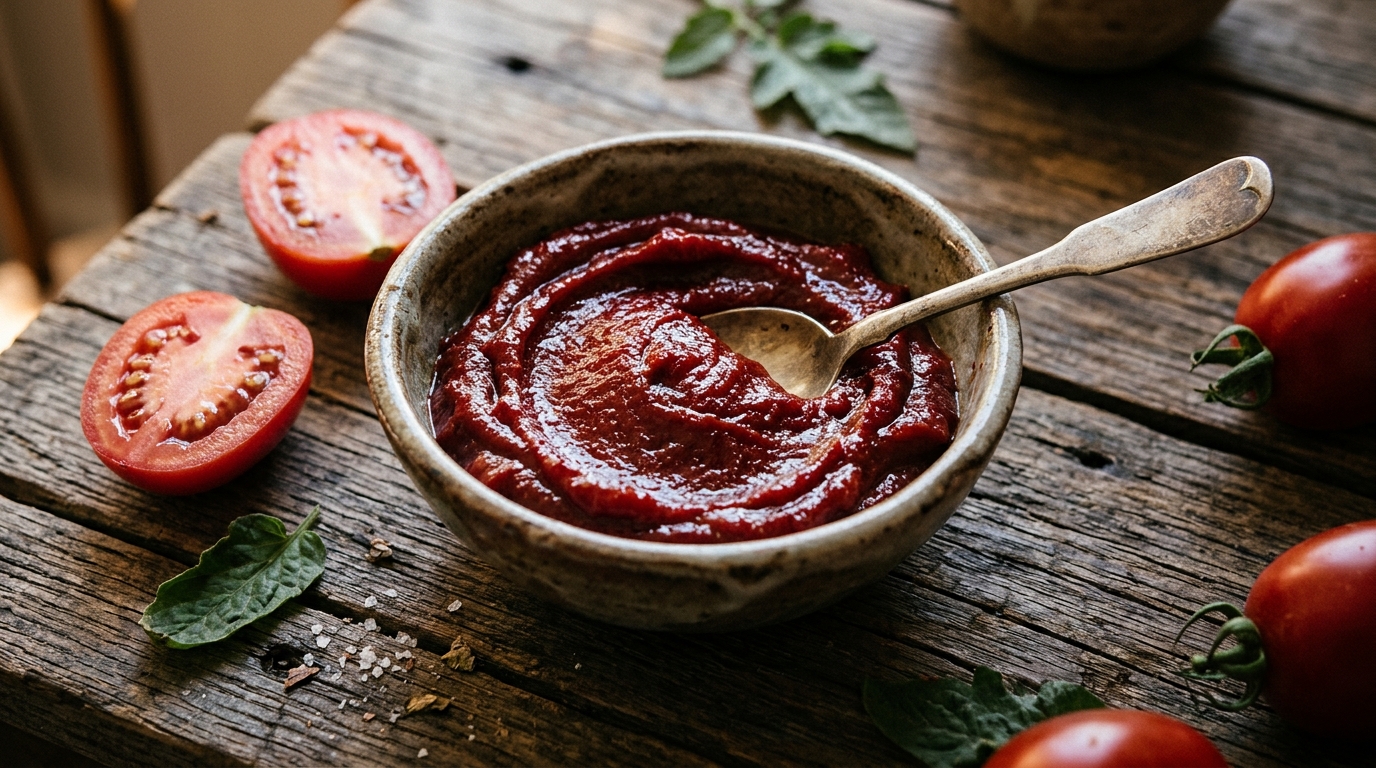
Processors and international traders are recalibrating commercial strategies around the gap between raw fruit volume and dry-matter yield. European producers are directing higher-Brix lots toward 36–38% concentrated paste and higher-margin formats, curbing spot availability of bulk concentrate.
Global trade flows are rebalancing through origin switching. Against California’s 11.1% output drop and European Brix constraints, international buyers are drawing more heavily on China’s carryover export inventories and steady Spanish supply.
Across retail, foodservice (HoReCa), and industrial sauce manufacturing, specification flexibility is increasing. Downstream manufacturers are blending raw materials from multiple origins and adjusting viscosity parameters to safeguard continuity of supply.
Conclusion
Analytical Outlook: The global tomato processing market is balancing a moderate contraction in raw tonnage to 39.37 million tonnes (-2.6–3.4%), available carryover stocks, and a sharp drop in European soluble solids (4.83 °Bx in Northern Italy). Over the next 6–12 months, market tension will remain centered on the 28–38% high-concentration paste segment, where Chinese inventory drawdowns will only partially offset tighter European supply and help sustain a price floor.
Commercial Takeaways: For processors, importers, and retail buyers, supply planning requires shifting focus from headline harvest tonnage to actual regional dry-matter yields. Procurement resilience will depend on multi-origin sourcing across the Mediterranean, North America, and Asia, alongside early alignment on flexible concentration specifications.
MIC-TRADE (International Food Trading Company): MIC-TRADE is an international food trading company specializing in food commodity supply and building commercial partnerships between producers and buyers across global markets.
We coordinate international supply chains, source qualified manufacturing partners, align product specifications, and manage export-import execution. Particular emphasis is placed on product attributes, production standards, quality control, and transparent commercial terms.
Explore our product range and specifications in the MIC-TRADE tomato paste catalog. To discuss supply, distribution, and international partnership opportunities, reach out to our team via the contact page.