

Thai Hom Mali Jasmine Rice: Natural Floral Aroma, Tender Texture, and Quality Standards
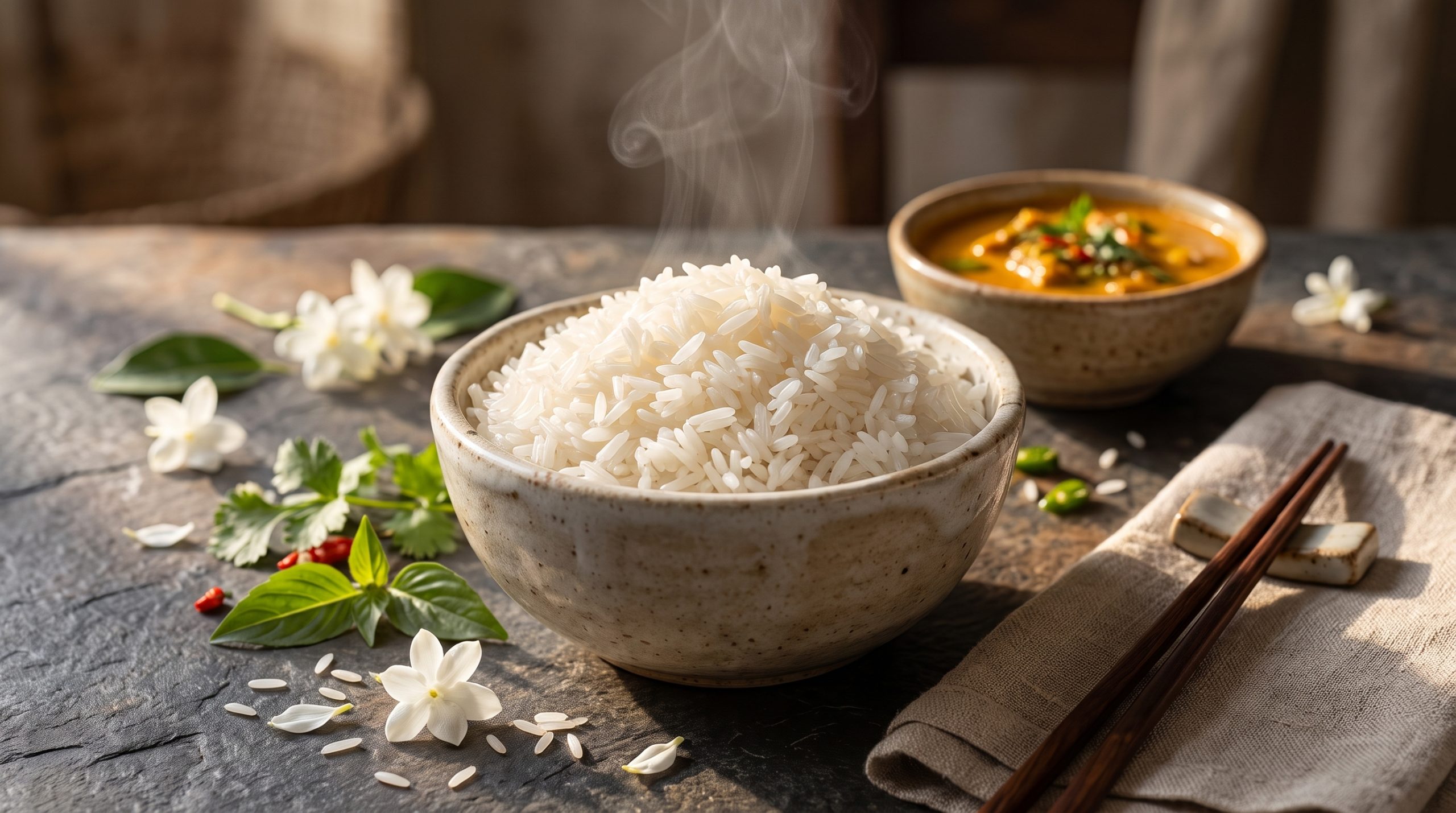
In international gastronomy, certain staple ingredients establish their tier from the first minute of preparation. Thai Jasmine rice, known globally as Hom Mali, occupies that position: its distinct yet delicate floral aroma immediately sets it apart from conventional rice varieties. Unlike neutral, loose-grained regular white rice, fragrant long-grain rice contributes an independent sensory dimension to a dish. After cooking, its elongated whole grains become soft, tender, and slightly cohesive while maintaining clear definition on the plate without breaking down into mush. This balance between aroma, tender texture, and grain integrity makes Thai Jasmine rice a benchmark for commercial kitchens and premium retail assortments across global markets. Below, we examine how origin, whole-grain selection, and international quality standards define the character of Hom Mali.
Natural Origin and Botanical Heritage of Hom Mali
Thai Jasmine rice is a fragrant long-grain variety of the botanical species Oryza sativa originating in Thailand. Across international gastronomy and commodity trade, Hom Mali has established itself as the world’s most recognized Thai rice variety. Its name reflects not added flavorings, but a naturally occurring delicate floral note inherent to the grain itself.
In global trade and foodservice operations, standardized commercial names are used to ensure accurate product identification across regional catalogs and technical specifications:
- English — jasmine rice, fragrant long-grain rice;
- French — riz jasmin, riz parfumé;
- Spanish — arroz jazmín, arroz aromático;
- German — Jasminreis, Duftreis;
- Italian — riso jasmine, riso al gelsomino.
Harvest freshness plays a decisive role in defining the grain’s sensory profile. The natural aroma is most pronounced in new-crop rice.
It is equally important to distinguish Jasmine rice from other dry rice categories. In professional product portfolios, Jasmine rice is classified separately alongside parboiled rice and regular white rice, as each type differs in processing method and end-use performance. Unlike neutral, fluffy regular white rice, Hom Mali combines its floral fragrance with a soft, gently cohesive cooked texture.
Organoleptic Profile: Floral Aroma and Delicate Texture
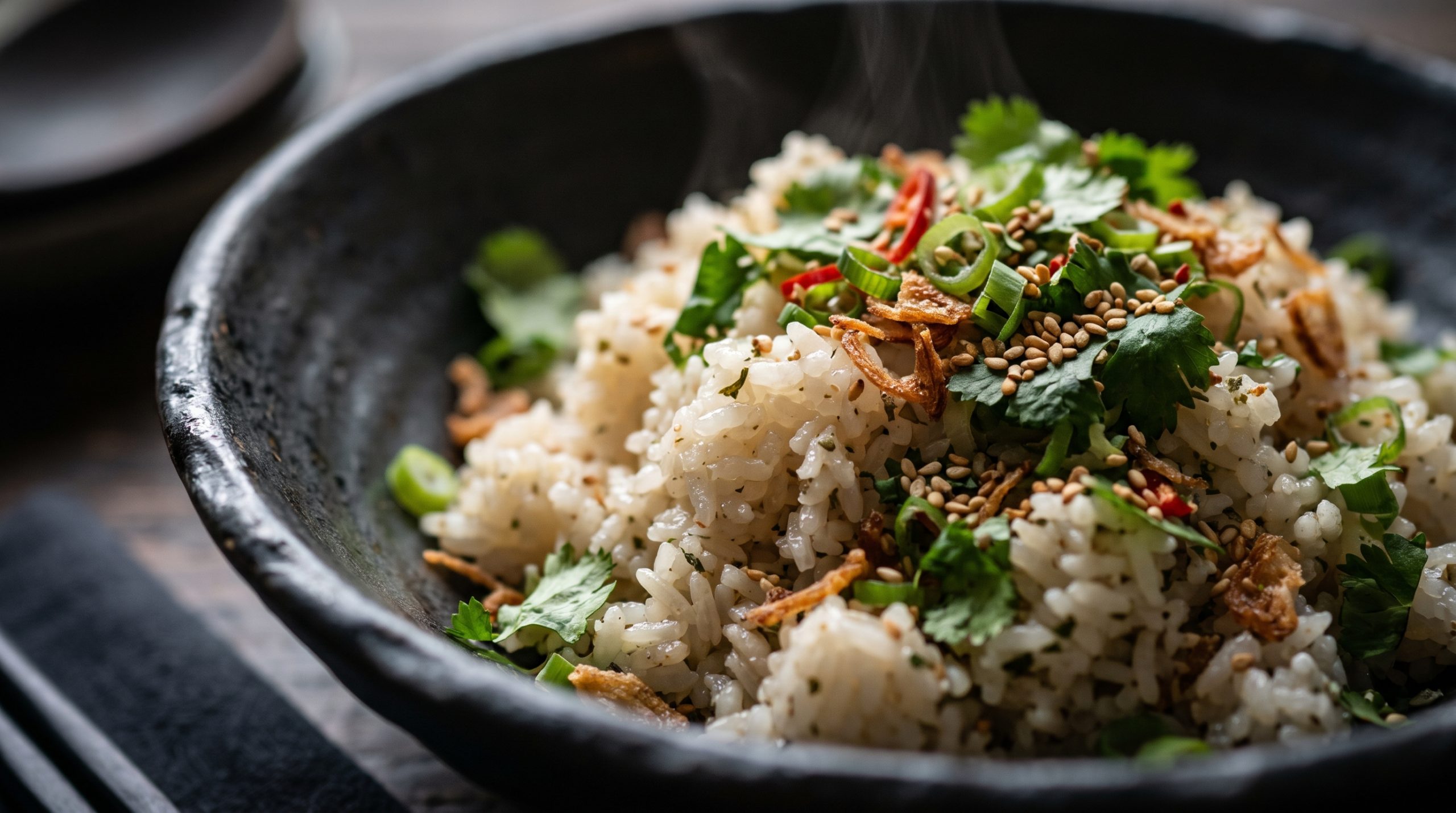
The first impression of Thai Jasmine rice is olfactory, emerging well before tasting. Its distinct, delicate floral fragrance comes from a natural aromatic compound present within the kernel itself—a pure floral aroma free of external flavorings.
Cooked texture is an equally critical parameter for food technologists and chefs. Once cooked, the long grains turn soft, tender, and lightly cohesive while preserving the structural integrity of each kernel. This subtle natural cohesiveness is fundamentally different from overcooked mush: the grains cling lightly without falling apart and hold their shape cleanly on the plate.
How Jasmine Rice Differs from Regular White Rice
Regular white rice yields a neutral flavor profile and a dry, loose structure after cooking. Thai Jasmine rice delivers a distinct performance: its grains cook evenly, resist turning mushy, and retain their form, pairing a soft, delicate texture with a subtle floral aroma.
This combination of tender mouthfeel and intact grain geometry is widely valued by chefs in the HoReCa sector, where consistent plating appearance is essential.
Quality Anatomy and Grading: The Significance of 0% Broken Grains
In the premium rice segment, grain uniformity is a primary indicator of product grade. Premium-grade Thai Jasmine rice is specified at 0% broken grains, consisting exclusively of intact long kernels of uniform caliber.
The absence of broken fragments directly governs cooking performance. Whole grains of consistent size hydrate and cook at the same rate, preventing mushiness and preserving structural definition.
- Even cooking throughout the batch without turning mushy;
- Clean, uniform plate presentation thanks to consistent length and intact long grains;
- Compliance with premium retail standards for top-shelf dry grocery categories.
Monitoring grain integrity and caliber is an integral part of systematic Premium-grade raw material selection. For procurement teams drafting specifications for retail chains or hospitality groups, the 0% broken-grain benchmark serves as an objective quality metric.
Culinary Applications and Gastronomic Pairings
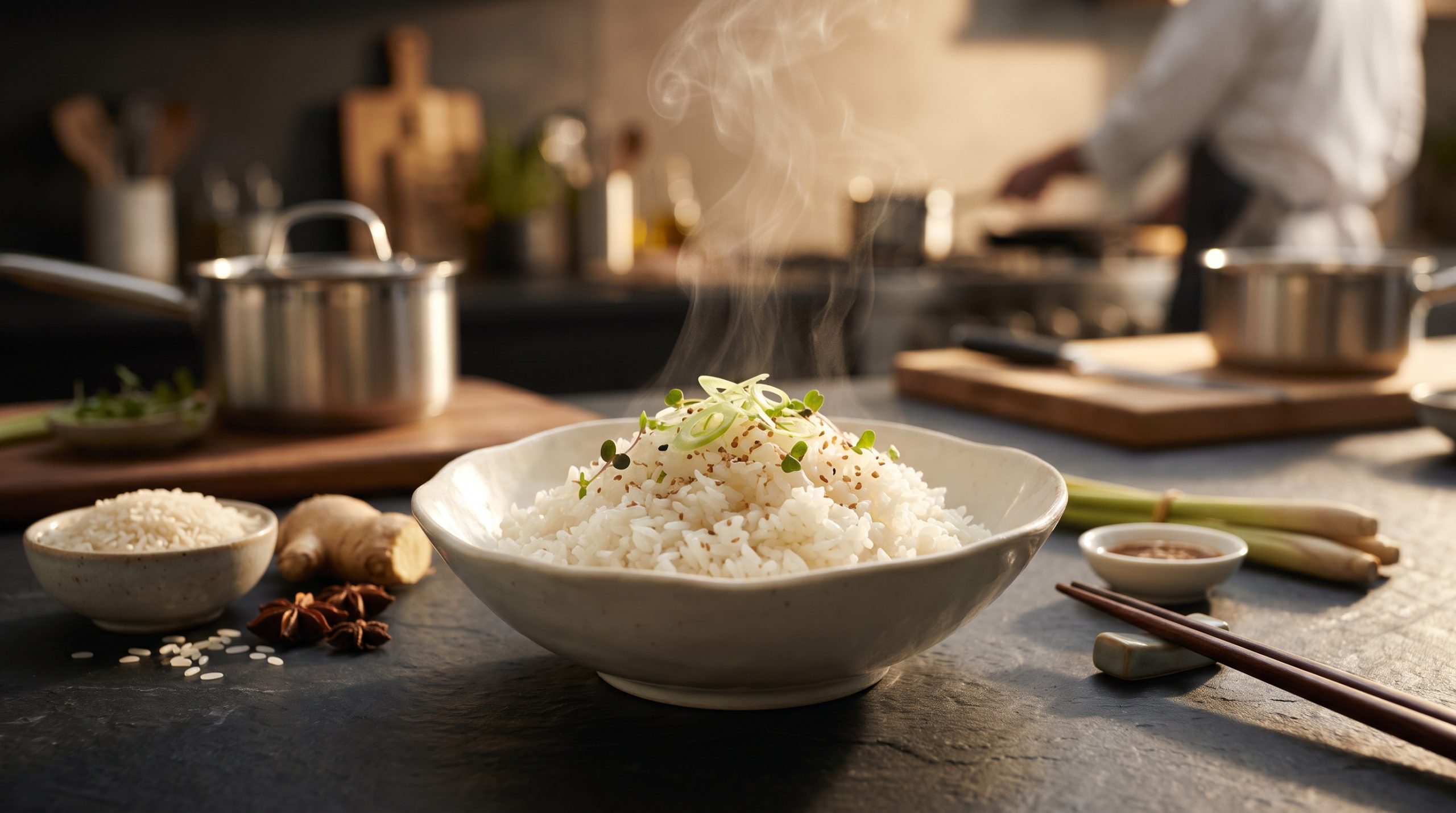
Owing to its delicate floral aroma and tender texture, Thai Jasmine rice holds a central role in professional kitchens. Across the HoReCa sector, it is widely used in Asian menus, curries, stir-fries, and as an accompaniment to fish and seafood.
Curries and Asian Menus
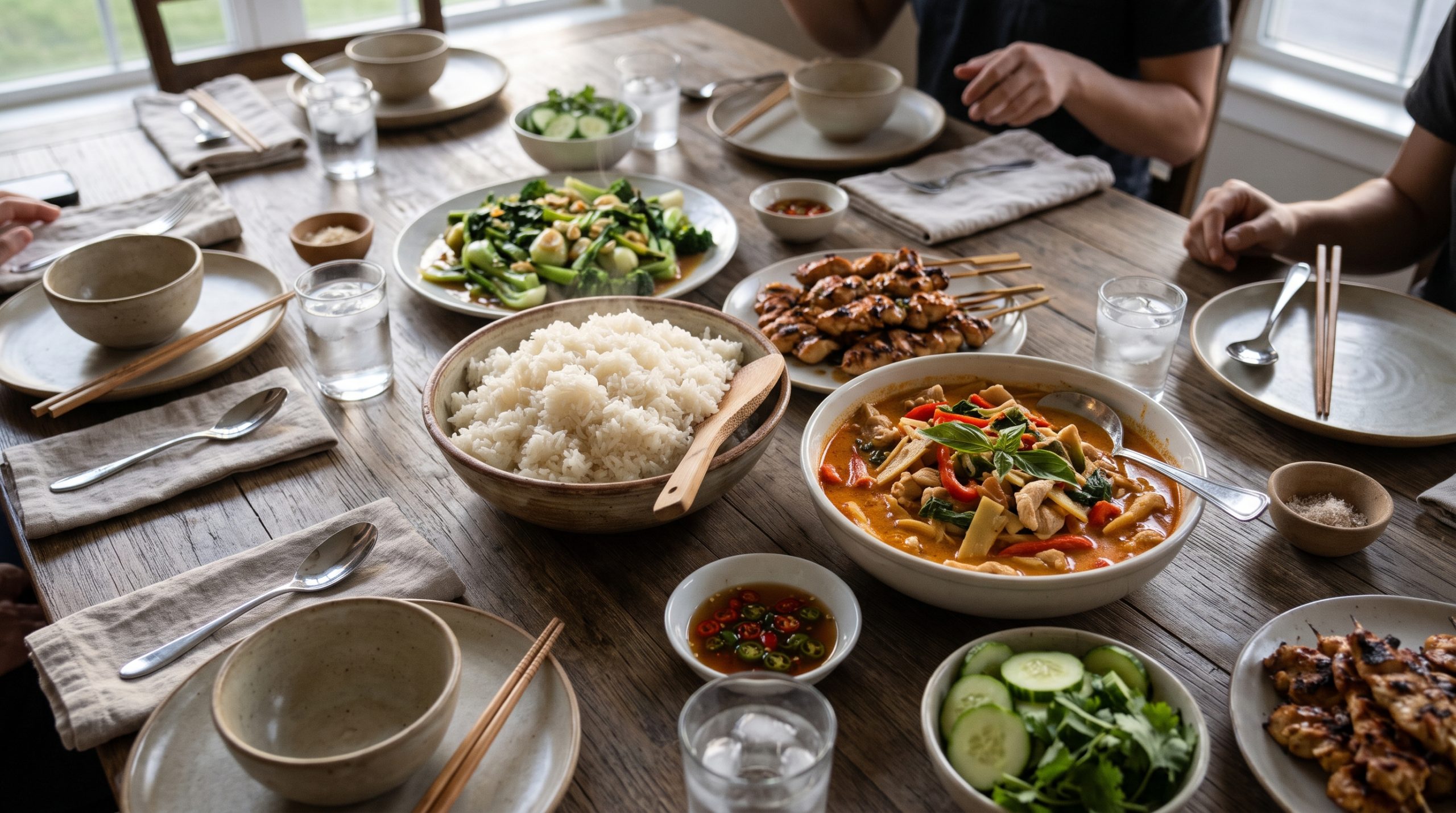
Jasmine rice is a staple pairing for curries due to its soft texture and floral fragrance. Across Asian menu applications, the cooked whole long grains remain tender, lightly cohesive, and well-structured on the plate.
Fish and Seafood
Restaurants and hotels frequently serve Jasmine rice as a side dish for fish and seafood. Its subtle floral note and soft whole-grain consistency support refined plating suitable for a wide range of culinary concepts.
Stir-Fries and Commercial Kitchens
In stir-fry dishes, Jasmine rice is valued for maintaining the shape of its long grains. For high-volume professional kitchens, the key operational advantage is that the grains cook evenly, do not turn mushy, and keep their form under service conditions.
Nutritional Profile of Jasmine Rice
Beyond its sensory attributes, Thai Jasmine rice offers a well-defined nutritional composition. The product is supplied as dry rice as sold, with no canning, brine, oil, or Brix/pH parameters.
The table below outlines typical nutritional values per 100 g of dry rice as sold; exact batch-specific figures are provided in the manufacturer’s specification upon request.
| Parameter | Value per 100 g of dry rice |
|---|---|
| Energy | 356 kcal / 1489 kJ |
| Carbohydrates | 79 g |
| — of which sugars | 0.1 g |
| Protein | 7 g |
| Fat | 0.7 g |
| — of which saturates | 0.2 g |
| Salt | 0.01 g |
Per 100 g of dry rice, energy content is 356 kcal (1489 kJ), carbohydrates account for 79 g (of which sugars 0.1 g), and protein is 7 g. Salt content is 0.01 g, and fat is 0.7 g (of which saturates 0.2 g) per 100 g of dry rice.
Grain Preparation Technology and International Food Safety Standards
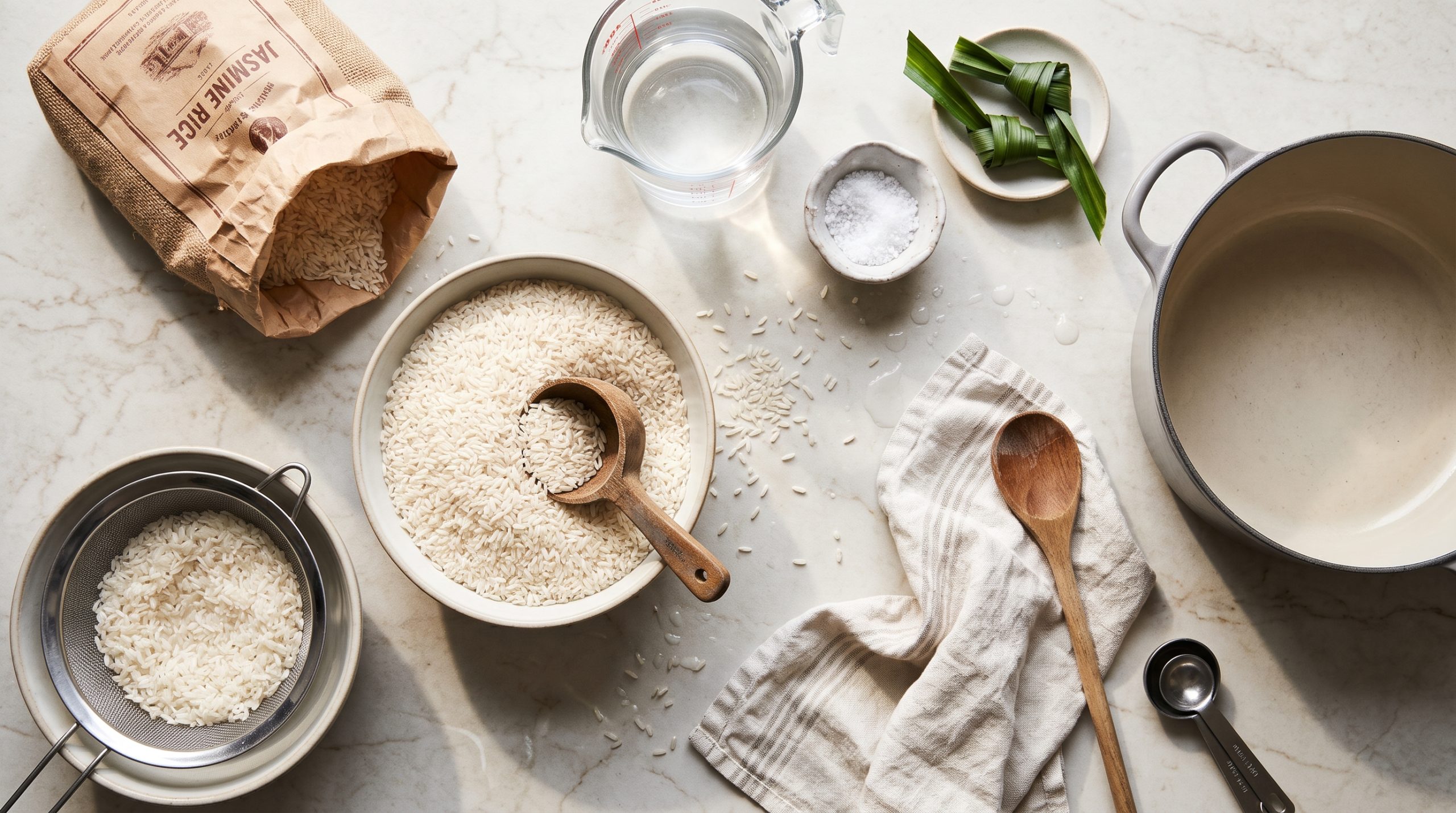
Unlike preserved or canned foods, dry Thai Jasmine rice undergoes no pasteurization or sterilization and contains no liquid media, oil, or brine. Instead, the grain is sorted and prepared to Premium grade with strict controls on kernel integrity and caliber uniformity.
The core technical benchmark for Premium-grade supply is maintaining 0% broken grains and uniform whole long-grain sizing. Each lot undergoes laboratory testing accompanied by a Certificate of Analysis.
For international trade and major retail groups, manufacturing compliance with recognized quality management and food safety systems is non-negotiable. Production adheres to international quality control standards and is certified under the following schemes:
- ISO 9001:2015;
- ISO 14001:2015;
- ISO 22000:2018 and HACCP;
- BRCGS;
- Kosher OU.
Detailed lot-specific technical parameters—including storage conditions and shelf life—are provided in the product specification upon request alongside copies of current certificates. This documentation framework ensures transparency at every stage of procurement for importers and retail quality assurance teams.
Sourcing Strategy for Retail, HoReCa, and the MIC-TRADE Approach
Selecting fragrant long-grain rice for supermarket shelves or restaurant kitchens requires verifying objective lot parameters. The defining criteria are Thai origin, 0% broken grains, uniform whole long-grain caliber, and the heightened natural aroma characteristic of new-crop harvests.
Packaging adaptability to the target distribution channel is equally critical. For top-shelf dry grocery placement in premium retail, Jasmine rice is supplied in 1 kg, 2 kg, and 5 kg retail bags—available either under the established White Gold Rice brand or in a Private Label format under the buyer’s own trademark. For restaurants, hotels, distributors, and food manufacturers handling repacking or HoReCa supply, bulk 25 kg and 50 kg bags are available.
The Private Label format enables retail chains and importers to build their own fragrant rice line, with rice type, specification, packaging format, label languages, and artwork approved prior to production. This flexibility supports international buyers tailoring assortments to specific regional market requirements.
Export shipments are supported by a full set of international trade documentation: Commercial invoice, packing list, Bill of Lading, certificate of origin, phytosanitary certificate, Certificate of Analysis, and product specification. Deliveries are arranged under CIF and other Incoterms rules aligned with the destination country, port, or city.
Available grades, rice types, and commercial options can be reviewed in the MIC-TRADE rice product catalog, which covers Jasmine, parboiled, and white rice for diverse culinary and commercial applications. To request a detailed product specification, copies of certificates, or consultation on White Gold Rice or Private Label formats, contact the MIC-TRADE team to discuss your requirements.