

Mediterranean Clingstone Harvest: High Flesh Firmness and Benchmark Color Reshape Canned Peach Market
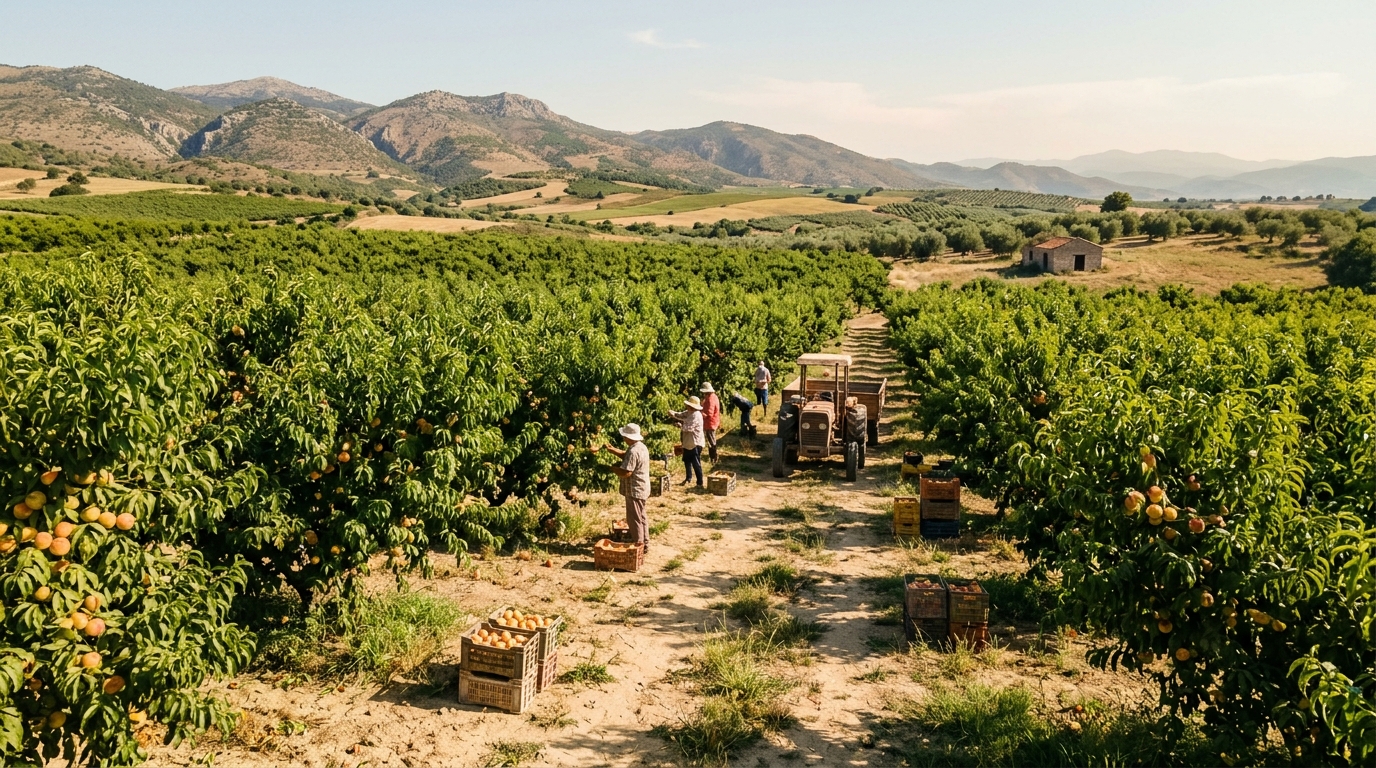
The conclusion of the dessert Clingstone peach harvest across the Mediterranean Basin has recorded benchmark quality metrics in flesh firmness and rich golden pigmentation. Optimal seasonal microclimatic conditions supplied the processing sector with raw material of superior processing grade, minimizing factory sorting losses on canning lines and establishing a pronounced quality premium for Grade A contracts.
Market Realities and Scale: Clingstone Harvest Balance and Raw Material Metrics
The harvesting campaign for specialized dessert Clingstone peaches across Southern Europe’s primary growing hubs—principally Central Macedonia (Greece, Imathia and Pella regions) and the Ebro River Valley (Spain)—concluded with yields exceeding historical market expectations. Total industrial peach production in the Mediterranean basin reached 845,000 tonnes in the current production cycle, representing a 7.8% volume recovery compared to the previous year, which was disrupted by localized weather anomalies.
The defining variable of the season was not merely volume expansion, but the qualitative profile of the harvested fruit. Laboratory penetrometer readings registered average flesh firmness of 4.8–5.4 kg/0.5 cm², representing the upper technological optimum for industrial processing. The share of fruit meeting Grade A (Choice) specifications reached 82%, up from the typical historical average of 68–72%. Concurrently, optical sorting rejection rates at cannery intake dropped from the customary 12–14% to a record low of 5.2%.
This concentration of high-grade raw material has reshaped pricing dynamics across the international canned peach market. While baseline contracts for standard grades maintained relative price stability supported by adequate aggregate supply, select halves and dices featuring guaranteed firmness and uniform coloration are commanding a quality premium of 9–13%. This premium reflects heightened demand from international supermarket chains and foodservice (HoReCa) operators seeking superior visual presentation and plate integrity.
Agro-Climatic Drivers of Flesh Firmness and Fruit Pigmentation
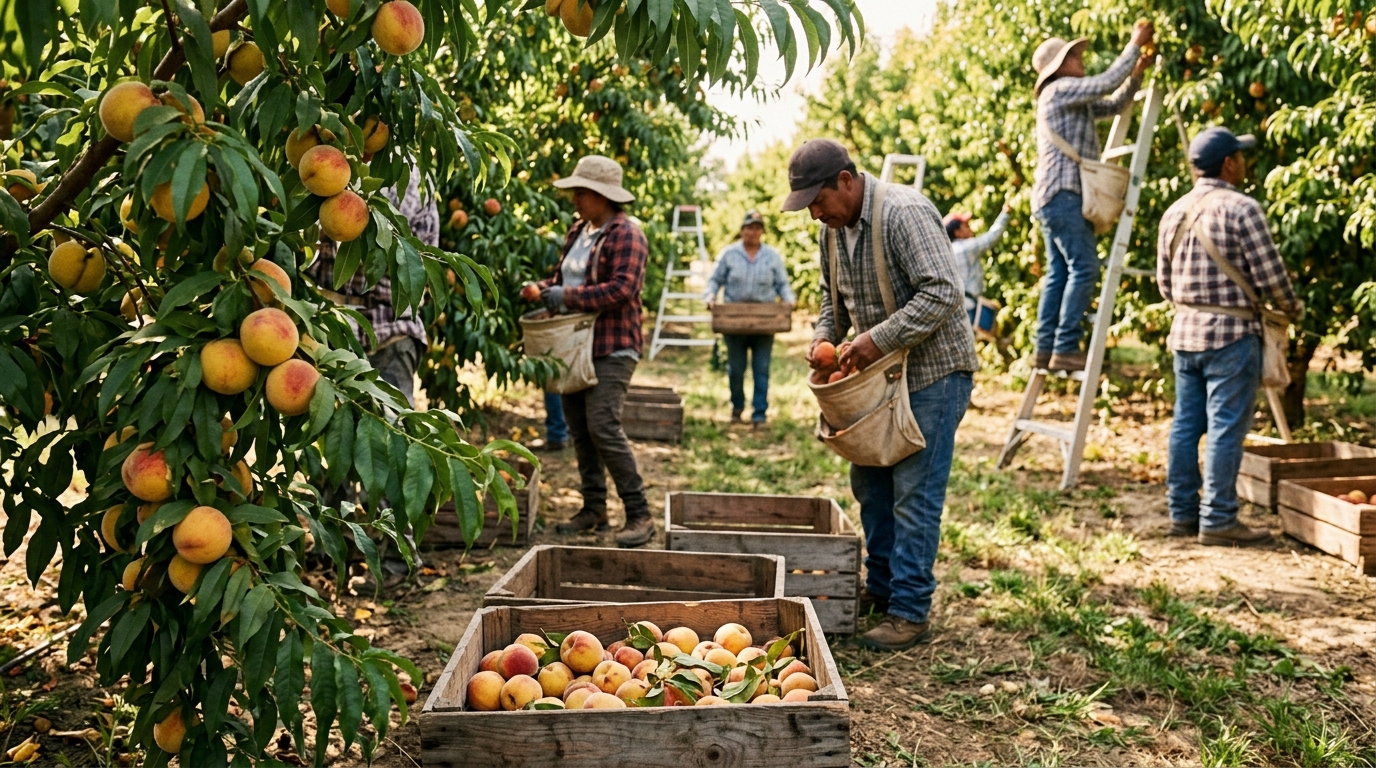
The exceptional commercial attributes of Mediterranean Clingstone peaches this season were the direct outcome of an optimal convergence of meteorological conditions. The winter dormancy phase provided over 780 chill hours below +7°C, ensuring full vernalization of buds, uniform spring bloom, and homogenous fruit set without premature ovary drop.
The spring and summer vegetative cycle proved equally decisive. The region avoided late frosts during stone formation, while balanced rainfall distribution in April and May contained fungal pressure. Throughout cell division and subsequent fruit expansion, conditions remained warm and sunny without extreme heatwaves exceeding +40°C, which typically induce thermal stress, premature tissue softening, and pit splitting.
A critical determinant was the pronounced diurnal temperature fluctuation during the pre-harvest window of July and August, where daytime highs of +32…+34°C were moderated by nocturnal cooling to +18…+20°C. This thermal shift stimulated carotenoid biosynthesis, producing a deep, uniform amber-gold coloration free of green shoulders around the stem cavity. Concurrently, controlled drip irrigation coupled with regulated deficit irrigation prior to picking promoted pectin synthesis and cell wall reinforcement, preventing flesh wateriness.
Category Market Mechanics: Why Clingstone Firmness and Color Are Critical for Processing
In the global stone fruit processing sector, a clear technological distinction exists between table varieties with free stones (Freestone) and dedicated industrial varieties with non-separating stones (Clingstone). While Freestones dominate the fresh market due to their melting texture, Clingstone cultivars remain the benchmark for canning due to the firm adherence of flesh to the endocarp and their resilience under aggressive thermal processing.
The industrial canning process involves hot caustic peel removal, mechanical pitting, grading, immersion in sugar syrup, and high-temperature retort pasteurization. Insufficient raw fruit firmness causes halves to lose geometric integrity, leads to fraying along cut margins, and triggers cellular leakage into the syrup, producing turbidity and sediment. The high flesh density achieved by Clingstones this season guarantees structural retention, maintains drained weight, and preserves syrup clarity.
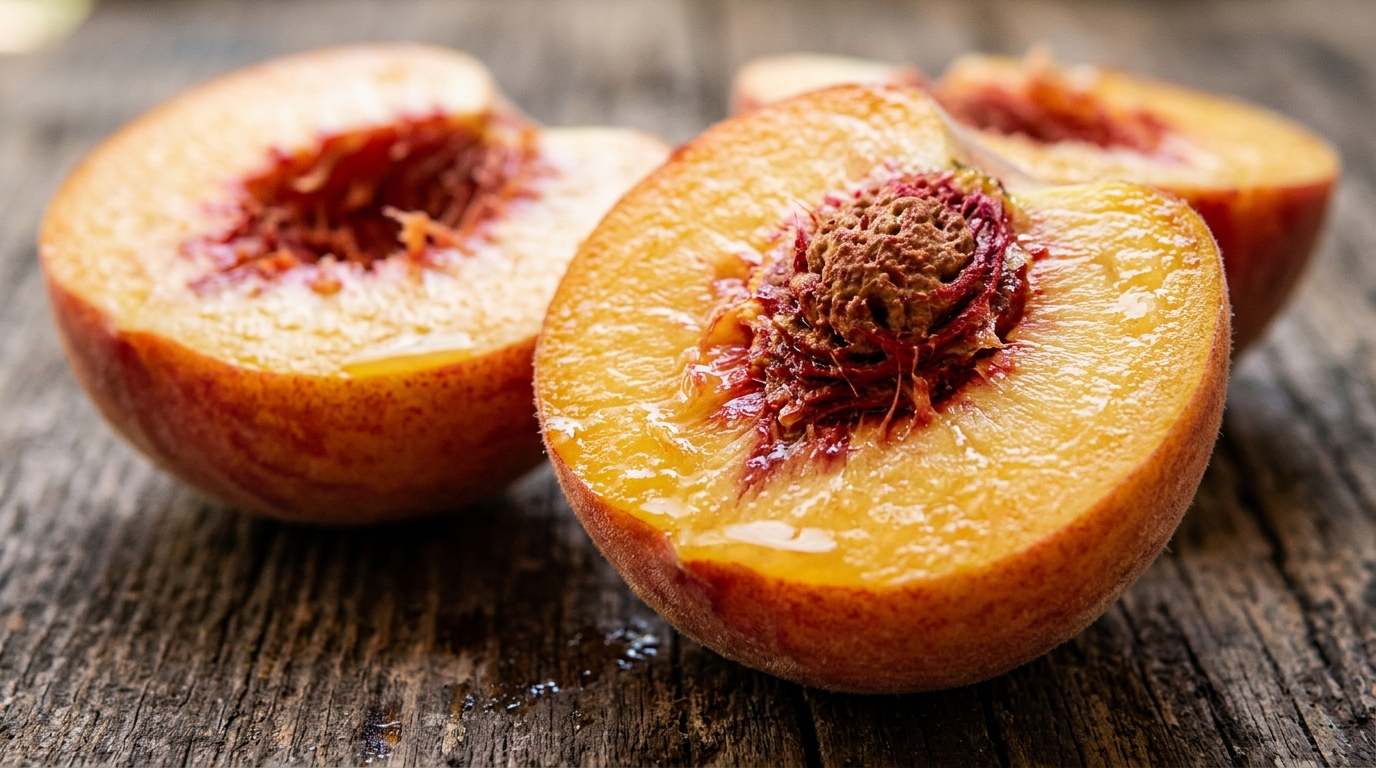
Color specifications carry equal commercial weight. International trading standards evaluate finished canned fruit on pigmentation uniformity. Residual chlorophyll indicates physiological immaturity accompanied by fibrous texture, while anthocyanin accumulation (red staining around the pit cavity) oxidizes during thermal processing into dark brown or purplish discoloration. This defect automatically downgrades lots from premium Choice status into Standard grade or industrial puree. This season’s Mediterranean crop remained virtually free of anthocyanin oxidation, maximizing Choice-grade half yields.
Industry Response: Contract Reallocations and Trade Flow Optimization
European processors adjusted their production schedules significantly in response to raw material quality. With scrap rates minimal, processing plants operated at 94–96% of nameplate capacity, completing the fresh processing run 8 days ahead of baseline projections. The reduction in trimming loss allowed canneries to shift volume allocations toward higher-margin retail packaging—specifically glass jars and retail can formats (425 ml and 850 ml).
Simultaneously, demand accelerated in the institutional and foodservice packaging segment (A10 format cans, 3 kg net weight) serving HoReCa and industrial bakeries. Commercial bakeries and catering operators require intact, firm halves and dices that withstand secondary baking and thermal processing without collapsing. The enhanced thermal resistance of this season’s flesh prompted early forward bookings by major multinational confectionery and bakery groups.
Across global trade lanes, Mediterranean processors consolidated their export footprint in North America, the Middle East, and East Asia. Robust forward contracting resulted in more than 70% of planned current-season canned peach export allocations being locked under firm long-term agreements by mid-autumn. This dynamic tightened uncommitted spot market liquidity, strengthening processors’ bargaining position on delivery schedules.
Conclusion
Analytical Outlook: The supply-demand balance in the canned peach category has reached stable operational equilibrium alongside sharp qualitative divergence. Ample Mediterranean Clingstone harvest volumes and elevated processing condition have mitigated previous supply deficit risks, yet established structural tiering across grades. Over the next 6–12 months, primary market friction will shift from gross volume availability to the spot accessibility of Grade A parcels, as prime export production is heavily committed to forward contracts. The secondary spot market in the second half of the year will face depleted premium inventories, sustaining the price spread between premium Choice and baseline grades.
Strategic Takeaways: For international trading desks, importers, and retail category managers, current market conditions necessitate transitioning away from opportunistic spot buying toward structured annual procurement programs. Priority should be given to locking in detailed physicochemical specifications—penetrometer firmness thresholds, piece calibration, and color uniformity parameters—early during contract formulation. Diversifying sourcing allocations across core Mediterranean growing sub-regions will enable buyers to safeguard assortment integrity and mitigate supply chain disruption.
«MIC-TRADE is an international food commodity trading company specializing in food supply and cross-border commercial links between manufacturers and buyers worldwide.
We orchestrate international supply chains, source qualified manufacturing partners, align product specifications, and manage end-to-end export-import operations. Our focus centers on rigorous technical specifications, processing standards, quality control, and commercial transparency.
Explore our product specifications and portfolio in the dedicated section of the MIC-TRADE catalogue. To discuss supply programs, distribution opportunities, and international trade partnerships, connect with our commercial team via the contact page.»