

Morocco Extends Sardine Fishing Ban and Launches Stock Assessment Ahead of Quota Review

The extension of Morocco’s commercial fishing ban north of Laayoune and the launch of a 45-day scientific mission in FAO Area 34 underscore heightened regulatory scrutiny over Atlantic pelagic stocks. Combined with the continued ban on frozen sardine exports, these restrictions sustain a tight raw material balance across the global canned fish market despite a 66% surge in southern Moroccan landings.
Scope of Measures: 45-Day Biomass Assessment and Extended Fishing Ban
In late October, a 45-day scientific mission commenced in Morocco’s Atlantic waters to assess the biomass of small pelagic species, primarily sardines. The findings will form the baseline for reviewing foreign fishing quotas, which previously stood at 54,000 tonnes.
In parallel, the State Secretariat for Maritime Fisheries extended the ban on small pelagic fishing north of Laayoune through the end of December. The restriction is aimed at safeguarding spawning stocks across a key coastal fishing belt.
Meanwhile, over the first eight months of the year, Morocco’s cumulative sardine landings rose 66% to roughly 394,200 tonnes. Growth was driven by southern and central ports: Dakhla (+222%), Tan-Tan (+110%), Sidi Ifni (+104%), and Laayoune (+76%). Despite higher volumes, domestic retail prices periodically climbed to MAD 30 per kilogram, prompting authorities to tighten market oversight and maintain the existing export ban on frozen sardines.
Drivers Behind Tighter Regulation: Spawning Cycles and Domestic Market Imbalances
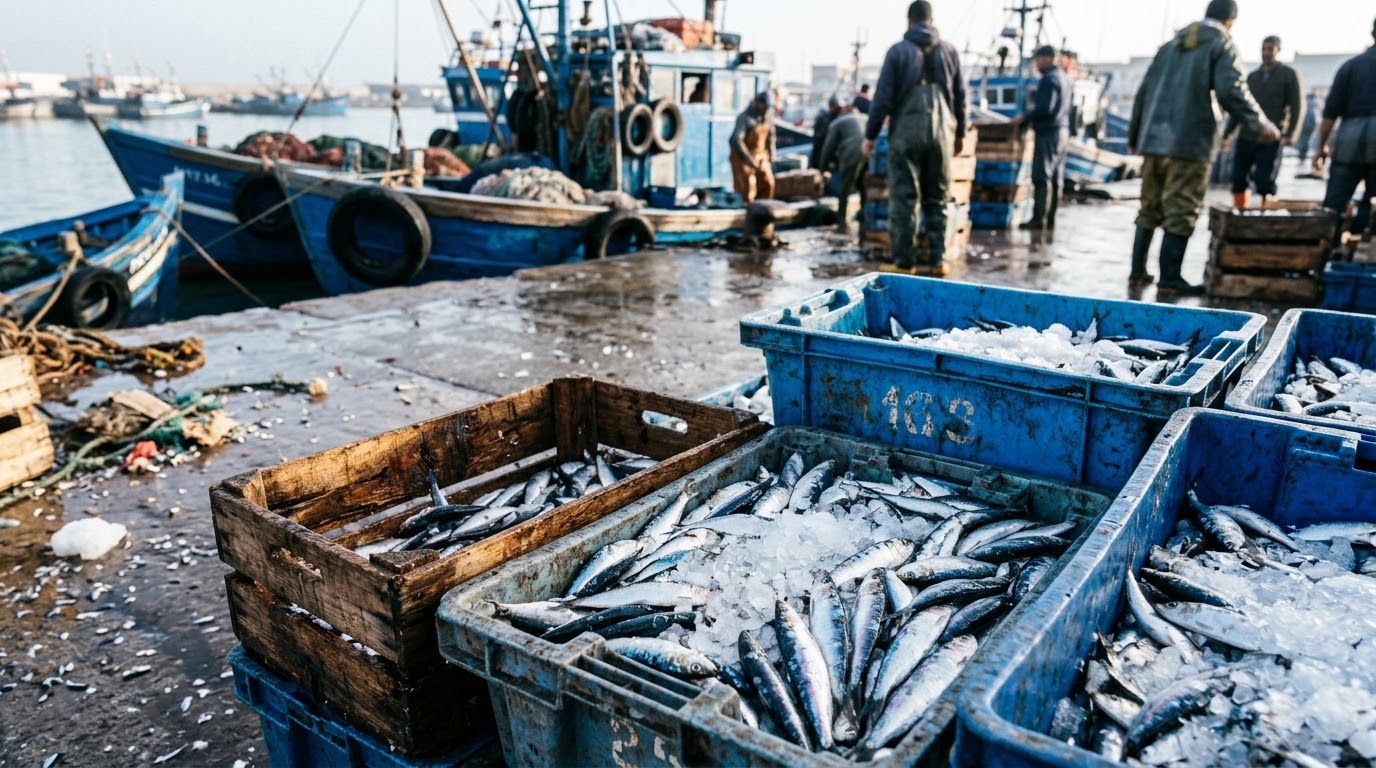
The primary biological driver behind extending the closure north of Laayoune is the need to protect spawning stocks during the autumn-winter period. Small pelagic populations within the upwelling zone are highly sensitive to sea temperature fluctuations and fishing pressure, making scientific biomass verification essential before reviewing the 54,000-tonne foreign quota to prevent overfishing.
On the economic front, uneven catch distribution and domestic price volatility have anchored the strict trade regime. Although landings at Dakhla and Tan-Tan surged, intermittent retail price spikes up to MAD 30 per kilogram compelled the government to keep the export ban on frozen raw material in place. The policy curbs the outflow of unprocessed fish to foreign buyers, channeling supply toward domestic consumption and local processing.
Category Market Mechanics: How FAO Area 34 Shapes Global Canned Sardine Pricing
Morocco, together with the adjacent FAO Area 34 fishing zone, forms the backbone of the global raw material base for canned Atlantic sardines. Unlike commodities with broad geographic substitutability, the canning industry relies on steady deliveries of fish meeting specific size grades and fat content profiles found along the northwest African coast.
The combination of seasonal fishery closures, foreign fleet quota reviews, and the frozen sardine export embargo directly constrains physical raw material availability for overseas canners without dedicated access in Moroccan waters. As competition intensifies for unallocated lots, a greater share of value-added processing remains concentrated within the supplying country.
Price volatility in primary small pelagic raw material transmits rapidly into finished canned goods. Under current conditions, this underpins firm export quotations for finished sardines, particularly in the olive-oil-packed segment, where processors capture higher margins and defend price levels on the back of steady demand for premium specifications.
Industry Response: Adjusting Processing, Trade Flows, and Retail Procurement

Overseas canneries that have historically relied on frozen Moroccan sardine imports are being forced to partially redirect procurement toward alternative fishing basins or adjacent pelagic categories, notably mackerel and other small pelagic species. By contrast, domestic Moroccan processors retain priority access at landing ports, subject to heightened state supervision.
Across international distribution, retail, and HoReCa channels, buyers are aligning contracting schedules with the biological closure calendar. Importers are actively securing forward volumes ahead of the post-December reopening of the northern zone while operating with shorter validity windows on export offers, reflecting heightened uncertainty over future quota allocations.
Retail chains are adjusting assortment strategies to maintain consistent shelf availability for products packed in vegetable and olive oils. Sardines in olive oil continue to demonstrate the strongest price resilience, whereas budget lines in standard sauces remain more sensitive to fluctuations in raw fish and packaging costs.
Key Takeaways and Strategic Implications for Market Participants
Analytical Takeaway: The raw material balance in the sardine market remains tight and bifurcated: the sharp eight-month landing increase (+66% to 394,200 tonnes) does not alleviate shortages of freely traded frozen raw material due to the export embargo and the northern closure through December. Over the next 6 to 12 months, the primary price catalysts will be the findings of the 45-day scientific mission and the decision on the 54,000-tonne foreign fleet quota, keeping export prices for finished canned products firmly supported.
Practical Takeaway: For processors, importers, and retail buyers, supply planning must factor in the FAO Area 34 regulatory calendar alongside headline catch figures. Mitigating single-basin concentration risk requires locking in finished product specifications early, diversifying geographic sourcing, and balancing canned seafood portfolios between sardines and adjacent staples such as canned tuna.
MIC-TRADE (International Food Trading Company): MIC-TRADE is an international food trading company specializing in food commodity supply and building commercial partnerships between producers and buyers across global markets. We structure international supply chains, source qualified manufacturing partners, align product specifications, and manage export-import execution, with strict focus on product parameters, production standards, quality control, and transparent commercial terms.
Explore product ranges and technical specifications in the MIC-TRADE sardine catalog. To discuss supply, distribution, and international partnership opportunities, reach our team via the contact page.