

Oceanic Sardines in Oil and Tomato Sauce: Omega-3 Density, Calcium Bioavailability, and Mediterranean Traditions
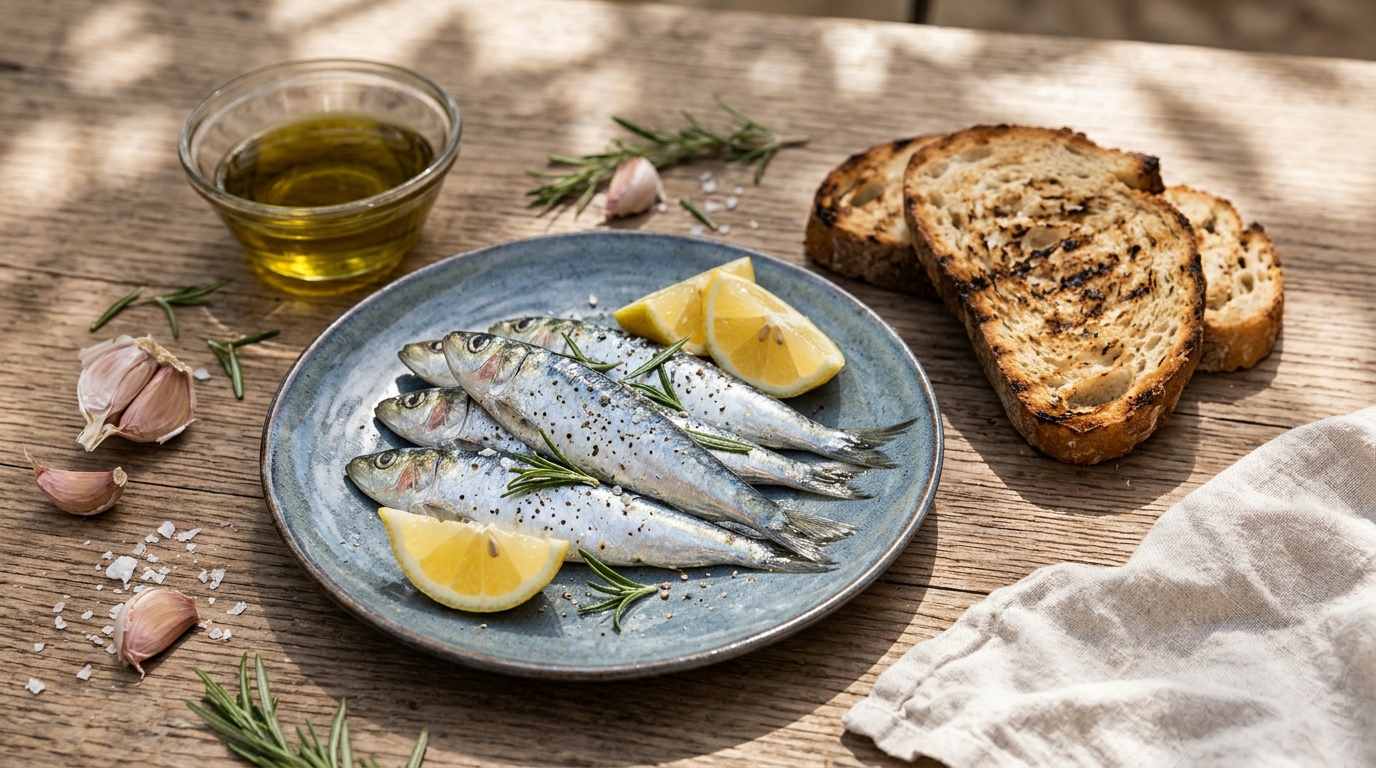
Silvery schools cutting through cool oceanic currents have shaped the culinary traditions of Atlantic and Mediterranean coastal regions for centuries. Sardines have long moved beyond basic maritime rations, securing a prominent position in fine dining and contemporary gastronomy. Across the tapas bars of Lisbon, the bistros of San Sebastián, and the culinary establishments of Paris, premium canned sardines are served as a standalone delicacy that captures the concentrated essence of the sea. Modern nutritional science has renewed focus among executive chefs and health-conscious consumers on this pelagic resource. Oceanic sardines feature high concentrations of long-chain fatty acids, bioavailable calcium, and complete protein. Concurrently, the choice of packing medium—delicate vegetable oil or thick natural tomato sauce—delivers distinct textures and flavor profiles suitable for culinary development and professional HoReCa menus. MIC-TRADE has prepared this comprehensive B2B expert guide covering every technical and gastronomic dimension of oceanic sardines. Below is an examination of harvest biology, pelagic environmental purity, grading parameters, autoclave sterilization standards, nutritional profiles, and culinary applications.
Ocean Depths and Natural Purity: Biology of a Pelagic Species
Oceanic sardines of the species Sardinella aurita and Sardina pilchardus are pelagic schooling fish native to the open waters of the Atlantic and Pacific oceans, sustained by clean zooplankton. Operating in perpetual motion across open pelagic zones, these fish form dense, coordinated schools—a defining characteristic of their wild marine environment.
A primary commercial advantage of this species is its natural environmental purity. Owing to a short life cycle, sardines do not bioaccumulate heavy metals such as mercury and cadmium, ranking them among the cleanest marine fish available globally. This represents a decisive sourcing criterion for commercial buyers and health-focused consumer segments.
Because of this truncated life cycle, sardines remain among the purest commercial catches in the global ocean. Foraging on clean open-water zooplankton yields a classic, refined fish profile free from muddy or undesirable off-notes.
Organoleptic Profile and Texture: Oil Delicacy vs. Tomato Piquancy
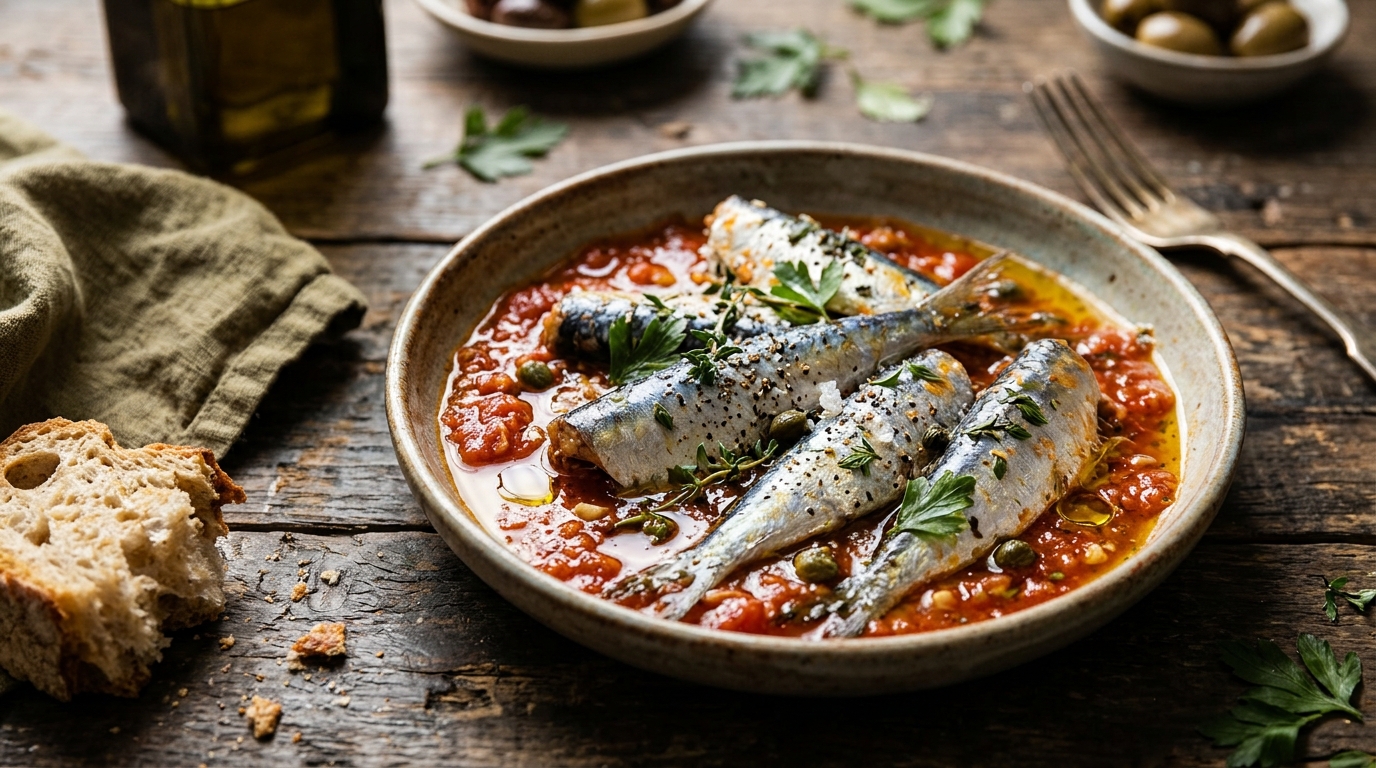
The sensory profile of oceanic sardines is balanced and pronounced. It provides a rich, oily, authentic fish flavor complemented by a delicate saline finish without astringency or bitterness. Following controlled thermal processing, the flesh maintains structural firmness yet flakes effortlessly into tender, succulent segments under gentle fork pressure.
Preservation is conducted primarily in two traditional formats depending on foodservice and retail requirements: packed in refined sunflower or soybean oil for a smooth, velvety texture, or in a rich natural tomato sauce offering balanced acidity.
Refined vegetable oil coats the fish fibers, highlighting their natural silkiness and lipid content. It preserves a neutral background aroma, making it an excellent component for dressings and cold antipasti. In contrast, thick tomato sauce with natural acidity forms a striking sensory counterpoint to the dense sardine flesh, yielding a full-bodied culinary base for warm entrées and side dishes.
Quality Anatomy and Grading: Carcass Calibration and Structural Integrity
Finished product consistency begins with raw material sorting immediately post-harvest. Processing specifications mandate strict calibration by length and unit weight, alongside precise manual evisceration to prevent tearing of the delicate silvery skin. Preserving this intact silver dermal layer serves as primary proof of careful handling and absolute freshness.
For commercial culinary operations and aesthetic presentation, visual integrity is essential. Uniformly sized whole fish with intact, lustrous skin provide visual appeal on bruschetta and tapas platters, elevating presentation standards.
A critical benchmark is the filling ratio: a minimum of 70% selected fish and no more than 30% packing medium per tin. This formulation ensures every unit supplies at least 70% solid fish content, maximizing usable yield for professional kitchens.
Gastronomic Artistry and Optimal Culinary Pairings

With their refined flavor profile, oceanic sardines are an adaptable culinary ingredient. They serve as an ideal base for classic Mediterranean tapas, warm garlic-rubbed bruschetta, Sicilian pasta con le sarde, and high-protein breakfast items. The fish adapts equally well to minimalist presentations and complex multi-ingredient formulations.
Mediterranean Bruschetta and Tapas Culture
In Spanish and Portuguese culinary traditions, sardines in oil are a staple of the tapas segment. To prepare an authentic bruschetta or pintxo, artisanal sourdough bread is grilled until crisp, rubbed with fresh garlic, and drizzled with oil from the tin. A whole sardine is placed atop the toast, garnished with shaved shallots, flat-leaf parsley or cilantro, and a touch of fresh lemon juice.
The contrast between warm, toasted bread, pungent garlic, and rich, tender fish produces an exceptional taste profile. The oil from the tin can also be emulsified with Dijon mustard and lemon juice to create a flavorful dressing.
Sicilian Authenticity: Pasta con le Sarde
Classic Sicilian pasta con le sarde showcases the pairing of pelagic richness with sweet and savory pantry staples. To prepare the sauce, sardines are gently simmered in a skillet with sweet raisins, toasted pine nuts, fresh wild fennel, and a touch of saffron, then tossed with al dente spaghetti.
Prior to service, the dish is traditionally finished with muddica atturrada—breadcrumbs toasted in olive oil with ground black pepper. This crisp element contrasts with the soft texture of the fish and sauce, delivering an authentic Palermo profile.
Sardines in Tomato Sauce: Hearty Hot Entrées
Sardines in natural tomato sauce with vibrant acidity perform reliably in hot restaurant and catering preparations. Enriched with natural fish juices, the tomato sauce requires minimal reduction: it can be warmed with capers, olives, and dried oregano for an efficient Mediterranean entrée.
Tomato-packed sardines also integrate cleanly with steamed baby potatoes, roasted zucchini, and bell peppers, or serve as a flavorful filling for savory tarts and gratins.
Balanced Breakfast Formulations
For high-protein breakfast menus, sardines in oil offer an optimal nutritional source. They pair well with whole-grain toast, sliced avocado, poached eggs, and fresh baby spinach or arugula, providing sustained morning satiety without excessive heaviness.
Nutritional Biochemistry: Balance of Omega-3, Calcium, and Protein
Oceanic sardines are recognized as a premier functional food due to their high nutrient density per serving. The fish contains 1.5 to 2.2 g of Omega-3 fatty acids (EPA and DHA) per 100 g, providing up to 200% of daily reference intake to support cardiovascular health. Long-chain polyunsaturated EPA and DHA are essential fatty acids requiring regular dietary intake.
A key operational benefit is mineral density. Controlled steam sterilization softens the fish bones completely, rendering them fully edible and supplying over 350–380 mg of bioavailable calcium per 100 g (exceeding 35% of daily requirements). Naturally occurring calcium and phosphorus provide balanced micronutrient delivery.
The protein content ranges from 20.0 to 24.0 g of complete protein per 100 g, with a net protein utilization coefficient above 92%. This positions sardines as a high-efficiency protein source suited for active lifestyles and specialized nutrition formulations.
Furthermore, sardines are an exceptional natural source of cobalamin (Vitamin B12—up to 300% of daily value) and Vitamin D3 (up to 50% of daily value). This dense micronutrient matrix establishes canned sardines as a dependable year-round nutritional resource.
| Nutrient / Parameter | Content per 100 g | % Daily Value | Biological Role and Properties |
|---|---|---|---|
| Complete Protein | 20.0 – 24.0 g | — | High-biological-value protein with a digestibility coefficient exceeding 92% |
| Omega-3 Fatty Acids (EPA and DHA) | 1.5 – 2.2 g | Up to 200% | Cardiovascular system support and cellular function |
| Bioavailable Calcium | Over 350 – 380 mg | Over 35% | Delivered via fully edible softened bones alongside phosphorus |
| Vitamin B12 (Cobalamin) | — | Up to 300% | Natural dietary source of cobalamin |
| Vitamin D3 | — | Up to 50% | Naturally occurring Vitamin D3 content |
Canning Engineering and Precision: From Ocean Catch to Autoclave
Finished product quality depends on process precision across every stage of the supply chain. Harvested catches undergo immediate onboard brine blast-freezing at -18°C, alongside mandatory laboratory monitoring to ensure histamine levels remain below 50 ppm. This cold-chain protocol ensures raw material freshness prior to processing.
Modern preservation requires no chemical additives. Steam autoclave processing at 121°C provides commercial sterility and a 3-year shelf life without synthetic preservatives. This thermal cycle softens the fish fillets and renders the bones completely edible.
Strict standards are maintained for primary packaging. The interior surface of each tin is coated with certified food-grade, anti-corrosive lacquer (BPA-NI). This barrier prevents any interaction between the metal substrate and the product contents.
Processing facilities operate under ISO 9001:2015, ISO 22000:2018, and HACCP certifications. Compliance with these international benchmarks guarantees thorough quality control across all production phases and uniform batch consistency.
Procurement Culture and MIC-TRADE Import Standards
For efficient operations across foodservice and retail sectors, packaging specifications are critical. Club-style and oval tins feature Easy-Open (EOE) pull-tab lids. This feature enables rapid, tool-free opening suitable for high-turnover professional kitchens, catering events, and direct retail purchase.
In building its product range, MIC-TRADE enforces strict criteria regarding raw material provenance and adherence to international quality and certification standards. The portfolio of canned sardines in oil and tomato sauce is produced in accordance with European culinary specifications.
Our structured line of canned oceanic fish meets the commercial demands of restaurant operators, foodservice caterers, and retail distributors. For product specifications, bulk delivery terms, or private label partnerships, please contact the MIC-TRADE commercial team.