

Parboiled Rice: Hydrothermal Processing in the Husk, Nutrient Migration, and Non-Sticky Texture
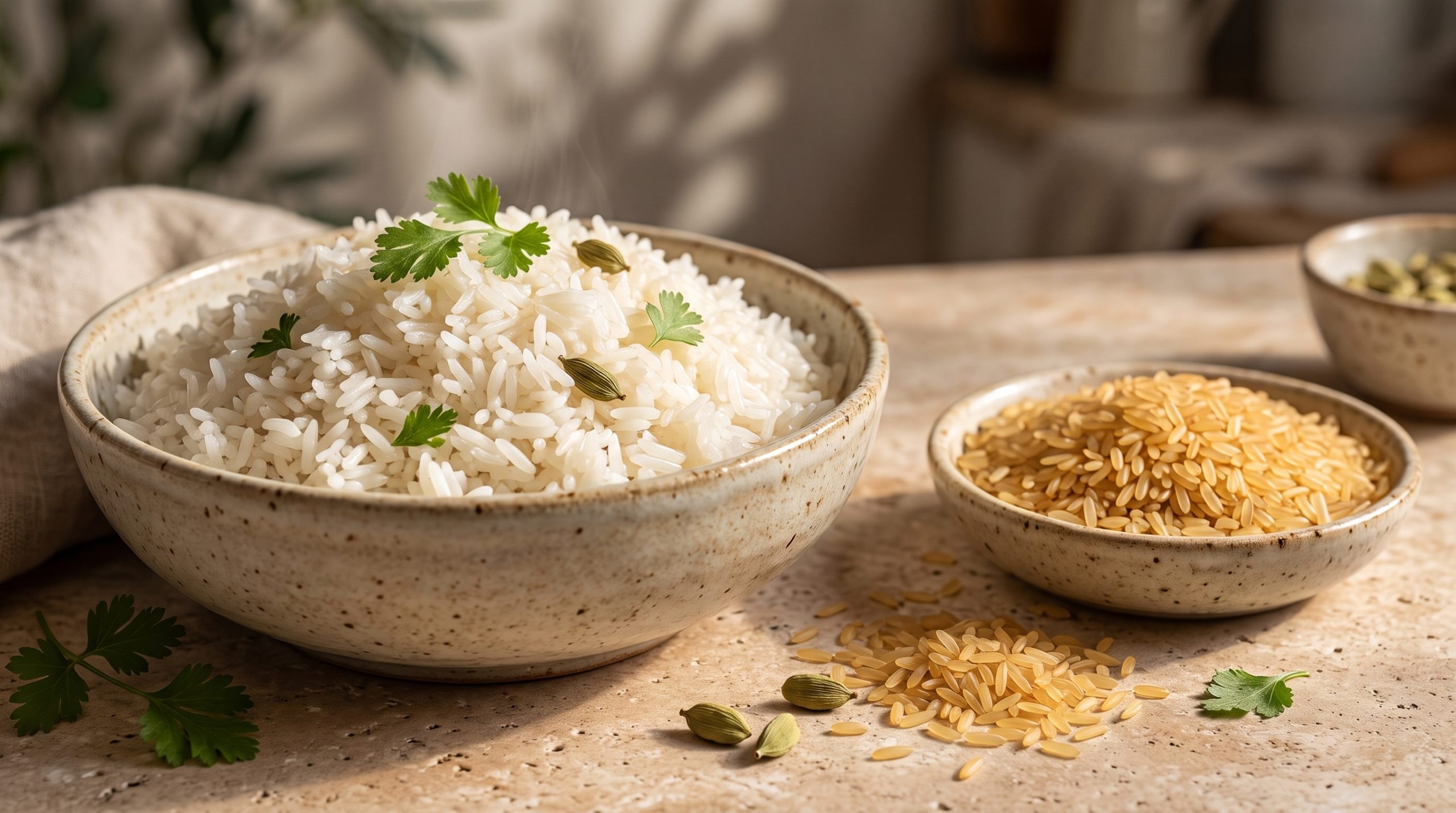
Among dozens of long-grain rice varieties, parboiled rice holds a distinct position in commercial restaurants, catering operations, and structured culinary programs. It is recognizable prior to cooking: in its dry state, each kernel displays a warm golden hue, which lightens during cooking to yield a white, firm, and free-flowing side dish. The mechanism behind this transformation lies not in additives or complex kitchen techniques, but in controlled hydrothermal processing of the grain directly inside its natural husk. Soaking and steaming prior to milling compact the internal structure of the kernel and enable a portion of naturally occurring nutrients to migrate from the outer bran layer into the endosperm. As a result, premium-grade Thai long-grain rice withstands the operational demands of professional HoReCa kitchens, extended holding on service lines, reheating, and freezing while retaining its shape and mild cereal aroma. This technical guide examines the origin, organoleptic profile, production process, nutritional composition, and international procurement standards for parboiled rice.
Natural Origin and Botanical Identity of Thai Parboiled Rice
The product is derived from cultivated rice of the species Oryza sativa grown in Thailand. Premium-grade Thai parboiled rice is a long-grain variety graded at 0% broken grains, producing a firm, non-sticky texture after cooking in which every kernel remains separate.
In global foodservice and international commodity trade, this product is referenced under established commercial designations that reflect its steam-treated processing. Familiarity with this nomenclature enables chefs, food technologists, and procurement teams to interpret product specifications accurately across regional markets:
- In English-speaking commercial trade, the standard terms are parboiled rice and converted rice.
- In Spanish-speaking markets, the product is traded as arroz vaporizado or arroz parboiled.
- In French culinary and trade terminology, it is designated as riz étuvé or riz parboiled.
- In German- and Italian-speaking markets, the established terms are Parboiled-Reis and riso parboiled or riso vaporizzato.
Unlike canned commodities, parboiled rice requires no packing liquid, brine, or preserving medium to maintain its functional properties—it is supplied as a dry grain. Its stability and processing performance are achieved solely through physical methods: sequential soaking, steaming in the husk, drying, and precision milling.
Organoleptic Profile: From Golden Grain to White, Non-Sticky Texture
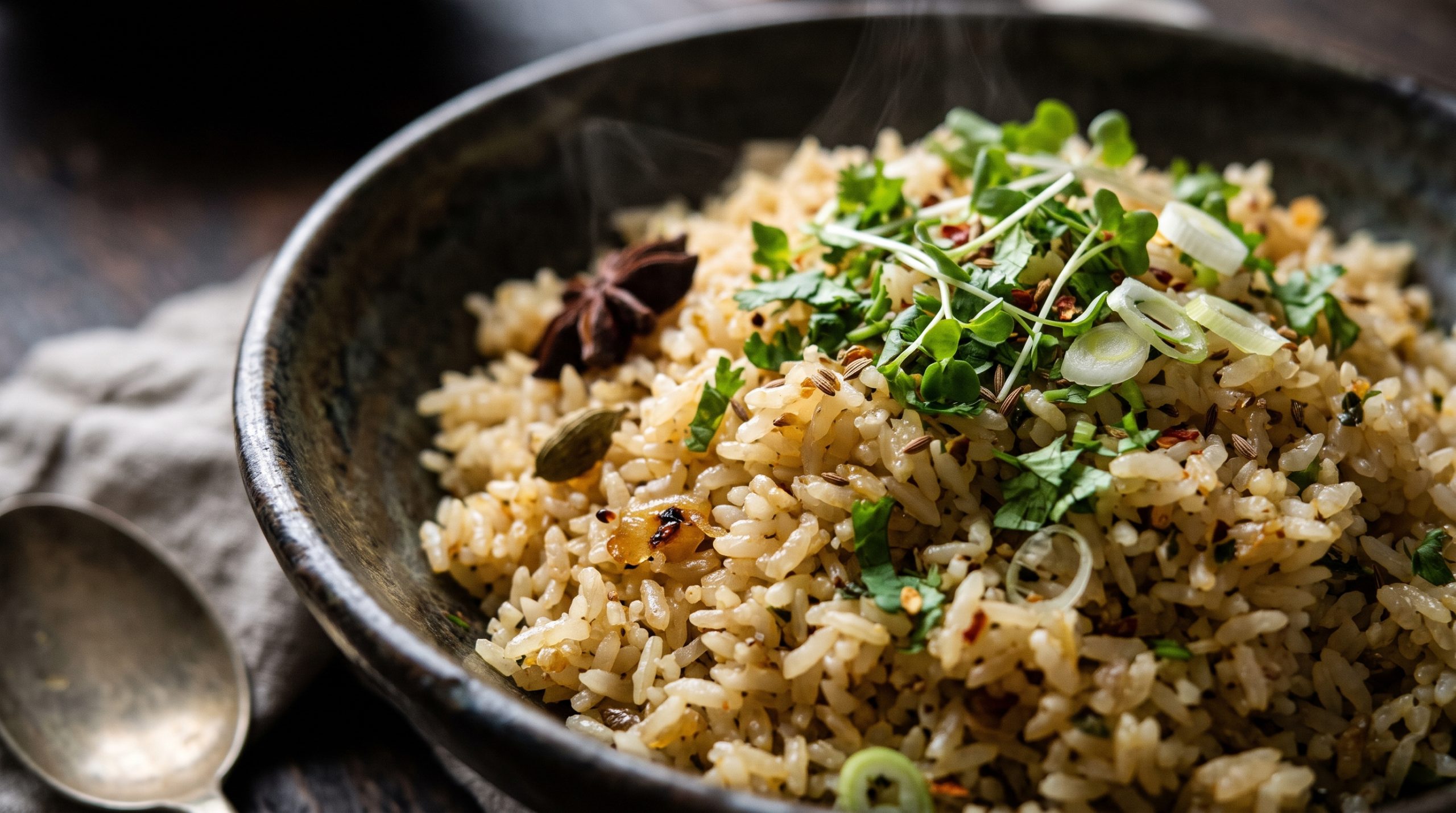
Visual assessment is the first indicator of parboiled rice quality. In its dry form, each kernel exhibits a warm golden tint resulting from the steaming process. This coloration confirms that the grain underwent hydrothermal densification prior to dehulling.
During cooking, the kernels undergo a clear physical transition. They absorb water evenly, lighten in color, and turn white. Throughout thermal preparation, the rice resists overcooking and clumping, maintaining a firm and separate structure.
The flavor and aroma profile of parboiled rice is restrained and clean. It carries a mild cereal aroma without intrusive notes. In professional gastronomy, this neutrality is a practical advantage: the grain does not overpower spices, sauces, seafood, or herbs, serving instead as a balanced base that supports the primary components of a dish.
Cooked parboiled rice delivers a firm, dense, and free-flowing texture. Each grain stays intact and uniform from the first serving to the last.
Anatomy of Premium Grading: Long Grain and the 0% Broken Standard
In commercial food preparation, raw material uniformity directly determines plate consistency. When whole and fractured kernels are mixed within the same lot, smaller fragments gelatinize and break down faster while full-length grains are still reaching doneness. Consequently, the defining quality benchmark for premium parboiled rice is 0% broken grains.
Premium-grade long-grain parboiled rice is specified at 0% broken grains. Steaming compacts the kernel matrix and imparts its characteristic golden hue.
- High uniformity in grain length ensures even moisture absorption during cooking.
- The absence of broken grains (0%) delivers a clean, non-sticky presentation where every kernel remains distinct.
- Lot-by-lot compliance with declared parameters is verified through laboratory testing (Certificate of Analysis) and documented in the product specification.
This level of grading precision supports not only visual consistency in restaurant plating, but also repeatability in standardized recipes. The grain performs reliably in high-volume batch cooking without structural degradation.
Culinary Applications: From Classic Pilaf to High-Volume Catering
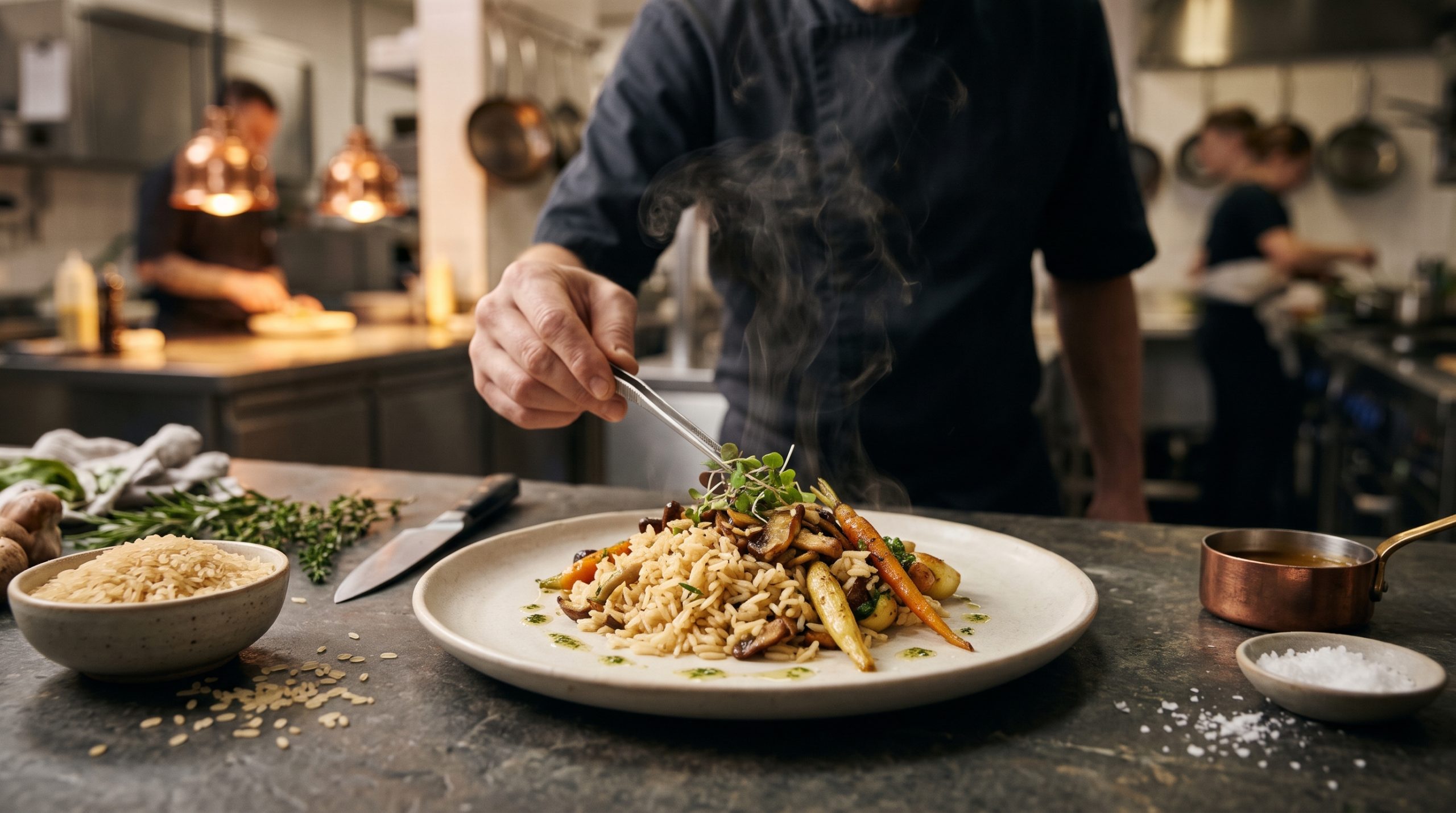
Parboiled rice is utilized across a broad spectrum of culinary formats—from traditional pilaf and biryani to contemporary European cuisine and large-scale banquet service. Its structural integrity makes it a versatile foundation for side dishes, pilaf, biryani, and composed salads.
Side Dishes, Pilaf, Biryani, and Signature Salads
Across the HoReCa sector, long-grain parboiled rice is widely specified for standard accompaniments, spiced pilaf, layered biryani, and cold salads. In pilaf and biryani, the firm kernels integrate with cumin, cardamom, saffron, caramelized onions, and meat or vegetable stocks while remaining completely separate.
For salad applications, parboiled rice is particularly effective: it does not clump and retains a loose consistency, pairing cleanly with citrus dressings, olive oil, roasted vegetables, fresh herbs, seafood, or poultry. Its mild cereal note accommodates both delicate dairy-based preparations and high-acid, spice-forward profiles.
Holding Stability on Service Lines, Catering, and Ready-Meal Production
One of the most demanding operational tests for any starch in a commercial kitchen is the interval between cooking and service. Parboiled rice maintains its shape and separation for hours on hot-holding lines or in bain-maries without losing visual appeal or bite.
In catering and ready-meal manufacturing, this resilience carries operational significance. The grain withstands large-scale batch preparation as well as freeze-thaw and reheating cycles without loss of textural quality.
Culinary Techniques for Optimal Texture and Flavor
- Follow the water-to-rice ratios and cooking times stated on the packaging or in the product specification to preserve grain firmness and separation.
- Lightly toasting dry rice in butter or vegetable oil with whole spices before adding stock accentuates its natural cereal character.
- For salad service, fluff cooked rice gently with a fork on a wide sheet pan so each kernel cools and remains separated.
Nutritional Biochemistry: Nutrient Migration and Composition Profile
The primary nutritional distinction of parboiled rice stems directly from hydrothermal treatment in the husk. When paddy rice is soaked and steamed prior to milling, a portion of the water-soluble nutrients present in the outer bran layer migrates inward into the starchy endosperm. When the outer layers are subsequently removed during milling, these migrated nutrients remain locked inside the kernel.
Because steaming takes place before dehulling, a share of nutrients transfers from the bran into the grain interior (exact analytical figures are provided in the manufacturer’s specification upon request). The product supplies carbohydrates and protein, with minimal fat, sugars, and salt (see table below).
Below are typical nutritional and energy values per 100 g of dry product as sold (exact lot-specific analytical parameters are supplied in the manufacturer’s specification upon request):
| Parameter | Value per 100 g of dry product |
|---|---|
| Energy | 360 kcal / 1506 kJ |
| Carbohydrates | 78 g |
| — of which sugars | 0.2 g |
| Protein | 7.5 g |
| Fat | 1 g |
| — of which saturates | 0.3 g |
| Salt | 0.01 g |
Energy value stands at 360 kcal / 1506 kJ per 100 g of dry product. These reference figures support nutritional calculation and recipe formulation for institutional catering, retail, and restaurant menus.
Hydrothermal Processing in the Husk and Quality Control
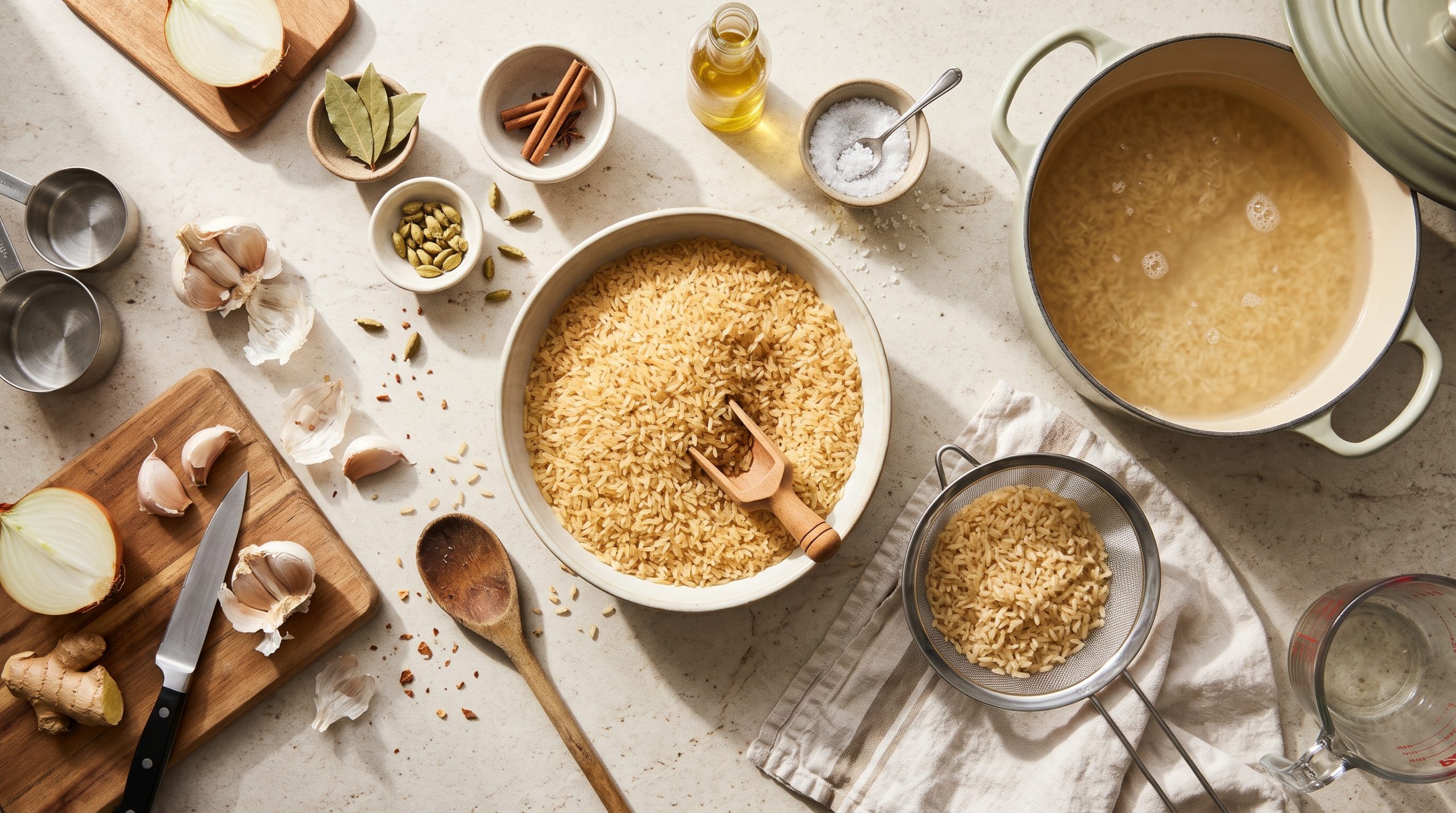
The progression of parboiled rice from harvested paddy to retail pouch or bulk sack is a controlled industrial sequence in which each stage governs texture, color, and grain stability. Unlike wet-pack canning, where Brix, pH, or brine composition are monitored, dry parboiled rice production depends on precision control over the hydrothermal cycle.
- Soaking in the husk: unmilled paddy absorbs moisture, establishing conditions for uniform heat transfer and the migration of nutrients from the bran into the endosperm.
- Steaming: controlled steam application compacts the internal starch structure, reinforces resistance to overcooking, and develops the characteristic golden tint.
- Drying: the steamed grain is dried to a stable moisture level prior to mechanical processing.
- Milling: the dried paddy is dehulled and milled; the finished product is graded to 0% broken grains.
International food safety frameworks require multi-stage verification across the entire production chain. Processing facilities operate under certified systems complying with ISO 9001:2015, ISO 14001:2015, ISO 22000:2018, HACCP, BRCGS, and Kosher OU, confirming structured management of quality, environmental compliance, and food safety. Further details on auditing protocols and international certifications are available in the MIC-TRADE quality standards section.
Each export shipment is accompanied by a laboratory Certificate of Analysis and a product specification documenting key organoleptic, physical, and compliance parameters along with storage requirements.
Procurement Standards, Packaging Formats, and MIC-TRADE Specifications

For regular imports of parboiled rice by retail chains, distributors, or HoReCa operators, commercial viability depends not only on grain performance, but also on packaging flexibility and complete export documentation. Supply formats span multiple distribution channels—from consumer-ready retail packs to bulk sacks for commercial kitchens and food processors.
- Retail packs of 1 kg, 2 kg, and 5 kg—suitable for supermarkets, specialty food stores, and household retail.
- Industrial and HoReCa sacks of 25 kg and 50 kg—designed for restaurants, central catering kitchens, hotels, and repacking facilities.
- Branding options: available under the White Gold Rice brand or under the buyer’s own trademark.
For commercial partners expanding proprietary product ranges across international markets, production is available under the Private Label program—covering custom branding on both retail packs and bulk sacks subject to prior approval of rice grade, specification, labeling language, and artwork layout. By arrangement, mixed consignments combining multiple rice varieties and packaging formats within a single shipment can also be consolidated to streamline inventory planning.
International wholesale shipments of parboiled rice are structured under CIF and other Incoterms with a complete export documentation package. This includes the commercial invoice, packing list, Bill of Lading, Certificate of Origin, phytosanitary certificate, Certificate of Analysis, product specification, and copies of international facility certificates supplied alongside the commercial offer.
The combination of Thai origin, 0% broken grading, hydrothermal processing in the husk, and consistent non-sticky performance establishes parboiled rice as a dependable specification for chefs, retailers, and global importers. Review the full grain assortment in the MIC-TRADE rice catalog, or request product specifications, certificate copies, and shipment terms via the MIC-TRADE contacts page.