

Red Kidney Beans in the B2B Sector: Specifications for Mexican Cuisine, Bowls, and Salad Bars
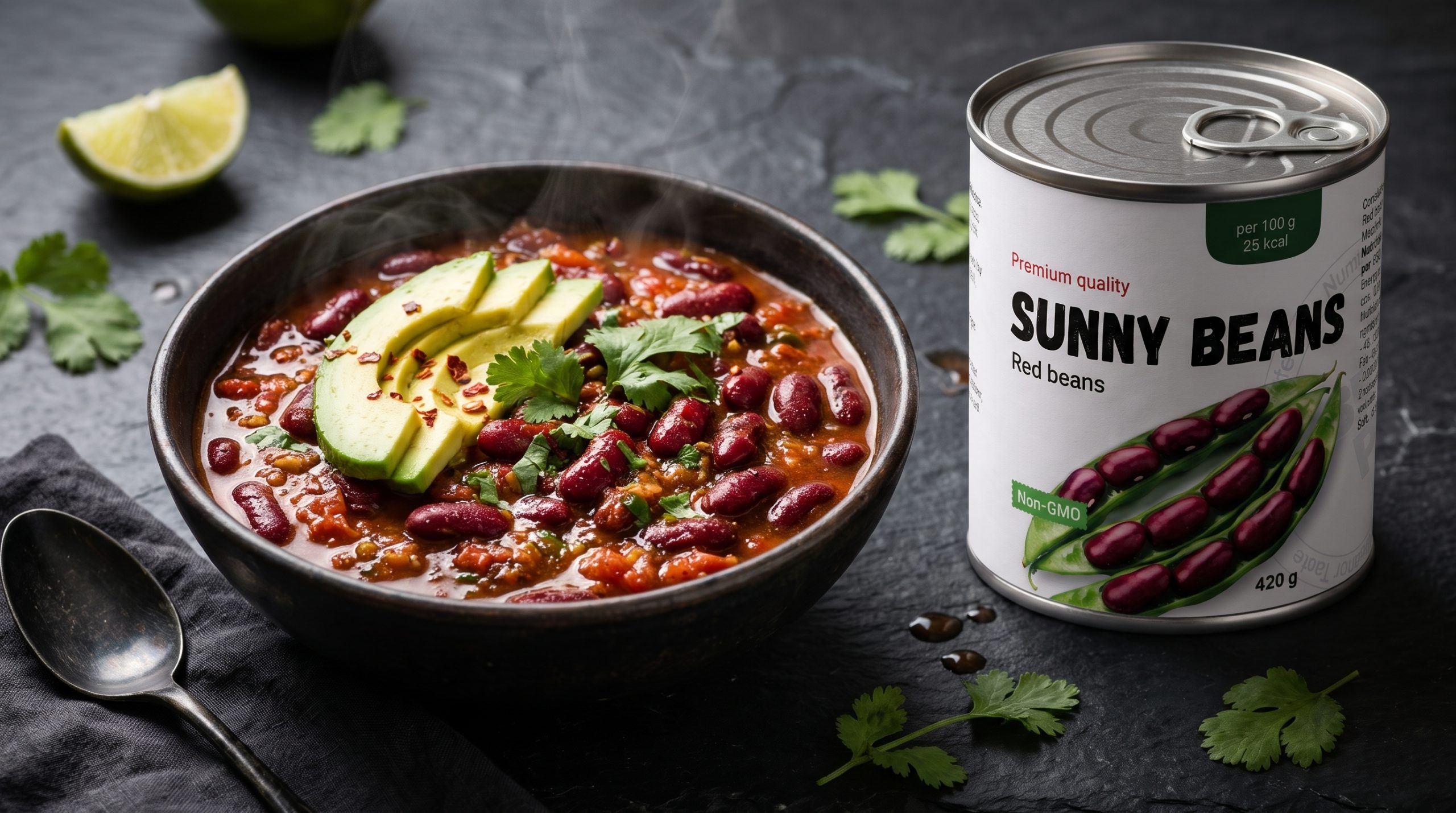
In global gastronomy, red kidney beans occupy a distinguished position, serving both as the structural backbone of authentic regional recipes and as a versatile staple in health-conscious menu development. Their characteristic kidney shape, firm silky seed coat, and velvety interior strike an ideal balance between plate presentation and thermal processing stability. For restaurant chefs, quick-service concepts, and catering operators, consistent bean firmness is a critical quality parameter, preventing breakdown and mushiness during extended simmering or prolonged holding in steam tables. Rising global demand for plant-based proteins has established this pulse as a strategic commodity for the commercial hospitality sector. Balanced organoleptic properties and remarkable culinary flexibility make it indispensable across Mexican and Tex-Mex applications, vibrant grain bowls, plant-based burgers, and salad bars. Reliable canned beans enable restaurant chains and food processing facilities to eliminate labor-intensive soaking and boiling cycles, delivering batch-to-batch textural uniformity throughout daily operations. Procurement specialists and production directors evaluate canned red kidney beans through rigorous technical metrics: drained weight ratios relative to sauce, pH stability, and strict adherence to commercial sterility protocols. Understanding raw material specifications and packing medium formulations allows B2B buyers to optimize menu margins and scale high-demand product lines.
Botanical Origin and Raw Material Purity of Kidney Beans
Red kidney beans belong to the species Phaseolus vulgaris and are distinguished among pulses by their elongated, anatomically curved shape, which gives the variety its global commercial name. The raw crop originates in China, where specialized agro-climatic conditions foster the maturation of large, uniformly calibrated beans featuring deep pigmentation and resilient cell wall structures.
In global commodity trade, the variety is traded under various regional trade designations: English-language buyers specify red kidney beans or canned kidney beans, Spanish commercial terminology establishes them as frijoles rojos and alubias rojas, French foodservice refers to haricots rouges or haricots kidney, German procurement lists Kidneybohnen or rote Kidneybohnen, and Italian culinary channels designate them as fagioli rossi or fagioli kidney.
Agricultural harvesting schedules are calibrated to peak maturity, ensuring seed moisture content and density support physical integrity during downstream industrial processing. Rigorous optical and mechanical grading eliminates damaged or misshapen seeds prior to the blanching stage. This rigorous screening ensures that wholesale shipments of canned red kidney beans reach commercial buyers and processors as uniform, color-consistent consignments capable of undergoing retort sterilization without seed coat rupture or skin slip.
Organoleptic Profile and Culinary Texture
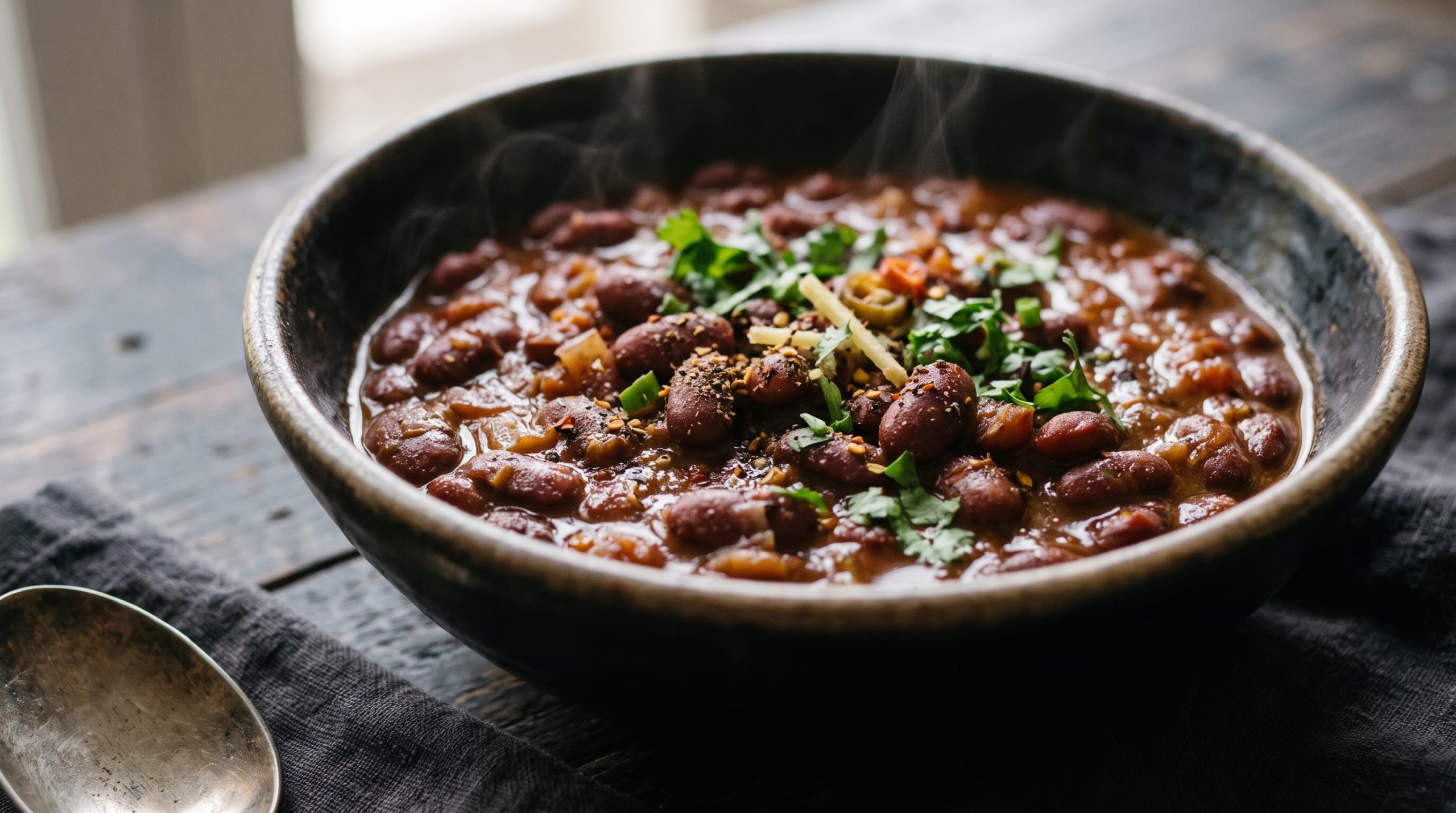
The primary culinary value of red kidney beans lies in their distinct textural dichotomy: an intact, resilient outer skin envelops a smooth, creamy core that provides a clean, substantial bite. The product features an earthy, mildly sweet flavor profile that integrates seamlessly into complex culinary matrices without overpowering secondary ingredients, absorbing spices, stocks, and aromatics.
Their deep crimson to reddish-brown pigmentation plays a strategic visual role in menu presentation, delivering contrast on the plate or in front-of-house buffet displays. In white sauce formulations, the red to reddish-brown beans are suspended in a silky, homogeneous medium, whereas in tomato sauce preparations, the reddish-brown beans are packed in a rich ruby sauce.
Owing to the thermal stability of their dietary fiber network, the beans resist breakdown when folded into viscous sauces or heavy dressings, maintaining firm grain integrity even after extended thermal exposure. This structural resilience makes them indispensable in both hot and chilled applications where visual definition and mouthfeel are critical for commercial dining operations.
Quality Anatomy, Grading, and Formulation Ratios
In commercial canning, the ratio of solid product to liquid medium serves as the definitive benchmark for specification compliance and procurement economics. In canned red kidney bean processing, the solid bean fraction is strictly standardized at 55–60%, with minimum drained bean content guaranteed at not less than 55% of total net weight.
This calibrated solid-to-liquid ratio eliminates excess packing medium and protects structural bean integrity: in tomato sauce, the beans remain tender, fully cooked, and whole, while in white sauce, they remain tender and structurally intact within a smooth, creamy emulsion.
Commercial supplies are delivered in two distinct packing media with non-interchangeable formulation parameters:
- White sauce formulation: bean content 55–60%, purified water 25–30%, vegetable oil 3–5%, wheat flour or modified starch as an emulsion stabilizer 2–4%, sugar 1–2%, food-grade salt 1–1.5%, spice blend 0.5–1%; acidity levels are maintained at pH 5.5–6.5, salinity at 1–1.5%.
- Tomato sauce formulation: bean content 55–60%, natural tomato sauce 30–35%, sugar 1–2%, vegetable oil 1–2%, salt 1–1.5%, spices 0.5–1%; medium acidity is controlled at pH 4.0–4.5, with salinity at 1–1.5%.
Brix values are not specified in the product catalog, as flavor balance is achieved through the precise equilibrium of acidity, vegetable oils, and natural spice extracts. For foodservice and food preparation lines, this ensures predictable performance: the white sauce provides an immediate velvety base for braises and stews, while the tomato sauce introduces traditional tangy acidity without requiring supplementary tomato paste.
Culinary Applications: From Mexican Classics to Modern Grain Bowls
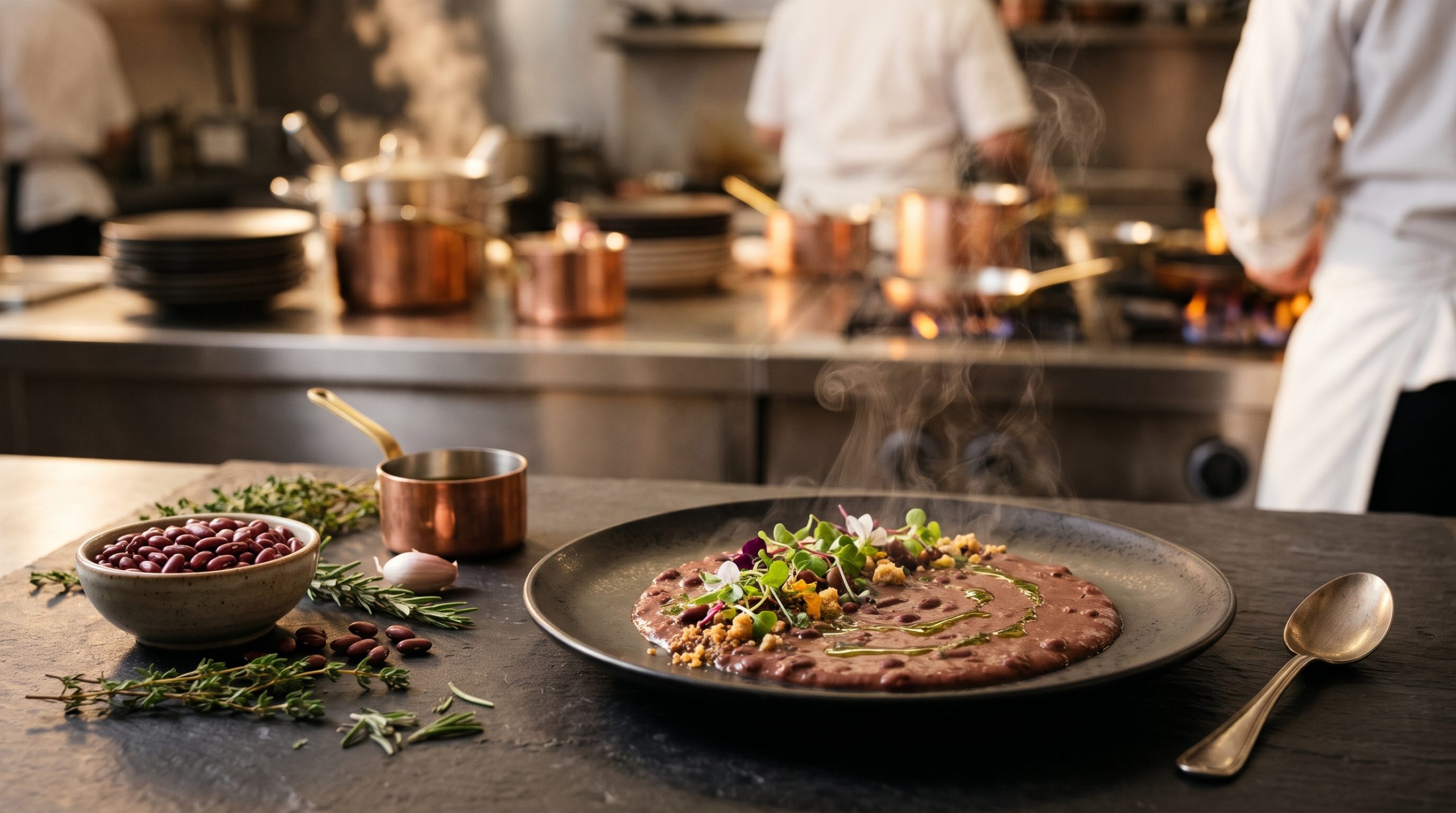
The versatility of canned red kidney beans allows operators to utilize them directly with their packing sauce or drained, offering extensive culinary flexibility in commercial kitchens. The product is engineered to satisfy the operational demands of retail distribution, foodservice and HoReCa operators, central commissary kitchens, and ready-meal manufacturers.
Latin American and Mexican cuisines represent the quintessential sector for kidney bean utilization. Red kidney beans for HoReCa are essential in authentic formulations where firm beans bind braised meats, onions, chili peppers, cumin, and tomatoes. Canned beans for chili con carne and burritos establish industry benchmarks due to their capacity to retain structural firmness during prolonged baking in wraps or slow braising in braising pans.
Key Foodservice Application Sectors
- Mexican and street food programs: succulent burritos, baked enchiladas, hearty wraps, quesadillas, and traditional chili con carne or plant-based chili sin carne.
- Healthy eating and grain bowls: balanced protein bowls centered on quinoa or rice, where deep ruby beans provide visual and nutritional contrast alongside ripe avocado, sweet corn, and fresh herbs.
- Salad bars and pre-mixed salads: fresh vegetable medleys with bell peppers, red onions, and vinaigrettes; the beans maintain whole structural integrity without leaching excess moisture into gastro-pans on open buffet bars.
- Soups and slow-simmered stews: hearty bean soups, rustic vegetable broths, and composite braises prepared with root vegetables and aromatic herbs.
- Side dishes and grain blends: warm side dishes based on parboiled or wild rice, where the packing sauce coats grains evenly to form a flavorful glaze.
For kitchen operators in quick-service restaurant (QSR) chains, assembly speed is paramount. Pre-cooked canned beans eliminate the need for secondary cooking cycles; they require only gentle re-heating within a sauce base or direct incorporation into cold-prep stations following rinsing, substantially reducing ticket times.
Nutritional Profile and Biochemical Value
Pulses play a fundamental role in modern nutritional formulations as natural sources of plant protein and complex carbohydrates, delivering sustained satiety without glycemic spikes. Red kidney beans provide a rich matrix of dietary fiber that promotes optimal digestion and supports gastrointestinal health.
Nutritional and energy profiles vary according to the packing sauce, enabling dietitians and food technologists to calculate precise caloric targets and macronutrient distributions in finished meal formulations:
| Parameter (per 100 g product) | In White Sauce | In Tomato Sauce |
|---|---|---|
| Protein | 5–7 g | 5–7 g |
| Fat | 3–5 g | 1–2 g |
| Carbohydrates | 12–16 g | 14–18 g |
| Dietary Fiber | 3–5 g | 4–6 g |
| Energy Value | 100–125 kcal | 90–115 kcal |
In the white sauce formulation, lipid content is slightly elevated due to added vegetable oil (3–5 g versus 1–2 g in tomato sauce), yielding a rich, creamy mouthfeel. Conversely, the tomato sauce medium features a higher carbohydrate concentration (14–18 g) and increased dietary fiber (4–6 g per 100 g) alongside a lower overall energy density of 90–115 kcal.
Commercial product specifications do not list isolated micronutrient values or recommended daily allowance percentages; industrial buyers evaluate the commodity on verified macronutrient yields and structural nutrient retention following thermal processing.
Canning Technology and Food Safety Standards
The manufacturing process is governed by stringent thermal schedules and environment monitoring, achieving total microbiological stability without synthetic preservatives or artificial colorants. Canning is executed via precision thermal processing in commercial retorts to achieve commercial sterility, fully eliminating potential pathogens and spoilage flora.
Multi-stage quality assurance—from incoming raw bean intake to finished lot testing—is verified by accredited laboratory analyses and detailed technical datasheets delivered with shipping documentation. This ensures strict compliance with the high international quality standards mandated across certified food processing facilities.
Hermetically sealed tinplate packaging insulates product contents from light, atmospheric oxygen, and moisture, safeguarding natural bean pigmentation and turgidity throughout the product lifecycle. Eliminating environmental exposure prevents lipid oxidation, maintaining a stable, fresh organoleptic profile throughout commercial shelf life.
Procurement Standards and Global Trade Specifications with MIC-TRADE
For international commodity traders, distributors, and major foodservice chains, vendor qualification hinges on raw material consistency and rigorous legal execution of export contracts. As an established exporter of red kidney beans in tomato and white sauces, MIC-TRADE manages continuous high-volume shipments of canned pulses tailored to rigorous international specifications.
Packaging formats are standardized: heavy-duty 420 g net weight tin cans optimized for corrugated master carton packing and automated palletization. Drained bean content constitutes a minimum of 55% of net weight. The core pulse portfolio comprises four standard SKU configurations in 420 g formats: red kidney beans and white kidney beans, each available in either delicate white sauce or rich tomato sauce.
Commercial retorting guarantees an extended 36-month shelf life, ensuring physical stability during long-transit ocean freight and prolonged ambient warehousing. Consignments are dispatched in full container loads (FCL) with a minimum order quantity (MOQ) of 2 ocean freight containers under CIF or flexible Incoterms rules, with explicit agreement on destination ports and custom labeling languages.
A core strategic pillar of our export operations is canned pulse Private Label manufacturing: institutional clients can brand each SKU under proprietary trademarks, with complete pre-production validation of label artwork and tailored formulation recipes. Products are also supplied under our proprietary catalog brand, Sunny Beans.
Contract manufacturing facilities comply fully with international management and food safety certifications, including ISO 9001:2015, environmental management ISO 14001:2015, food safety management ISO 22000:2018, HACCP principles, global standard BRCGS, and Kosher OU religious certification. Every shipping container is documented with a full compliance dossier: commercial invoice, packing list, ocean bill of lading, certificate of origin, certificate of quality, certified laboratory test report, and technical product specification.
To request a commercial quotation, finalize SKU allocations, or commission private label contract packing, importers and procurement buying alliances can directly contact our trading desk to secure seamless global supply chains and standardized foodservice ingredients.