

Reefer Freight Retains High Food Surcharges Despite Decline in Global Container Indices
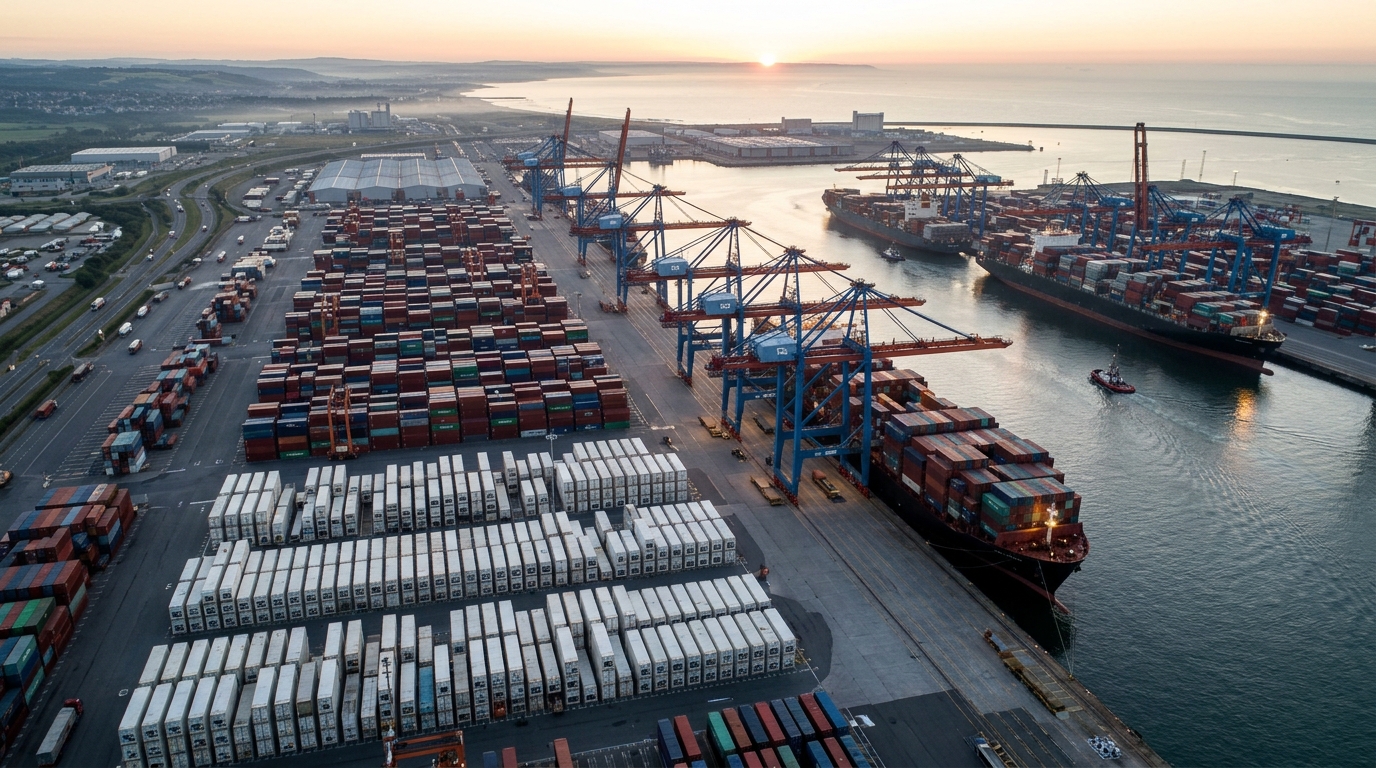
A four-week correction in global container freight spot indices has failed to ease logistics pressure on international food trade. Rerouting around the Suez Canal, shortages of refrigerated equipment, and congestion at European ports are keeping local surcharges at $800–$1,300 per container.
Freight Index Divergence and the Scale of Reefer Surcharges
According to the latest Drewry World Container Index (WCI) data, the composite ocean freight rate fell 3% week-on-week to $4,176 per 40-foot container (FEU), marking a fourth consecutive week of decline. Even after this pullback, however, the benchmark remains 126% higher year-on-year. In parallel, the Shanghai Containerized Freight Index (SCFI) edged down 1.9% to 3,503.78 points, creating the impression of a gradual cooling in the global container shipping market.
A closer route-by-route breakdown, however, reveals a sharp asymmetry. Spot rate declines have been concentrated primarily on transpacific lanes: Shanghai–New York dropped 9% to $8,194/FEU, while Shanghai–Los Angeles fell 5% to $7,026/FEU. On European and Mediterranean lanes, pricing moved in the opposite direction—rates from Shanghai to Genoa rose 6% over the same week to reach $4,436/FEU.
The gap between headline indices and actual landed freight costs is most pronounced in refrigerated food shipping. On tight European import lanes, carriers continue to levy local reefer equipment scarcity surcharges ranging from $800 to $1,300 per unit. As a result, importers of frozen fruit, vegetables, meat, and dairy products continue to absorb elevated logistics expenses despite the headline softening of benchmark indices.
Drivers of Persistent Cost Pressure in the Cold Chain
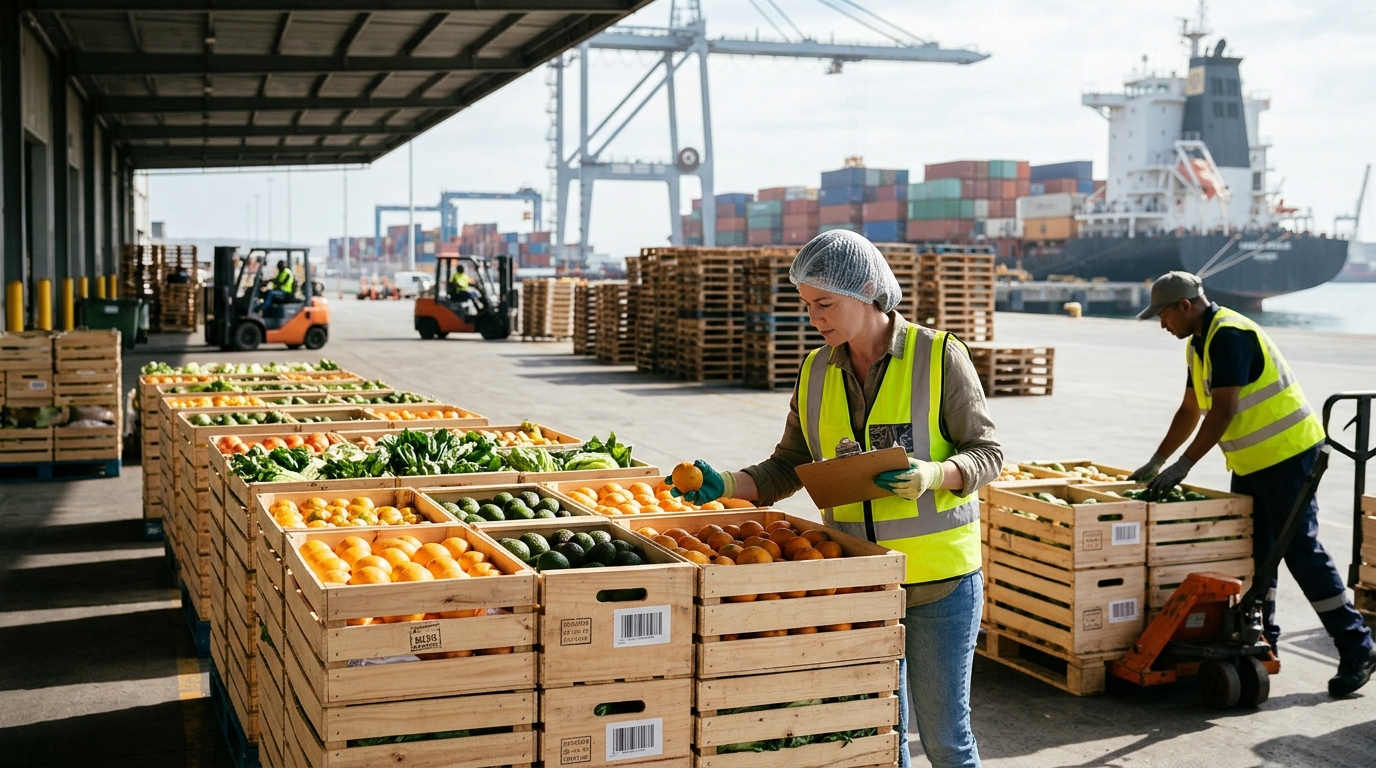
The primary driver of elevated temperature-controlled freight costs remains the forced diversion around the Suez Canal via the Cape of Good Hope. Extending Asia–Europe transit times by 10–15 days carries a direct operational penalty for the reefer segment: each additional day at sea requires uninterrupted power for refrigeration units, increasing fuel consumption and keeping bunker adjustment factors (BAF) elevated.
Longer round-trip voyages directly slow the turnaround of specialized containers. A substantial share of the global reefer fleet remains tied up at sea for longer intervals, tightening the availability of empty equipment at loading ports. Capacity is further constrained by ocean carriers’ blank sailing strategies, which have already triggered the 6% rate jump on the Shanghai–Genoa corridor.
On the receiving end, infrastructure bottlenecks at major European hubs are compounding the strain. The ports of Rotterdam and Hamburg are reporting vessel-handling delays alongside an acute shortage of shore-side reefer plugs. The buildup of temperature-controlled containers at terminals delays their return into circulation and serves as the direct basis for carriers’ $800–$1,300 per-container equipment surcharges.
Market Mechanics of Refrigerated Food Logistics
Composite freight indices such as the WCI and SCFI primarily track spot market conditions for standard 40-foot dry containers, whereas the reefer market operates under a far more rigid economic model. Specialized refrigerated units have limited substitutability, require dedicated power plugs both aboard vessels and at port terminals, and demand continuous technical monitoring. Consequently, rate corrections in the dry-cargo segment do not automatically translate into lower cold-chain costs.
For perishable and frozen food commodities, an extra 10–15 days in transit combined with BAF charges and equipment scarcity fees creates a dual financial squeeze. On one hand, the direct logistics share in the landed cost of raw materials entering European markets increases; on the other, working capital remains tied up for longer cycles while the risk of supply schedules falling out of sync with processing plant runs intensifies.
This imbalance between dry and refrigerated logistics is reshaping price relativities across adjacent food categories. Faced with elevated cold-chain expenses, a growing number of processors and distributors are reassessing the economics of shelf-stable alternatives—particularly canned and ambient grocery lines from the MIC-TRADE food commodity range, which move in standard dry containers without reliance on scarce port power plugs.
Industry Response and Supply Chain Adaptation

In response to extended transit times and reefer equipment shortages, European processors, retail chains, and HoReCa operators are revising their import planning horizons. Market participants are building in additional logistics and lead-time buffers, advancing booking windows to secure vessel slots and reefer plug allocations on key maritime services.
Trade flows and port routings are also being realigned. Some importers are diversifying European entry points to reduce exposure to congested terminals in Rotterdam and Hamburg, while increasingly evaluating regional suppliers with shorter haul distances. These adjustments help limit final price sensitivity to transoceanic bunker surcharges and schedule disruptions.
Across supplier–retailer negotiations, there is a stronger shift toward flexible pricing formulas that incorporate floating freight components. Within chain retail and Private Label programs, buyers are increasingly balancing assortments between frozen items and logistically steadier canned counterparts to contain shelf-price pressure.
Conclusions and Market Outlook
Analytical takeaway: The global ocean freight market has entered a bifurcated phase: despite rate corrections on transpacific dry-cargo lanes, overall freight levels remain 126% higher year-on-year, and the European reefer segment continues to face a structural capacity deficit. Over the next 6–12 months, Cape of Good Hope diversions, blank sailings, and constrained reefer infrastructure at Northern European ports will remain the primary sources of tension for international food trade.
Practical takeaway: For processors, importers, and retail chains, headline dry-container indices are no longer a reliable proxy for forecasting cold-chain costs. Maintaining supply chain resilience requires systematically adapting procurement schedules to 10–15-day transit extensions, diversifying sourcing origins and discharge ports, and maintaining a balanced portfolio across temperature-controlled and ambient product categories.
MIC-TRADE (International Food Trading Company): MIC-TRADE is an International Food Trading Company specializing in the supply of food commodities and the development of commercial ties between producers and buyers across global markets. We organize international supply chains, identify manufacturing partners, align product specifications, and manage export-import operations—with a strict focus on product parameters, production standards, quality control, and transparent commercial terms.
To learn more about the company’s supply approach and food category specifications, visit the MIC-TRADE International Food Trading Company page. To discuss sourcing, distribution, and international cooperation opportunities, reach out to our team via the contacts page.