

Skipjack Tuna: Distinct Oceanic Flavour, Key Differences from Yellowfin, and Culinary Applications
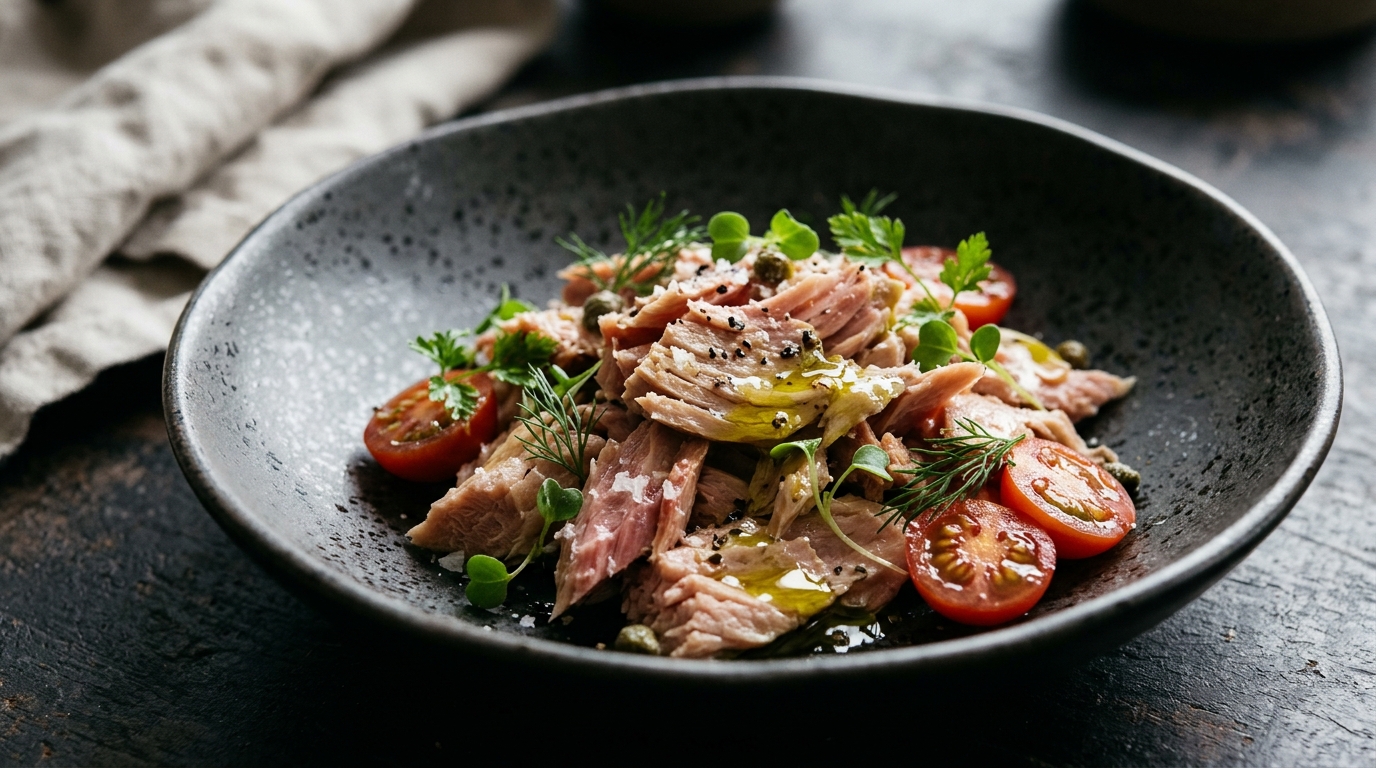
In global gastronomic culture, tuna holds an esteemed standing, combining the pedigree of an oceanic resource with extraordinary culinary adaptability. Among the diversity of pelagic species, Skipjack tuna (Katsuwonus pelamis) has earned widespread recognition among professional chefs as a fish with a pronounced individual character, shaped in the depths of warm tropical ocean waters. Unlike milder species, this open-sea pelagic delivers an authentic marine depth that serves as a robust foundation for modern culinary concepts. Contemporary culinary trends and the demand for clean, nutritionally balanced formulations increasingly favor ingredients with honest, assertive organoleptic profiles. Commercial interest in the technical properties and gastronomic potential of Skipjack continues to expand among procurement managers and executive chefs across global markets, who value its balance of natural flavour, processing stability, and superior nutritional density. A comprehensive understanding of this raw material unlocks broad applications—from contemporary light salads and delicate spreads to rillettes, baked goods, and nutrient-dense grain bowls. This expert guide details the biological attributes, textural parameters, and canning technology benchmarks of Skipjack tuna. We examine the fundamental culinary distinctions between Yellowfin and Skipjack, assess the functional advantages of sunflower oil versus brine packaging, and demonstrate how MIC-TRADE’s international quality assurance protocols govern the rigorous selection of ocean commodities.
Natural Origin and Oceanic Habitat of Skipjack Tuna
Skipjack tuna (Katsuwonus pelamis) is a pelagic ocean predator belonging to the Scombridae family, inhabiting warm tropical waters across the open ocean. These offshore environments require perpetual movement through warm water masses, well away from coastal shallows and continental shelves.
By biometric and behavioural metrics, Skipjack is distinct within the tuna family. Smaller and more agile than Yellowfin (measuring 50–80 cm in length and weighing 3–6 kg), it executes rapid maneuvers throughout the upper pelagic layers. High sustained speeds and constant movement support active foraging throughout upper water horizons.
An open-ocean pelagic habitat creates specific environmental conditions that define the species’ biological profile. Life in surface open-water layers involves extensive migrations, directly influencing the density and composition of Skipjack muscle tissue.
This inherent mobility and pelagic open-ocean existence shape a distinct physiological profile. Minimal contact with coastal zones and development within clean oceanic currents ensure stable species-specific attributes, highly valued by food industry professionals across global markets.
Organoleptic Profile and Texture: Authentic Fish Character
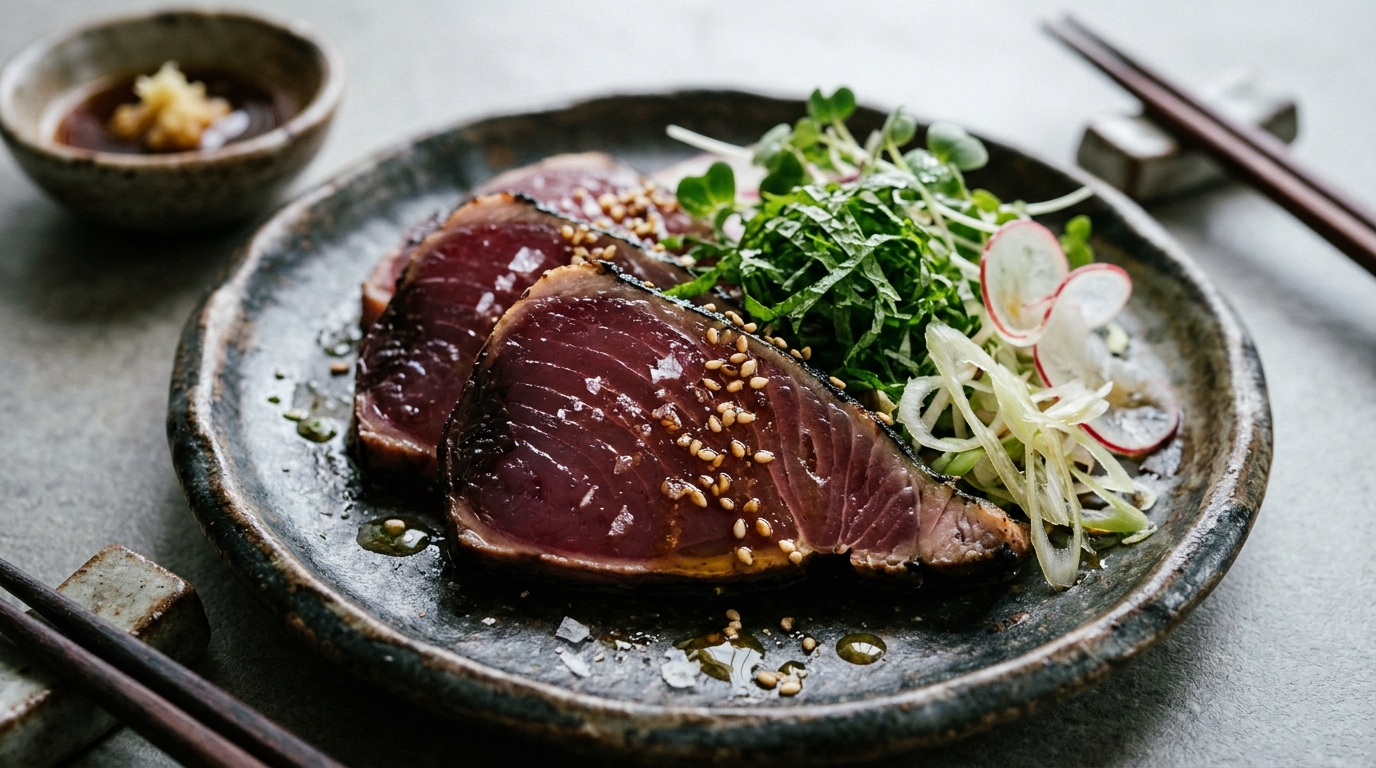
In professional foodservice, Skipjack tuna is prized for its defined flavour identity. Its organoleptic profile features a pronounced, robust oceanic taste with a subtle savoury depth highly valued by proponents of authentic seafood. While larger tuna species offer a milder, near-neutral flavour profile, Skipjack acts as an assertive primary source of distinct ocean flavour.
Under international canned tuna classifications, the species holds a clearly defined position. Its flesh exhibits a slightly darker tone (graded as Light Meat) and a finer fiber structure compared to Yellowfin, resulting in an exceptionally tender texture when flaked or minced. Although both species are standardized under the Light Meat designation, Skipjack’s richer tone reflects its pronounced organoleptic individuality.
The fine grain of the muscle fibers dictates unique performance in sauces and spreads: the texture becomes remarkably tender upon blending. This property allows Skipjack to integrate seamlessly with other ingredients without forming dry or overly fibrous particles.
To support versatile culinary applications, the product is packaged in two standard media. Skipjack is available in refined sunflower oil (enhancing moisture retention and tenderness) or in brine / natural juice (tailored for calorie-controlled dietary profiles up to 105 kcal). Vegetable oil gently rounds out savoury marine notes while enhancing product pliancy, whereas the brine pack emphasizes the natural freshness of oceanic fish.
Culinary and Commercial Differences Between Yellowfin and Skipjack
Experienced culinary professionals view Yellowfin (Thunnus albacares) and Skipjack (Katsuwonus pelamis) as two distinct culinary solutions, each fulfilling specific menu objectives. Yellowfin is characterized by larger physical size, lighter flesh, and broader, firmer flakes with a mild flavour profile, making it the preferred choice for applications requiring large, intact chunks.
In contrast, Skipjack is smaller and more dynamic than Yellowfin (50–80 cm in length, 3–6 kg in weight), adapted for high-velocity agility in upper pelagic waters. Its meat features a deeper hue within the Light Meat grade and a finer fiber structure than Yellowfin, yielding an exceptionally tender consistency when broken down.
In multi-component cold and hot culinary preparations, Skipjack’s specific characteristics deliver tangible advantages:
- Robust flavour retention: The pronounced oceanic profile with savoury depth holds up against potent accompaniments such as capers, Dijon mustard, fresh herbs, citrus, and olives.
- Tender consistency: Fine-grained muscle fibers deliver an exceptionally delicate mouthfeel when flaked or puréed, forming homogeneous mixtures.
- Optimal dressing binding: Fine fibers absorb and distribute emulsified dressings evenly, ensuring balanced moisture throughout every portion.
- Broad application range: High versatility spanning crisp salad mixes, bakery fillings, and baked pastry recipes.
Consequently, while Yellowfin is typically selected for center-plate presentations requiring solid loin cuts or large segments, Skipjack serves as the benchmark choice for salads, delicate spreads, pâtés, and sauce-based preparations.
Culinary Applications: Salads, Pâtés, and Contemporary Concepts

The culinary utility of Skipjack tuna is marked by outstanding operational versatility. Due to its structural characteristics, Skipjack serves as an industry standard base for classic seafood salads, gourmet sandwiches, pâtés, quiche fillings, and high-protein grain bowls. Its ability to complement both crisp fresh produce and warm baked dishes makes it an essential staple in high-volume commercial kitchens.
Formulating Balanced Salads with Skipjack Tuna
When executing refined Skipjack tuna salads, professional chefs focus on crisp textural contrasts and balanced dressing acidity. Given the tuna’s assertive maritime profile and savoury depth, heavy dressings are replaced by light vinaigrettes or emulsions based on extra virgin olive oil, fresh lemon or lime juice, wholegrain mustard, and sea salt.
Crisp greens such as romaine, baby spinach, peppery arugula, or tender lamb’s lettuce provide a fresh foundation. Sweet cherry tomatoes, shaved cucumbers, blanched asparagus, and shallots underscore the dish’s freshness. A poached egg with a runny yolk or soft-boiled eggs introduce a velvety richness that complements the delicate texture of flaked tuna.
Velvety Pâtés, Rillettes, and Breakfast Sandwiches
The fine fiber structure makes Skipjack tuna an ideal base for cold appetizers and spreads. A tuna pâté reaches optimal harmony when paired with soft cream cheese, fresh lemon juice, and ground white pepper. Because the meat features a deeper Light Meat tone and finer grain than Yellowfin, it forms an exceptionally smooth emulsion upon puréeing.
For a traditional seafood rillette, a portion of the tuna is coarsely flaked to preserve textural definition, while the remainder is whipped with butter, citrus zest, and chives. As an industry-standard base across salads, sandwiches, pâtés, quiches, and bowls, Skipjack rillette served on toasted artisan bread delivers a refined appetizer format for upscale food service.
Bakery Applications, Quiches, and Balanced Grain Bowls
In hot food applications, Skipjack demonstrates excellent thermal stability. It retains moisture and structural integrity within savoury pastry and French quiche fillings alongside caramelized leeks, broccoli florets, and aged cheese, without drying out during high-temperature baking.
Within contemporary health-focused grain bowls, Skipjack provides a lean, protein-dense core. Paired with warm quinoa or brown rice, avocado, edamame, crisp cucumber, and a light sesame dressing, it constitutes a nutrient-rich, operationally efficient dish tailored to fast-casual dining.
Nutritional Profile and Biochemistry: Lean Marine Protein
Beyond sensory attributes, Skipjack tuna delivers a dense nutritional matrix meeting the standards of contemporary functional nutrition. The meat provides 22.0–24.5 g of complete protein per 100 g of product, offering high bioavailability well-suited for sports and wellness diets.
The lipid and micronutrient profile also represents substantial nutritional value. Skipjack serves as a dietary source of essential omega-3 polyunsaturated fatty acids (EPA and DHA), bioavailable iron, selenium, and B-complex vitamins (notably B12 and niacin B3).
For health-conscious formulations, low caloric density is a decisive asset. Available packed in refined sunflower oil or in brine (delivering a lean, low-calorie profile under 105 kcal per 100 g), Skipjack integrates seamlessly into calorie-controlled menus without excess lipid loading.
| Nutrient / Parameter | Content per 100 g | Nutritional Profile |
|---|---|---|
| Complete Protein | 22.0–24.5 g | Highly digestible; optimal for sports and wellness nutrition |
| Energy Value (in Brine) | Up to 105 kcal | Lean, low-calorie profile suited for balanced dietary programs |
| Unsaturated Fatty Acids | EPA / DHA | Marine-derived polyunsaturated omega-3 fatty acids |
| Mineral Complex | Iron, Selenium | Essential trace minerals of marine origin |
| Vitamin Complex | B-group vitamins (notably B12 and niacin B3) | Essential B vitamins naturally occurring in oceanic fish |
Thanks to these nutritional parameters, high-grade canned tuna remains a cornerstone of the Mediterranean diet and modern health-focused meal planning.
Processing Standards: From Ocean Catch to Canned Product
Preserving the natural muscle structure and freshness of raw material requires an unbroken cold chain throughout primary processing. Onboard brine freezing at -18°C immediately post-catch, coupled with mandatory histamine screening below 50 ppm, safeguards raw material integrity. Rapid immersion brine freezing arrests enzymatic degradation and stabilizes muscle tissue.
Histamine surveillance strictly capped below 50 ppm serves as a critical safety and freshness benchmark, validating prompt chilling directly following oceanic harvest.
During canning, strict fill-weight ratios are maintained: a minimum of 70% drained tuna meat to 30% packing medium in cans fitted with Easy-Open lids. This ratio guarantees a substantial portion of succulent fish meat without excess liquid fill.
The production cycle concludes with thermal retort sterilization of hermetically sealed cans, ensuring microbiological stability and extended commercial shelf-life while preserving product quality.
Quality Assurance and Sourcing Protocols at MIC-TRADE
In international commodity trading and commercial food distribution, systematic compliance with global safety standards is paramount. Canned tuna supplied by MIC-TRADE adheres strictly to international certifications, including ISO 9001:2015, ISO 22000:2018, and HACCP principles.
Procurement is governed by stringent principles of quality assurance and transparency. MIC-TRADE operates under rigorous procurement protocols, focusing on comprehensive physico-chemical analyses for every incoming batch, meat purity, and strict conformance to agreed commercial specifications.
Commercial packaging practicality meets the operational demands of high-pace professional kitchens and retail consumers alike. Easy-Open lid formats enable rapid, clean opening while safeguarding the structural integrity of the fish meat.
By partnering with a reliable ocean seafood supplier, procurement managers and foodservice operators ensure consistency across their menu offerings. To explore the complete product range and review compliance with international safety and quality management standards, visit the relevant catalog sections. To arrange scheduled contract deliveries and technical consultations, contact the MIC-TRADE commercial team.