

Sliced and Whole Champignons in Brine: Specification Shifts in the Global Pizzeria and Ready-Meal Market
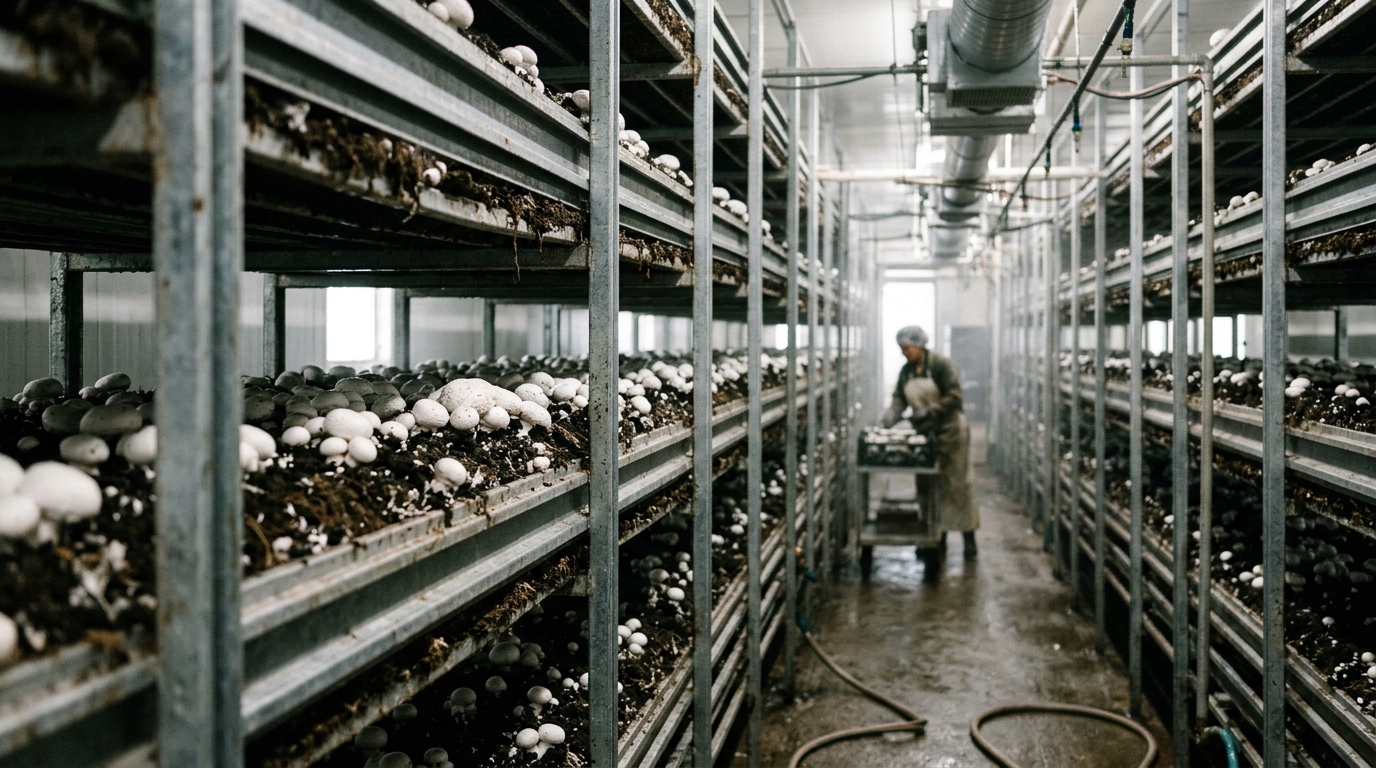
The global canned champignon market is experiencing an acute shortage of tightly calibrated specifications in brine: according to current industry estimates, HoReCa demand for uniform Grade 1 sliced and whole fruiting bodies exceeds supply by at least 12–18% compared with the previous cycle, while delays and claims during phytosanitary inspections of imported consignments at key European Union border checkpoints have reached 1–3% of total shipments. Concurrent pressure from climate volatility on first-flush yields, structural consolidation across the processing sector, and stricter European packaging regulations are reshaping pricing and contracting dynamics this season.
Supply-Demand Gap: Scale and Geography of the Deficit
The global canned champignon market is undergoing a structural shift in trade flows this season. According to current industry data, the HoReCa sector, pizzeria chains, and ready-meal manufacturers account for 44–45% of total canned mushroom consumption—and this segment has become the primary driver of the deficit. The sharpest rise in inquiries is concentrated in uniformly sliced cuts and calibrated whole fruiting bodies in brine, where supply of Grade 1 specifications lags demand by at least 12–18% relative to the previous cycle.
Across major trading hubs in Europe, North America, and the Middle East, tightness in top-grade specifications has reached its highest level in several seasons. The availability gap between standard “pieces and stems” cuts and premium Grade 1 sliced or whole champignons has widened markedly. At the same time, the rate of delays and claims during phytosanitary and quality inspections of imported consignments has climbed to 1–3% of total shipments at key European Union border checkpoints. Leading processing hubs—primarily Poland and the Netherlands—are reporting heightened strain on grading and sterilization lines, while Chinese processors are maintaining firmer pricing discipline in contracts for specifications with uniform slice geometry and reduced salt content.
Production, Climate, and Regulatory Drivers of the Imbalance
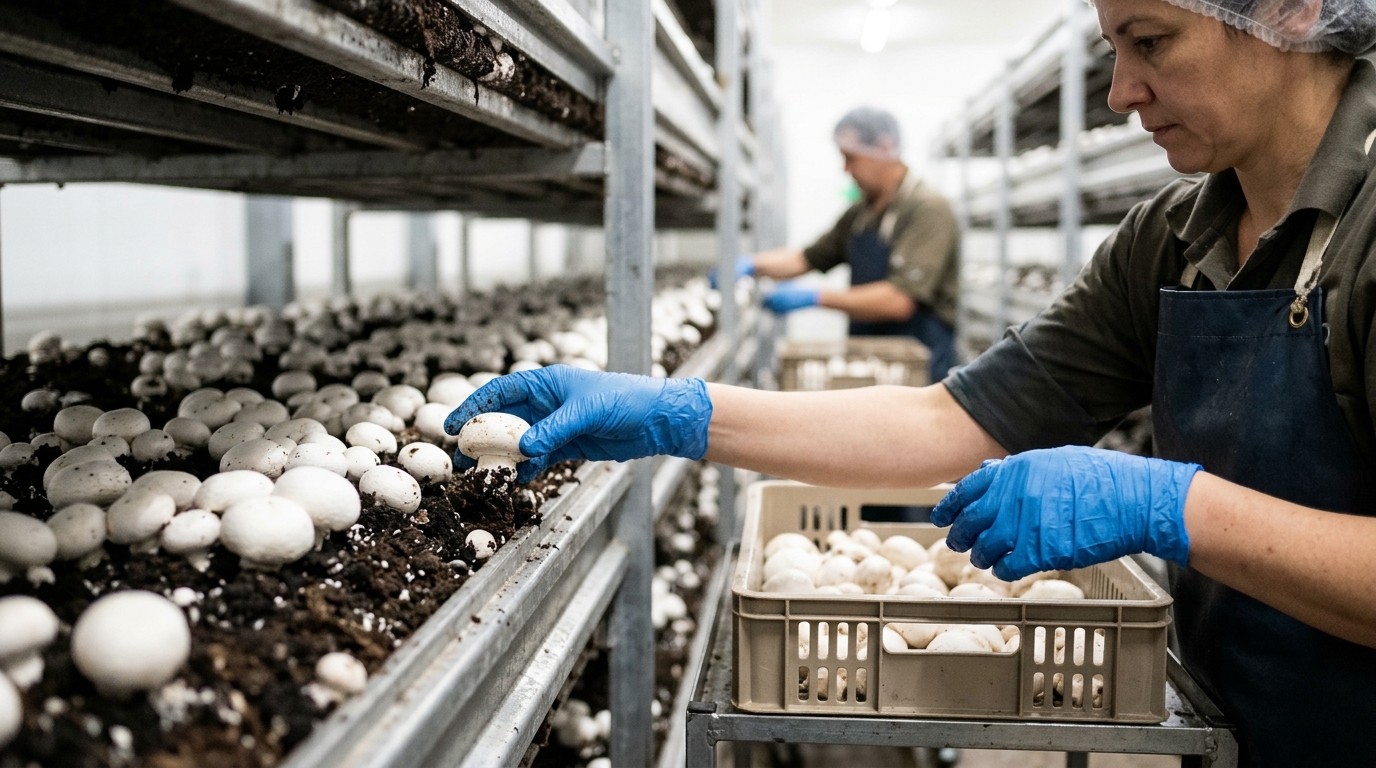
This deficit stems from three interconnected drivers, each directly constraining the availability of top-grade specifications. First, compost parameter instability during hot summer periods across key growing regions in Europe and North America. Deviations in temperature and humidity during substrate fermentation reduce the yield of firm, closed-cap first-flush mushrooms—the only viable raw material base for producing whole and uniformly sliced canned champignons. Lower first-flush yields translate directly into tighter raw-material supply for premium specifications.
Second, structural consolidation across the sector—driven by shortages of skilled manual harvesters, elevated climate-control costs, and the high energy intensity of retort sterilization—has forced a portion of independent farms to curtail operations. Available raw-material volumes are increasingly concentrated in the hands of large vertically integrated agro-holdings, limiting spot-market liquidity and preventing rapid supply expansion in response to seasonal demand peaks.
Third, stringent environmental and food-safety regulations in the European Union—most notably the mandatory transition to bisphenol A-free (BPA-free) internal coatings for metal cans—have raised operating costs for both European processors and Asian exporters. Line retooling and certification of new packaging materials have slowed capacity recovery, pushing up baseline production costs across the entire chain from farm to customs clearance.
Why Premium Specifications Face the Greatest Pressure
These production and regulatory pressures affect product grades unevenly. When first-flush yields decline, processors are forced to divert a larger share of raw mushrooms into the lower-grade “pieces and stems” category, which relies primarily on overripe or off-spec fruiting bodies and is less sensitive to raw-material uniformity. The result is an automatic contraction in raw material suitable for calibrated whole mushrooms and uniform machine slicing, where minimal mechanical damage and low oxidative browning are critical.
As a result, market conditions this season remain distinctly asymmetric: standard grades stay broadly available under moderate pricing pressure, whereas for canned champignons in premium specifications, processors are holding firm quotations without meaningful discounts. Compliance costs associated with the shift to BPA-free packaging further lock in this premium, as higher operating expenses are passed into contracts specifically within top-grade segments where buyers are prepared to pay for verified regulatory compliance.
Industry Response: Trade Flow Reallocation and Contract Transformation
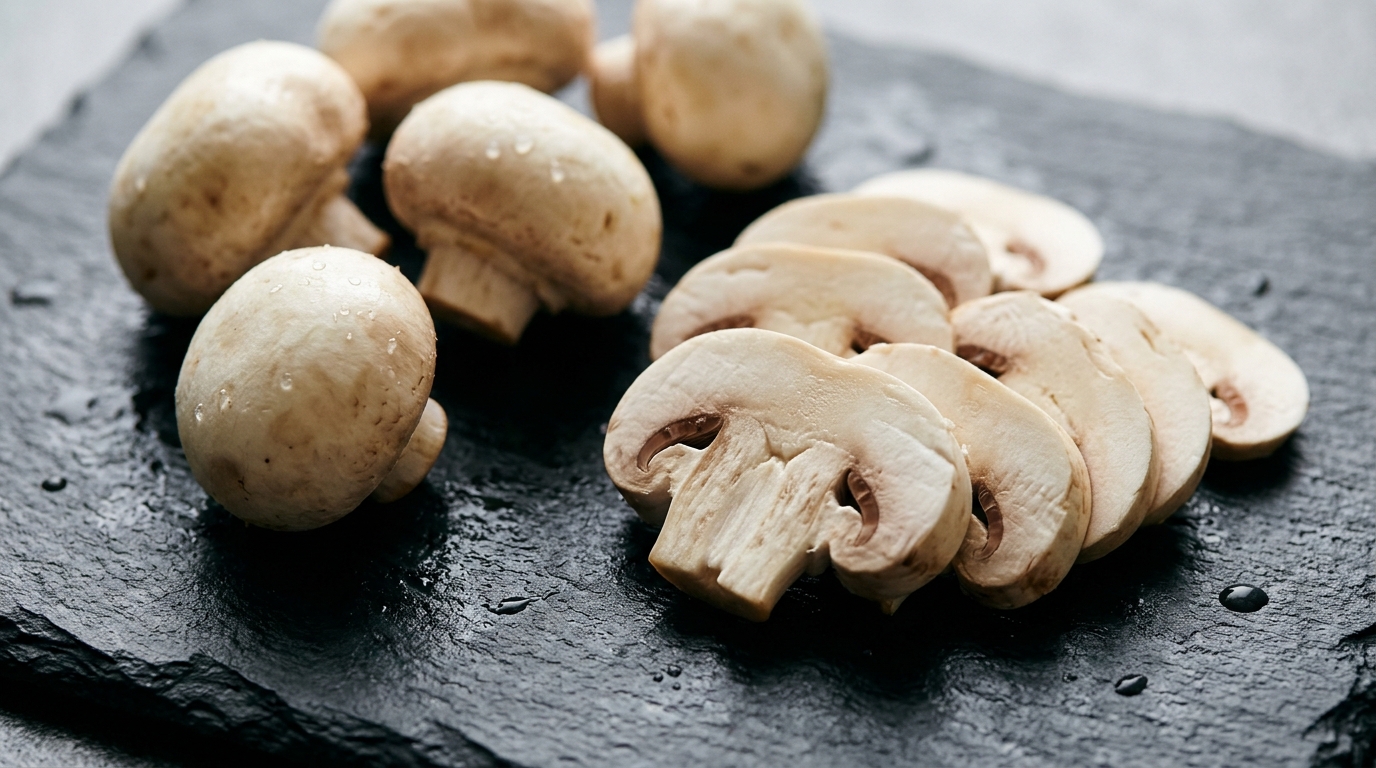
Pizzeria chain operators and large-scale producers of chilled and frozen ready meals are responding to tightening supply with a systematic shift from fresh mushrooms to standardized canned formats in brine. This transition allows commercial kitchens to eliminate labor-intensive washing and slicing stages, insulate operations from fresh-market price volatility, and reduce raw-material shrinkage during storage—yet it simultaneously intensifies competition for the very premium specifications already in short supply.
In parallel, order reallocation toward Private Label programs within foodservice distribution is accelerating. Major trading operators are seeking to protect margins through direct contracts with processors. Conversely, for calibrated whole champignons and precision-sliced cuts, processors continue to hold firm quotations with little willingness to discount, pricing in both physical scarcity and regulatory surcharges.
Across international trade flows, a durable trend toward origin diversification is taking shape. Importers and regional distributors are increasingly splitting procurement between European producers and Asian export hubs while shifting to medium-term framework agreements with pre-fixed technical specifications to mitigate shortage risks during peak consumption periods.
Conclusion
Analytical Takeaway: The documented imbalance between HoReCa demand for premium specifications and constrained supply is structural in nature: climate volatility, production consolidation, and the regulatory transition to new packaging standards are acting simultaneously and will not resolve within one or two quarters. Overall category availability is expected to remain stable, but primary market tightness will persist in tightly calibrated whole and uniformly sliced mushrooms in brine, where foodservice demand continues to outpace capacity upgrades.
Practical Takeaway: For HoReCa importers and distributors, current market conditions require earlier delivery scheduling and clear specification segmentation across different culinary applications. Strategic supply-chain resilience increasingly depends on geographic diversification of suppliers, rigorous pre-shipment verification of technical parameters, and readiness to commit to longer contracting horizons.
MIC-TRADE (International Food Trading Company): MIC-TRADE is an international trading company specializing in food commodity supply and building commercial partnerships between producers and buyers across global markets. We structure international supply chains, source manufacturing partners, align technical specifications, and manage export-import operations. Particular focus is placed on product parameters, production standards, quality control, and transparent commercial terms. You can explore our product range and specifications on the canned and marinated champignons page. To discuss international supply opportunities and global cooperation, contact our team via the contacts page.