

USDA WASDE Report: Global Rice Trade to Fall by 1.1 Million Tonnes as Ending Stocks Rise to 199.8 Million Tonnes

The USDA November balance sheet highlights a divergence between record global rice stock accumulation and tightening exportable supply. For global importers of long-grain and parboiled rice, this creates uneven physical availability and heightens price volatility risks.
Scale and Impact: Global Supply Expands While Trade Volumes Contract
In its November WASDE report, the U.S. Department of Agriculture (USDA) revised key parameters of the global rice balance sheet for the current marketing year. The global supply forecast was raised by 0.7 million tonnes to 738.0 million tonnes. At the same time, projected global consumption was trimmed by 0.6 million tonnes to 538.2 million tonnes, widening the gap between gross availability and actual demand.
The most telling adjustment for international trade was a 1.1-million-tonne cut to the global import-export forecast, bringing it down to 60.2 million tonnes. Driven by higher beginning stocks alongside softer cross-border trade flows, the global ending stocks estimate was raised by 1.3 million tonnes to 199.8 million tonnes.
On a regional basis, the United States adjusted its domestic rice production forecast for the current season to 157.6 million hundredweight (cwt), supported by a strong average yield of 7,664 pounds per acre. Against a backdrop of ample domestic supply, the USDA lowered its U.S. season-average farm price forecast, signaling localized easing of price pressure in the Western Hemisphere.
Drivers Behind the Revision: India’s Export Restraint and Demand Adjustment
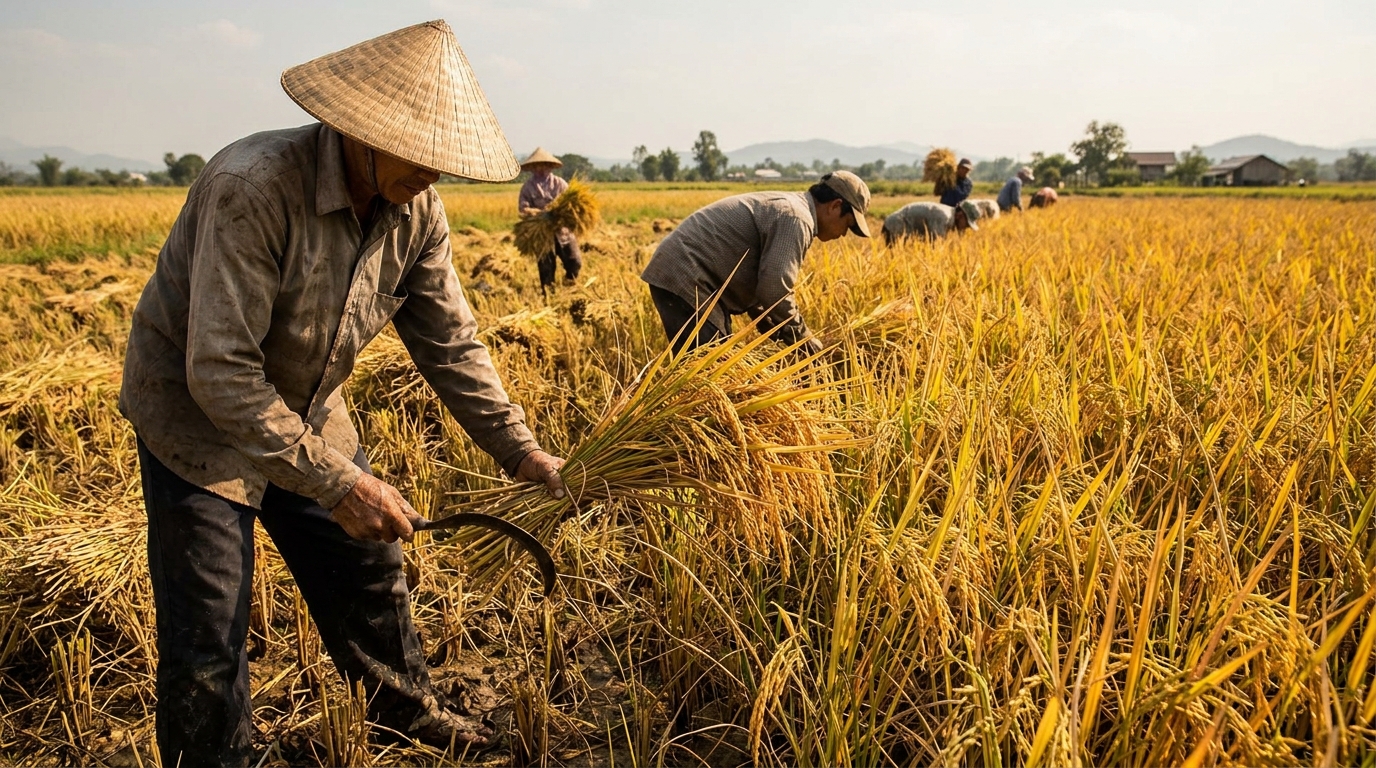
The primary driver behind the 1.1-million-tonne reduction in the global trade forecast was lower expected export shipments from India. By retaining substantial grain volumes domestically, the world’s largest exporter automatically curtails physical supply in international markets while building an additional buffer into global ending stocks.
The expansion of global supply to 738.0 million tonnes was underpinned by two parallel developments: upward revisions to beginning stocks in Nigeria, Bangladesh, and Thailand, as well as higher production forecasts for Argentina and Australia. These adjustments partially offset production and logistical constraints elsewhere, though they did not eliminate the concentration of export flows.
The 0.6-million-tonne downward revision to global consumption reflects weaker demand in Bangladesh and selected African markets. In these regions, consumption is being dampened by high imported raw-material costs, currency pressures, and reliance on domestic carry-over stocks, temporarily curbing spot-market purchasing.
Category Market Mechanics: Why Record Stocks Do Not Guarantee Availability
The central paradox of the current rice market is that 199.8 million tonnes in ending stocks are not uniformly accessible for international trade. A substantial share of these reserves is held in countries prioritizing domestic food security or operating regulated export channels, leaving the freely traded global pool constrained at 60.2 million tonnes.
Standard long-grain and parboiled rice segments remain particularly sensitive to reduced Indian shipments. Because India traditionally sets the benchmark pricing floor for these categories across Africa, the Middle East, and Europe, any contraction in its export activity rapidly tightens supply in mid-tier and value price brackets.
By contrast, aromatic varieties such as jasmine rice rely predominantly on Southeast Asian supply, where higher beginning stocks in Thailand help maintain relative shipment stability. Increased output in Argentina, Australia, and the United States (157.6 million cwt) partially expands long-grain availability in other basins, but freight economics and varietal differences prevent these volumes from fully substituting Asian origins.
Industry Response: Trade Flow Realignment and Specification Flexibility
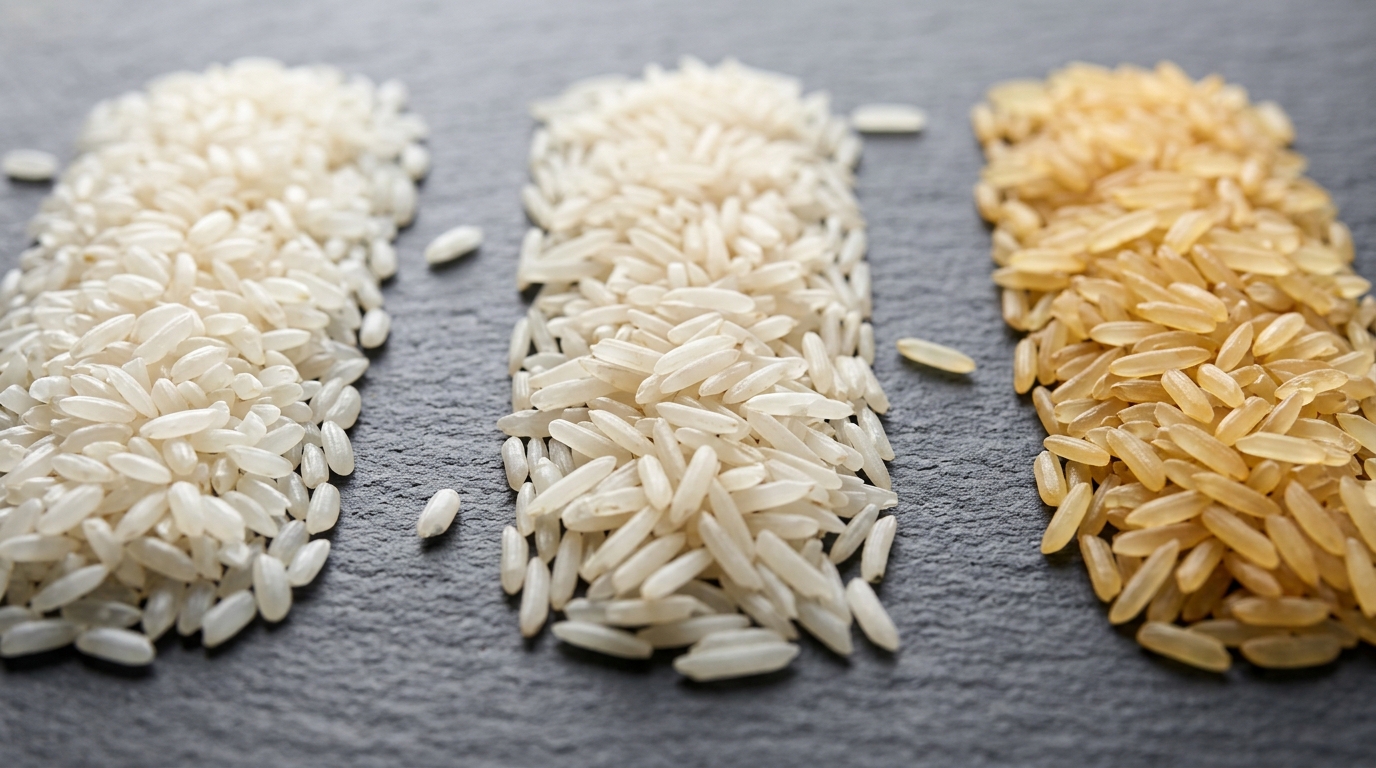
International trade flows are responding to the narrowing Indian channel through a gradual reallocation of demand toward alternative origins. Importers of parboiled and long-grain rice are stepping up contracted shipments from Thailand, Vietnam, and Pakistan, while testing South American and Australian origins on the back of stronger harvest outlooks in Argentina and Australia.
Across food processing and HoReCa channels, buyers are placing greater emphasis on raw-material specification flexibility. Manufacturers of ready meals, dry mixes, and foodservice operators are balancing procurement across parboiled, standard long-grain, and jasmine rice depending on prevailing lot availability and kernel calibration consistency.
In commercial contracting, caution toward long-term fixed commitments is deepening. Importers in Africa and Asia are scaling down single-tranche purchase volumes in favor of staggered, diversified delivery schedules to mitigate exposure to abrupt price spikes should export policies in key producing nations shift further.
Outlook and Strategic Takeaways for the Global Rice Market
Analytical Takeaway: The global rice market remains in a state of structural imbalance: total supply of 738.0 million tonnes comfortably exceeds consumption of 538.2 million tonnes and supports elevated ending stocks of 199.8 million tonnes, yet the contraction of international trade to 60.2 million tonnes sustains tightness at export ports. Over the next 6–12 months, the primary driver of price direction will be the actual pace of shipments from India alongside new-crop intake across the Southern Hemisphere and the United States.
Practical Takeaway: For food processors, importers, and retail chains, current market conditions underscore the importance of multi-origin sourcing diversification and pre-agreed technical specifications across long-grain, parboiled, and jasmine rice. Strategic supply-chain planning anchored in multiple producing basins helps dampen contract volatility and safeguard assortment continuity.
MIC-TRADE (International Food Trading Company): MIC-TRADE is an international food trading company specializing in the supply of food commodities and the development of trade partnerships between producers and buyers across global markets. We manage international supply chains, source qualified manufacturing partners, align product specifications, and oversee export-import operations. We place particular emphasis on product attributes, production standards, quality control, and transparent commercial terms. To explore our product range and technical specifications, please visit the MIC-TRADE rice catalogue. To discuss supply opportunities, distribution, and international cooperation, reach out to our team via the contact page.