

Product Expert Guide · Thunnus albacares
Yellowfin Tuna Chunks: Sensory Profile, High-Grade Protein, and Culinary Performance
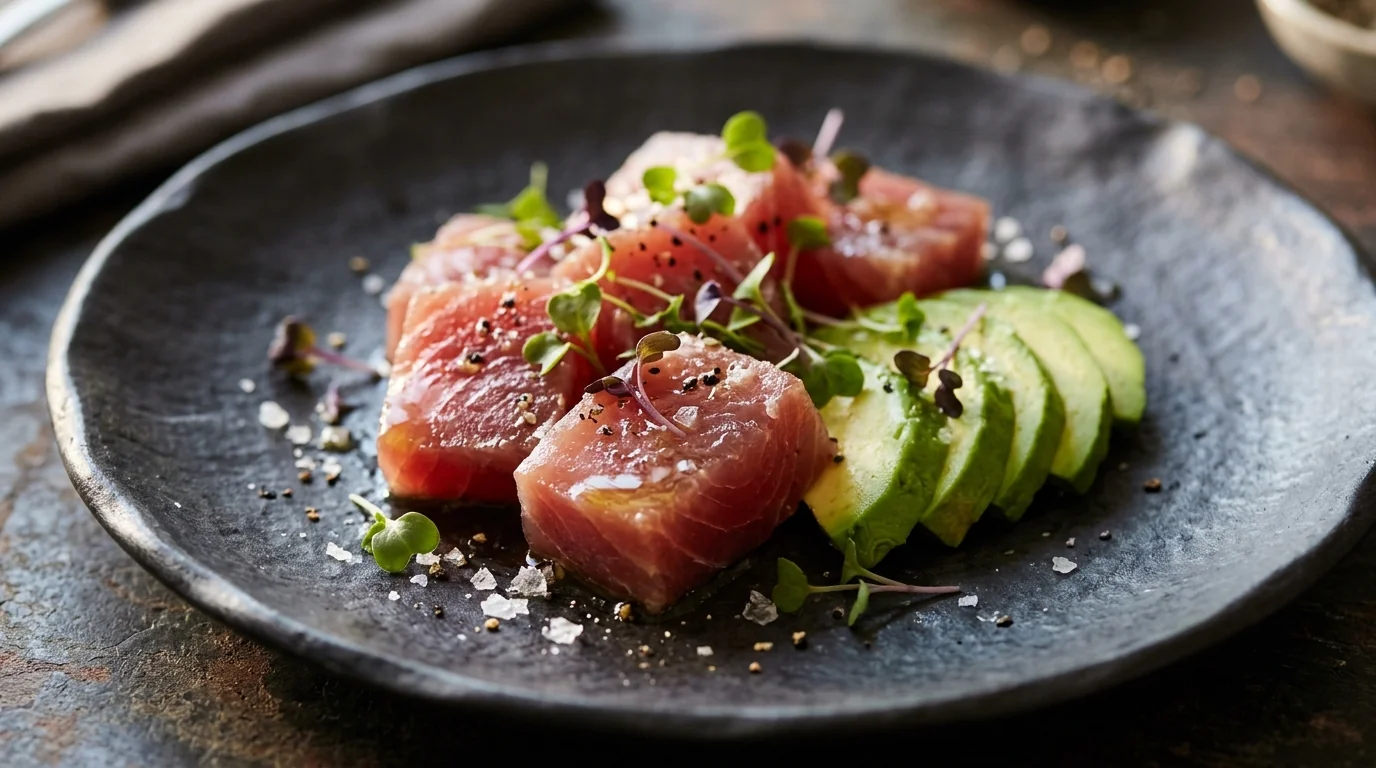
In the open expanses of tropical oceans, the narrative of one of the fastest and most streamlined pelagic species unfolds. Yellowfin tuna (Thunnus albacares) occupies a distinguished position in global gastronomy, valued not only for its refined organoleptic properties but also for an exceptional nutritional profile that pairs pure marine protein with tender muscle texture. This open-water apex predator has established itself as a primary choice for commercial foodservice operators and culinary professionals alike.
Modern procurement standards place rigorous demands on product purity and structural integrity, prioritizing wild provenance, natural muscle fiber retention, and clean formulations free of artificial additives. In this context, select canned Yellowfin tuna in Chunks format offers distinct culinary advantages. Unlike shredded or flaked fish, large, solid chunks maintain the natural geometry of the myosepta, delivering desirable succulence and a clean, light tone that balances kitchen efficiency with restaurant-grade plating.
This technical analysis examines the complete value chain of Yellowfin tuna from ocean harvest to plate: detailing the pelagic biomechanics that yield dense, lean muscle tissue; the commercial attributes of Light Meat classification; biochemical protein quality and trace mineral density; and industrial retorting standards. It also reviews culinary pairings optimized for high-volume foodservice and upscale retail applications.
Oceanic Dynamics and Hydrodynamics: Biology of Structural Integrity
Wild Yellowfin tuna (Thunnus albacares) is an epipelagic predator native to tropical and subtropical waters, whose physiological development is governed by continuous forward locomotion. Characterized by high hydrodynamic efficiency and elongated, sickle-shaped, bright yellow fins, this species reaches speeds of 75–80 km/h in open pelagic zones.
The defining physiological trait of Yellowfin lies in its obligate ram ventilation: to sustain respiration, the fish must remain in perpetual motion. This constant swimming activity produces exceptionally dense muscle tissue—resilient, structured fibers characterized by high concentrations of pure protein and an absence of loose interstitial fat deposits.
The pelagic habitat plays a decisive role in establishing the sensory profile of the meat. Yellowfin hunts in the open ocean at depths ranging from 50 to 250 meters, feeding primarily on squid, sardines, and pelagic crustaceans. Because the fish operates strictly in epipelagic zones far from coastal runoff and benthic substrates, the meat is completely free from muddy, earthy, or bottom-feeding off-notes, delivering a clean, marine profile characteristic of open-ocean fisheries.
Organoleptic Profile and Light Meat Classification
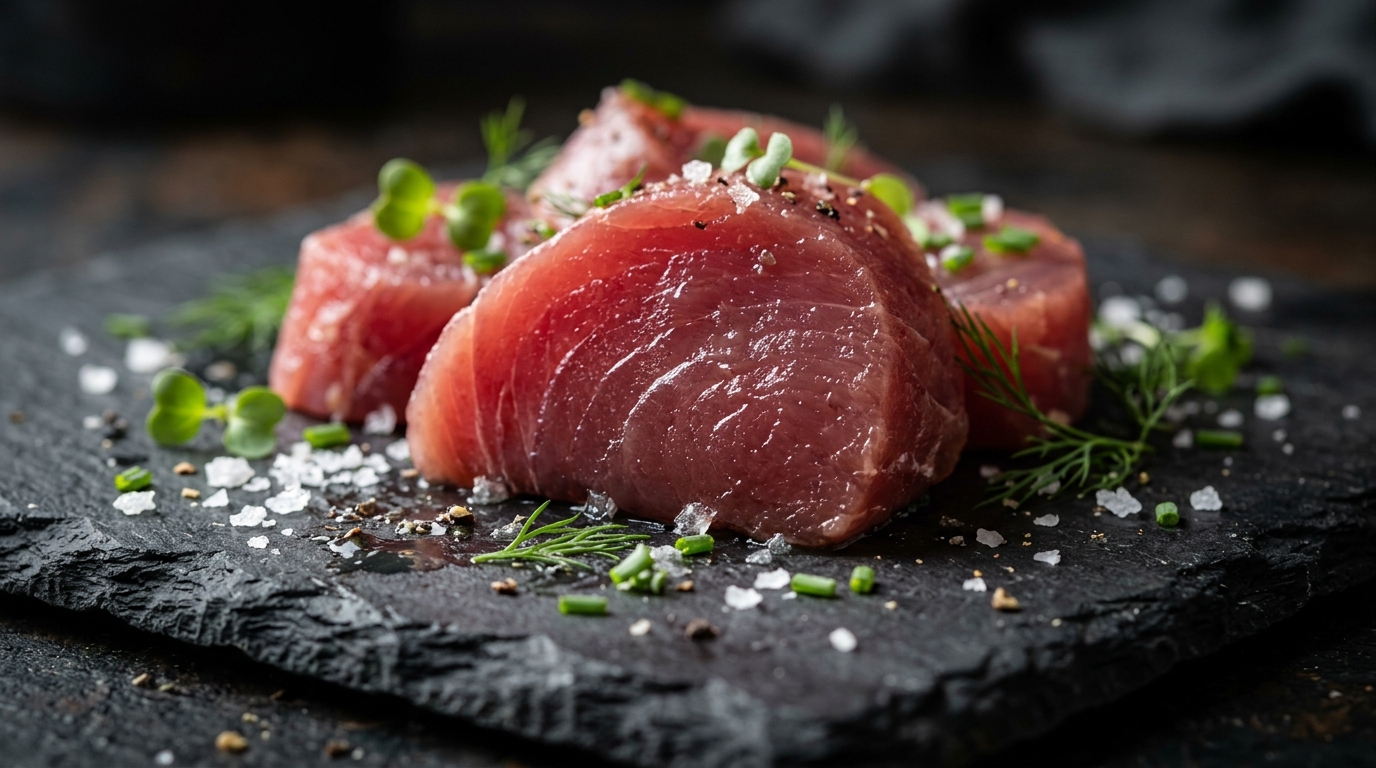
Under international seafood grading standards, Yellowfin tuna is classified within the premium Light Meat Tuna category. While raw loins exhibit a deep coral-pink hue, gentle thermal sterilization transforms the meat into an ivory, pearl-light tone free from grey or dark discolorations. This visual presentation makes light meat an appealing choice for both cold displays and hot culinary preparations.
The sensory profile of Yellowfin is characterized by balanced nuance: mild, delicate, and subtly oceanic with smooth, buttery-nutty undertones. Its flavor is milder and more delicate than that of Skipjack, whose flesh is darker and whose taste is more pronounced. Thanks to this subtle profile, Yellowfin appeals broadly across consumer segments, including patrons sensitive to pronounced fish odors.
The culinary versatility of Light Meat tuna provides an ideal protein base across foodservice applications. Its refined texture does not overpower complementary ingredients; rather, it absorbs and harmonizes with aromatic herbs, cold-pressed extra virgin olive oil, and citrus-forward reductions.
Structural Anatomy: Commercial Benefits of the Chunks Cut
The Chunks grade consists of select transverse loin segments that retain the natural anatomical orientation of muscle fibers (myosepta). Unlike shredded or flaked formats, which often break down into homogenous pastes, solid chunks retain elasticity, hold their shape during handling, and resist disintegrating into mush during mixing, dressing, or plating.
For commercial culinary directors and executive chefs, structural stability is paramount. Aesthetic plate presentation begins with ingredient integrity: well-defined chunks of pale tuna give salads, bowls, and cold appetizers a clean, premium visual standard. When pierced with a fork, the meat flakes cleanly along natural muscle striations, preserving the authentic bite of whole-muscle ocean fish.
- Preserved Myosepta Geometry: Natural fiber alignment locks in internal moisture and delivers a firm, tender bite.
- Visual Plate Integrity: Chunks maintain defined structure without collapsing into mush during commercial preparation.
- Presentation Versatility: The cut performs consistently across cold salad stations, deli bars, and hot culinary applications.
- Transparent Quality Standard: Large, intact segments allow immediate visual appraisal of color uniformity and raw loin purity.
Culinary Pairings and Foodservice Applications
Yellowfin Chunks offer exceptional culinary adaptability. With their firm structure and mild flavor profile, these select chunks serve as an ideal center-of-plate protein in classic Salade Niçoise, avocado poke bowls, Mediterranean bruschetta, and warm al dente pasta courses. Below are key commercial culinary applications highlighting the species’ marine profile.
Contemporary Salade Niçoise
In contemporary interpretations of Salade Niçoise, tuna chunks serve as the focal protein. Generous segments are arranged over crisp romaine, accompanied by blanched French green beans, tender boiled baby potatoes, sweet cherry tomatoes, quail eggs, and Niçoise olives. A classic vinaigrette of Extra Virgin olive oil, fresh lemon juice, and sea salt enhances the sweet, clean marine notes of the tuna, while the chunks maintain their geometric shape upon plating.
California-Style Avocado Poke Bowls
Firm Yellowfin chunks provide the required textural contrast for contemporary poke bowls. Built on a base of seasoned sushi rice or quinoa, portioned sectors of diced Hass avocado, crisp cucumbers, steamed edamame, and generous tuna chunks create a balanced bowl. Due to its dense muscular structure, the tuna resists weeping moisture into the base grains while delivering an authentic flake that contrasts smoothly with creamy avocado.
Mediterranean Whipped Cheese Bruschetta
Toasted slices of artisanal ciabatta or sourdough spread with savory cream cheese or whipped ricotta form a crisp foundation. Whole tuna chunks are layered on top, finished with sun-dried tomatoes, fresh basil leaves, and a drizzle of olive oil. In this application, the silky, nutty notes of the tuna complement the lactic acidity of the cheese without overwhelming the palate.
Warm Mediterranean Pasta al Dente
Yellowfin chunks perform exceptionally well in warm al dente pasta preparations. For spaghetti or tagliatelle dishes incorporating garlic, capers, San Marzano tomatoes, and flat-leaf parsley, tuna chunks are folded in during the final minute off the heat. Because the muscle fibers retain structural integrity, the tuna warms gently through the residual heat of the sauce without drying out or breaking down.
Biochemical Profile and Nutrition: The Oceanic Protein Benchmark
Yellowfin tuna represents one of the richest natural sources of high-biological-value protein. Providing 24.0–26.5g of complete protein per 100g with a biological net utilization rate exceeding 95%, which makes it one of the most efficient protein sources in the diet. This renders Yellowfin an essential input for clinical nutrition, sports performance formulations, and calorie-controlled diet regimens.
A key nutritional differentiator is its amino acid profile: Yellowfin yields over 4.5g of branched-chain amino acids (BCAAs: leucine, isoleucine, valine) per 100g, contributing to muscle protein synthesis.
Beyond protein concentration, Yellowfin delivers significant levels of eicosapentaenoic acid (EPA) and docosahexaenoic acid (DHA) Omega-3 fatty acids, which contribute to cardiovascular elasticity and cognitive performance.
The trace element profile is headlined by bioavailable organic selenium: 65–80 mcg per 100g, covering the daily requirement. Selenium acts as an enzymatic cofactor for glutathione peroxidase, neutralizing free radicals and supporting cellular longevity. The product is also a dense source of vitamin D (up to 40% RDA), B-complex vitamins (niacin B3, pyridoxine B6, cobalamin B12), phosphorus, magnesium, and potassium. In brine or natural juice packs, energy density remains low at 105–115 kcal per 100g with 0g carbohydrates and minimal fat.
| Nutrient / Parameter | Content per 100g | Biological Function & Nutritional Value |
|---|---|---|
| Complete Protein | 24.0–26.5 g | >95% bioavailability |
| BCAA Amino Acids (Leucine, Valine, Isoleucine) | >4.5 g | Contributes to muscle protein synthesis |
| Omega-3 (EPA & DHA) | High concentration | Supports vascular elasticity and cognitive function |
| Organic Selenium | 65–80 mcg (covering the daily requirement) | Activates glutathione peroxidase; provides cellular antioxidant defense |
| Vitamin D | Up to 40% RDA | Supports immune modulation and calcium-phosphorus homeostasis |
| B-Complex Vitamins (B3, B6, B12) | High density | Facilitates energy metabolism, cellular respiration, and nervous system integrity |
| Mineral Complex (P, Mg, K) | Bioavailable complex | Maintains bone density and intracellular electrolyte balance |
| Caloric Value (in brine / natural juice) | 105–115 kcal | 0 g carbohydrates, minimal lipids — clean macronutrient profile |
Industrial Processing Standards: From Purse Seiner to Hermetic Can
Preserving the natural organoleptic qualities and nutritional density of wild tuna requires stringent cold-chain and processing controls at every operational phase. Initial chilling occurs immediately at sea: catch is subjected to onboard brine blast-freezing at -18°C within hours of landing, with histamine levels strictly controlled below 50 ppm to guarantee raw material safety and freshness.
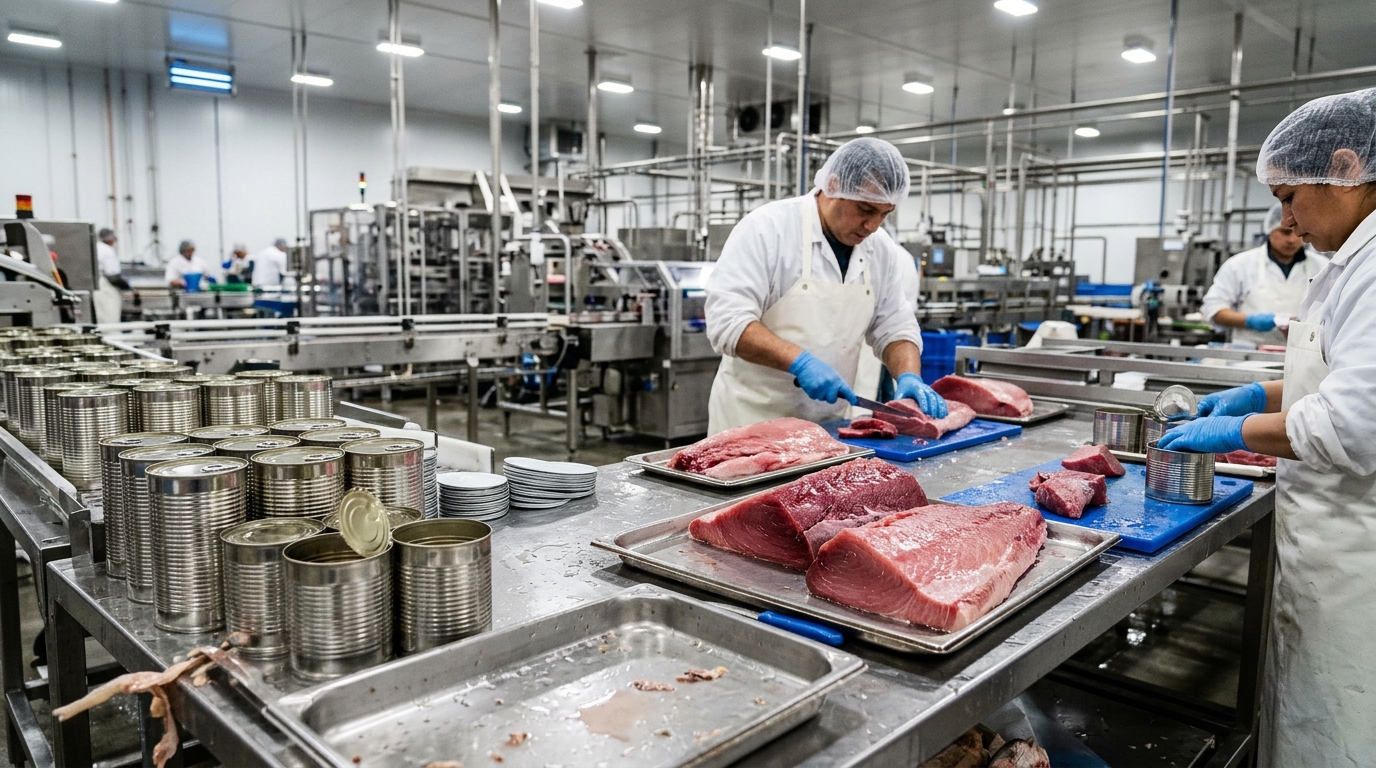
At the processing facility, secondary selection focuses exclusively on prime loin grading. Operators manually remove skin, bones, and the subcutaneous dark vascular layer (dark meat), isolating the pale muscle core. Eliminating this dark tissue eliminates potential lipid oxidation and bitterness, ensuring a clean pearl-ivory visual finish.
Filling lines adhere strictly to a 70/30 net fill ratio: every can contains at least 70% drained fish weight and no more than 30% packing medium. To serve diverse culinary and institutional specifications, packing media include refined vegetable soybean oil (for enhanced mouthfeel and moisture retention) and purified water with sea salt (for zero-fat clean dietary formulations).
Can integrity is secured via advanced packaging engineering: internally coated with food-contact anti-corrosion epoxies (BPA-NI or specialized food-grade enamel), preventing metal migration. Following vacuum deaeration and double-seam hermetic closure with Easy-Open Ends (EOE), cans undergo automated retort steam sterilization at 121°C. This thermal process delivers a commercial shelf life of 3 years without chemical preservatives.
The final protocol involves quarantine incubation: finished batches are held in thermostatic chambers at controlled temperatures for 10–14 days to verify microbiological commercial sterility and vacuum seal integrity before release.
Yellowfin Tuna in the MIC-TRADE Range: Formats, Safety and Standards
Procurement managers, restaurateurs, and retail buyers across international markets apply increasingly rigorous standards to raw material traceability and quality grades. High-grade canned Yellowfin tuna has established strong demand across foodservice and retail due to its light flesh, structured texture, and ready-to-eat operational efficiency.
To meet commercial and retail packaging requirements, production spans convenient single-serve 80g tins through standard 185g food-service/retail sizes equipped with Easy-Open pull-ring lids (EOE) for operational efficiency and food safety. The 80g format targets on-the-go snacking and single-portion deli trays, while the 185g tin serves family meal prep and restaurant cold-table assembly.
Product safety and regulatory compliance are documented through third-party food safety management systems, including ISO 9001:2015, ISO 22000:2018, HACCP, and ISO 14001:2015. Consignments are accompanied by official Veterinary/Health Certificates and Certificates of Origin; Halal and Kosher certifications are furnished upon request. Technical compliance specifications are detailed in the quality assurance and certification section.
MIC-TRADE trade compliance policies maintain strict confidentiality regarding proprietary supply networks while guaranteeing consistent product specifications across every delivered lot. For commercial contract specifications and institutional supply quotes, please consult our commercial department.